











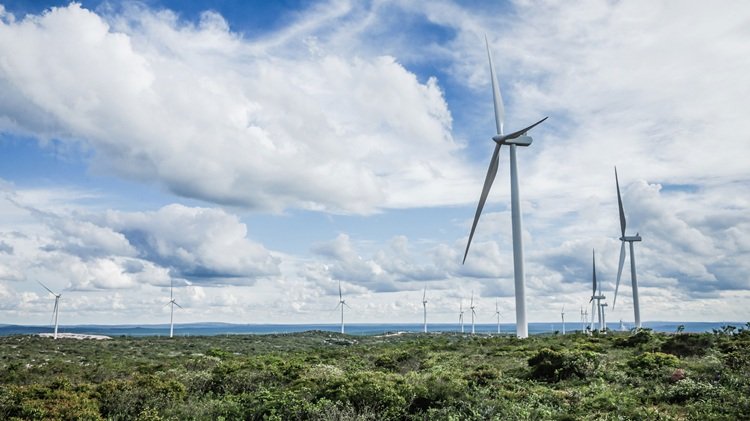
Europe installed 19 GW of new wind power capacity in 2025, bringing total cumulative capacity to 304 GW, according to the latest annual statistics report from WindEurope.
Onshore wind remained the main driver of expansion, setting a new record with more than 17 GW installed. Deployment was broadly distributed across the continent, with five leading markets accounting for a significant share of additions.
Top European Onshore Wind Markets in 2025
| Country | New Capacity Installed |
|---|---|
| Germany | 5.7 GW |
| Turkey | 2.1 GW |
| Sweden | 1.8 GW |
| Spain | 1.6 GW |
| France | 1.4 GW |
Spain’s 1.6 GW of new onshore wind capacity represents a 33% increase compared to 2024, when 1.2 GW were installed. The additions correspond to more than 275 new wind turbines, with an average capacity of 5.7 MW per unit, up from 5.2 MW in 2024 — reflecting continued technological scaling and efficiency gains in turbine design.
Looking ahead, Europe is expected to install 151 GW of new wind power capacity between 2026 and 2030, of which 112 GW will be deployed within the European Union.
More than one-third of EU expansion is projected to come from the German onshore wind market alone, consolidating Germany’s leadership in renewable energy investment and grid integration.
However, most EU member states face structural barriers to scaling wind energy:
-
Insufficient grid expansion and long connection queues
-
Delays in industrial electrification
-
Slow permitting processes across multiple jurisdictions
-
Regulatory bottlenecks affecting project development
As a result, the European Commission has launched infringement procedures against 26 of the 27 EU member states for failing to properly implement accelerated permitting measures.
Spain’s Wind Sector: Key Priorities to Meet 2030 Targets
To achieve its national renewable energy objectives, Spain must:
-
Accelerate permitting for new wind capacity
-
Facilitate and incentivize repowering of aging wind farms, while respecting asset owners’ decision-making autonomy
-
Preserve domestic industrial manufacturing capacity
-
Advance its offshore wind “pilot” market
-
Address growing legal challenges affecting projects in regions such as Galicia
These measures are critical to sustain investment in renewables and ensure long-term competitiveness in clean energy technologies.
European offshore wind added 2 GW in 2025, marking its lowest annual installation level since 2016. Only three countries connected new offshore turbines to the grid:
-
United Kingdom
-
Germany
-
France
Despite the slowdown, the sector expects a rebound starting in 2026.
Europe plans to install 34 GW of additional offshore wind capacity by 2030, reaching a total of 73 GW. Within the EU alone, offshore capacity is projected to grow by 19 GW, reaching approximately 40 GW installed by 2030.
Although meeting 2030 targets appears unlikely, delays are generally expected to range between one and two years, rather than resulting in a structural reduction in total capacity.
In Spain, the recent launch of a public consultation on the regulatory framework for the first competitive offshore wind auction scheme marks a long-awaited milestone for the sector.
This initial step sends a market signal regarding the government’s intention to advance offshore wind — a technology expected to become strategic for Spain’s economy over the next decade, particularly in floating wind development, port infrastructure and energy storage integration.