







The Argentine Renewable Energy Chamber (CADER) is set to formally update its institutional name to explicitly include energy storage among its strategic priorities.
While keeping its well-known acronym, the organisation will amend its statutes to adopt the name Argentine Renewable Energy and Storage Chamber, underscoring the rising relevance of battery technologies in Argentina’s power sector.
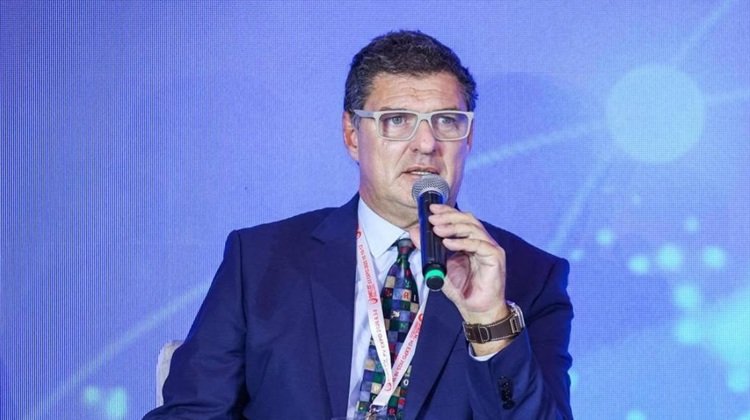
“Storage within CADER already has a role, a dedicated committee and a space to push forward its requirements and proposals and make them viable. Our goal is to become increasingly federal, expand our membership, and actively integrate storage into the association,” said Marcelo Álvarez, president of CADER, in comments to Energía Estratégica.
A pivotal moment for energy storage
The rebranding comes at a decisive time for the market. Following the success of the AlmaGBA tender — which awarded more than 700 MW of battery storage capacity in the Buenos Aires Metropolitan Area — the sector is now awaiting the launch of a new call designed to replicate the model in other regions of the country, under the name AlmaSADI.
“With the AlmaSADI tender, there will be a great deal of activity in Argentina’s energy storage sector during 2026. There are several grid nodes where installing storage is cheaper than relying on imported diesel fuel, meaning forced generation can be replaced,” Álvarez explained.
“There is already a clear learning curve for batteries, with prices falling exponentially. Combined with the ability to replace forced generation and mitigate power outages, storage becomes an essential step for managing variable renewable sources,” he added.
According to industry sources, the new process is expected to involve between 500 and 600 MW of battery energy storage systems (BESS), to be installed at congested nodes connected to 132 kV transmission lines, particularly in the NOA and NEA regions and parts of Patagonia.
Although the current regulatory framework establishes that demand should contract these services, discussions are ongoing over whether CAMMESA will act as the offtaker — which could ease contract awards — or whether that role will ultimately fall to distribution companies.
Regulation, distributed generation and financing tools
Beyond storage, CADER is also pushing for an update to the regulatory framework to provide long-term predictability. The aim is to ensure continuity of Law No. 27,191, at least in terms of fiscal stability, and, if possible, to recover some of the incentives that supported the initial expansion of renewables in recent years.
“To create an attractive investment climate, Argentina needs a country risk level below 500 basis points. Capital markets have improved significantly compared with last year, creating a limited but positive sense of stability,” Álvarez said.
“A law stating that the National State guarantees 20 years of regulatory stability is already a strong declaration of principles from an investor’s perspective,” he added.
In this context, the Chamber is advocating for these principles to be incorporated into the forthcoming Energy Transition Law, which it expects to enter parliamentary debate in the first half of 2026.
Distributed generation also remains a priority, particularly through coordination with provincial governments to remove barriers related to transaction costs and financing. CADER is looking to replicate successful models such as that of Córdoba, currently the most advanced jurisdiction under Law No. 27,424, with 1,470 prosumers representing 39 MW of installed capacity — more than 30% of the national total.
In addition, the Chamber is planning agreements with the National Institute of Industrial Technology (INTI) and the national government to establish a technical certification system for distributed generation, ensuring quality standards for projects backed by public or private finance.
Finally, CADER aims to consolidate its position as a technical and financial reference hub for the sector, including the creation of a voluntary “project marketplace” to connect developers with investors and support governments in identifying viable opportunities.
“CADER would act as a facilitator of these processes, with a strong focus on short-, medium- and long-term financing,” Álvarez concluded.