











The EDES-LPI-01-2024 renewable energy auction has revealed a structural signal for the Dominican power market: 1,027.10 MW across 12 renewable projects with battery energy storage systems (BESS) were submitted but failed to meet the qualification requirements.
Despite these exclusions, 1,655 MWp of proposals remain eligible in a tender designed to contract 600 MW of firm capacity. The process is shaping up to be one of the most competitive in the country’s solar PV segment, particularly for projects integrating utility-scale battery storage.
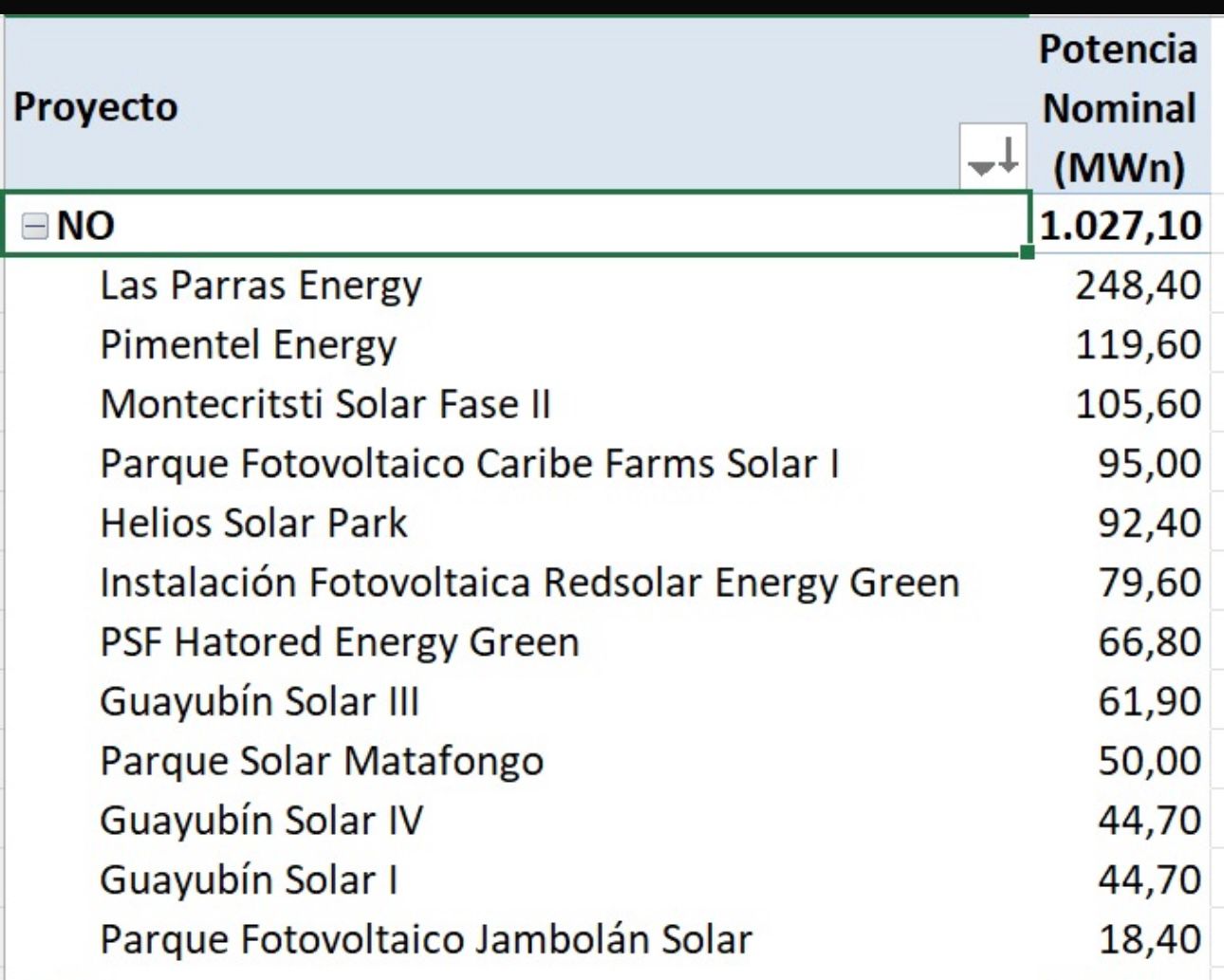
Among the largest developments excluded is Las Parras Energy (248.40 MW), followed by Pimentel Energy (119.60 MW) and Montecristi Solar Fase II (105.60 MW). Other disqualified utility-scale projects with integrated BESS include Parque Fotovoltaico Caribe Farms Solar I (95.00 MW) and Helios Solar Park (92.40 MW).
The list also comprises Instalación Fotovoltaica Redsolar Energy Green (79.60 MW), PSF Hatored Energy Green (66.80 MW) and Guayubín Solar III (61.90 MW), alongside Parque Solar Matafongo (50.00 MW), Guayubín Solar IV (44.70 MW), Guayubín Solar I (44.70 MW) and Parque Fotovoltaico Jambolán Solar (18.40 MW).
Tender overview and capacity balance
| Category | Capacity (MW / MWp) |
|---|---|
| Capacity sought by EDES | 600 MW |
| Qualified proposals | 1,655 MWp |
| Disqualified proposals | 1,027.10 MW |
| Total submitted (approx.) | 2,682 MWp |
When comparing the 600 MW sought by the state-owned Electricity Distribution Companies (EDES) against the combined volume of qualified and disqualified bids, total supply nearly quadruples the contracted capacity.
The projects excluded from the process confirm a clear technological concentration in solar PV paired with BESS. This reflects how battery storage has become a competitive standard rather than an optional add-on, particularly in islanded and grid-constrained systems where flexibility and grid integration are critical.
The figures highlight two simultaneous dynamics in the Dominican Republic’s renewable energy sector.
First, the technical and financial maturity of the market: developers were able to structure more than 2.6 GWp of hybrid solar-plus-storage proposals, signalling strong investment in renewables and increasing sophistication in project finance and engineering.
Second, intensifying competitive pressure. Developers that fail to secure capacity may be compelled to revise commercial strategies, optimise cost structures, or pursue bilateral power purchase agreements (PPAs) outside the auction framework.
The key challenge for policymakers will be how to channel this oversupply into future procurement rounds, ensuring that bankable projects do not remain stalled and that grid expansion and regulatory planning keep pace with investor interest.
What comes next?
Following the initial qualification stage, the tender now enters a decisive phase: the qualitative evaluation of proposals.
During this stage, authorities will assess each project’s technological architecture, BESS integration scheme, grid connection feasibility and full compliance with regulatory requirements established in the bidding documents.
Once the technical review is completed, the opening of financial offers is scheduled for 7 April. This will trigger the economic evaluation and, potentially, the corresponding auction mechanism.
According to the official timetable, the economic assessment will take place throughout April. Results are expected to be published between 27 April and 5 May, with contract signing projected for 22 May, formally concluding the procurement process.
The outcome will provide a critical benchmark for the Dominican Republic’s solar PV and energy storage market, as the country continues to expand firm renewable capacity while strengthening grid stability.