











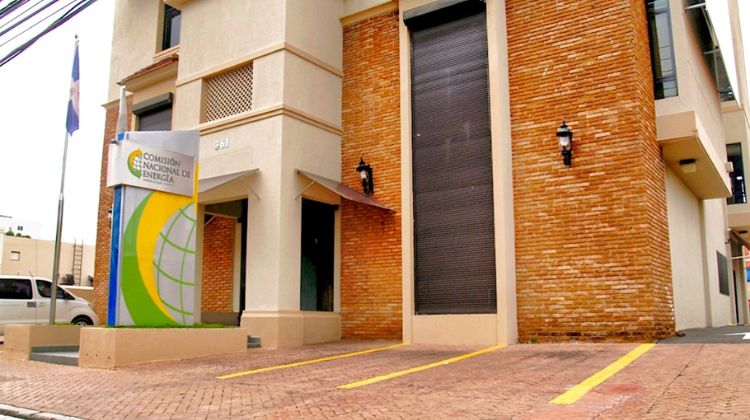
Renewable energy developers in the Dominican Republic will face stricter requirements under a new regulatory framework promoted by the country’s Comisión Nacional de Energía (CNE).
The updated technical and administrative manuals, currently under public consultation, redefine the criteria for structuring, evaluating and granting solar PV and wind power concessions. The changes raise the standards expected from project sponsors from the earliest development stages.
According to the CNE, the new framework introduces greater predictability and standardisation. By clarifying legal, technical and financial requirements upfront, the permitting process is expected to become more transparent and efficient.
In this context, Argely Pichardo, an electromechanical engineer and project management specialist in renewable energy, explained that “by defining legal, technical and financial requirements more clearly, developers now have clearer rules from the early stages of their projects”.
One of the core pillars of the new manuals is the tightening of technical criteria. Requirements related to solar and wind resource measurement have been strengthened, alongside the mandatory submission of more comprehensive electrical studies.
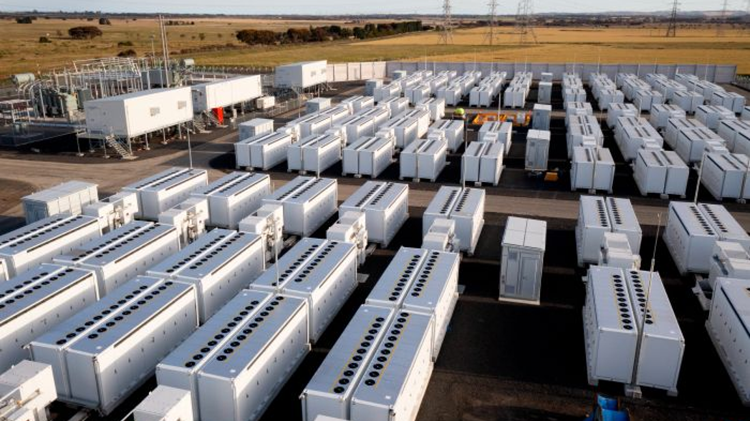
These include load flow, short-circuit and system stability analyses, which are increasingly critical as renewable penetration grows. The framework also introduces guidelines for hybrid projects and energy storage systems, a segment that is beginning to gain momentum in the Dominican market.
This higher level of technical detail aims to improve the overall quality of projects granted concessions and to act as a natural filtering mechanism, reducing the entry of speculative initiatives with limited real feasibility.
As Pichardo noted, “key requirements such as resource assessments and electrical studies were reinforced, raising the technical quality of projects that move forward towards definitive concession”.
The impact of the new framework goes beyond technical aspects. On the administrative side, the manuals introduce mandatory preliminary document reviews, clearly defined timelines and explicit consequences for non-compliance.
Project assessments will be conditional on complete and robust application files, helping to streamline the flow of submissions and optimise review times within the CNE.
Another relevant change is the stronger emphasis on the developer’s actual financial capacity, a shift that directly affects project bankability and execution.
A new phase for renewable integration
The public consultation comes at a pivotal moment for the Dominican renewable energy sector. With a rapidly expanding generation matrix and increasing penetration of clean energy, the challenge is no longer simply to add megawatts, but to integrate projects in a coordinated and sustainable manner into the National Interconnected Electric System (SENI).
Pichardo underlined that the regulatory update responds to this new reality:
“The Dominican Republic has gone through a consolidation phase for renewable energy, where the challenge is no longer just to increase installed capacity, but to integrate projects in an orderly way, aligned with the real capabilities of the system.”
In the short term, the market may experience an adjustment period as developers adapt their proposals to the new requirements. Projects with advanced studies, secured land and well-defined financial structures are expected to gain prominence.
Over the medium term, the anticipated outcome is a more coherent and higher-quality project pipeline, with greater presence of utility-scale developments, increased deployment of energy storage and hybrid configurations compatible with grid stability.