











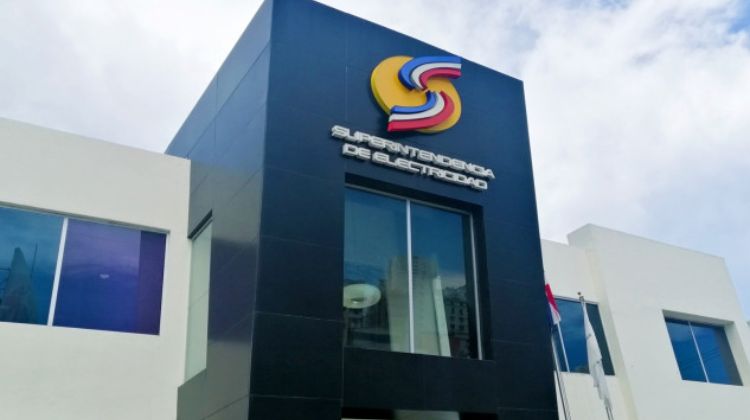
The Superintendencia de Electricidad (SIE) of the Dominican Republic has brought into force Resolution SIE-007-2026-REG, establishing for the first time a comprehensive regulatory framework for user-generators to connect their systems—mainly renewable energy installations—to medium- and low-voltage distribution grids.
The regulation, which is mandatory, redefines procedures, technical criteria and economic compensation, aligning the Dominican power system with a more participatory, efficient and decentralised electricity model.
Under the new rules, all applications must be processed through a digital platform that each distribution utility is required to implement within a maximum of 30 working days. The process is divided into two clearly defined stages: a feasibility certification—limited to a maximum of 10 working days—and a final inspection, after which a digital bidirectional meter is installed and the interconnection agreement is signed.
Installed capacity limits will now be linked to the user’s historical electricity consumption, allowing an additional 10% margin in low voltage systems (up to 10 kW) and 5% in medium voltage. The regulation also introduces stricter power quality requirements, including harmonic distortion control, flicker limits and the mandatory integration of anti-islanding protection, coupling switches and systems compliant with international interconnection standards such as IEEE 1547.
One of the most significant elements of the regulation is the billing structure under a net metering scheme. Energy balances will be calculated on a monthly basis, and if a user injects more electricity than they consume, the resulting credits will be carried forward to the following billing period.
In addition, any unused surplus as of 31 January each year must be paid at 100% of the average reference electricity price published by the Comisión Nacional de Energía (CNE). The scheme also includes a fixed charge and, in certain cases, a network usage fee equivalent to 25% of the standard grid access tariff applied to injected energy.
A favourable backdrop
The new regulation comes at a pivotal moment for the Dominican energy sector. More than 30 companies are currently competing for the award of 600 MW of renewable capacity, with proposals totalling nearly 3,000 MW. This dynamic highlights how clear regulatory frameworks can unlock investment and accelerate the deployment of distributed renewable energy infrastructure.
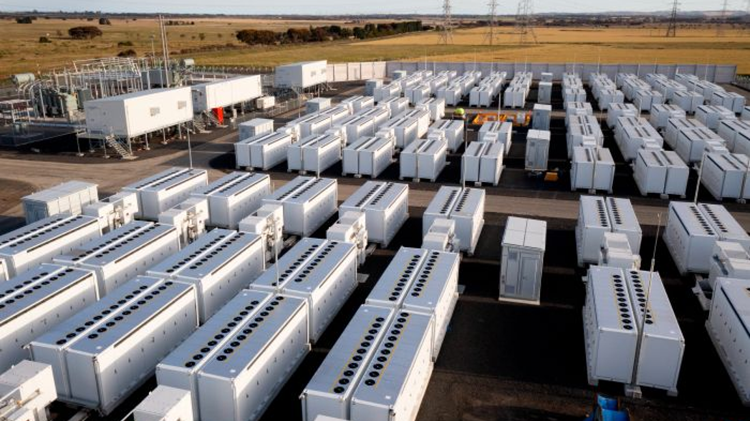
At the same time, the Superintendence has issued a mandatory technical framework for battery energy storage systems (BESS). These rules require capabilities such as frequency control, ramp rate management, voltage regulation without external reference and the ability to operate in grid-forming mode. Storage systems must also report their state of charge and operational parameters in real time to the Energy Control Centre and the system operator.
“The resolution is not an isolated measure, but rather a technical pillar in the construction of a comprehensive regulatory framework,” the Superintendent of Electricity, Andrés Astacio, said in comments reported by local media.
The regulation also establishes a five-year transition period for users operating under previous net metering contracts, allowing them to adapt to the new conditions without affecting acquired rights. Distribution companies, meanwhile, will be required to report newly connected projects to the regulator on a monthly basis, strengthening regulatory oversight and digital traceability across the distributed generation segment.
With this measure, the Dominican Republic aligns itself with international best practices, ensuring technical quality, operational safety and a clear economic signal for renewable self-generators. Beyond modernising the relationship between electricity producers and the grid, the regulation creates concrete conditions for continued growth in distributed renewable generation, backed by regulatory certainty and predictable returns.