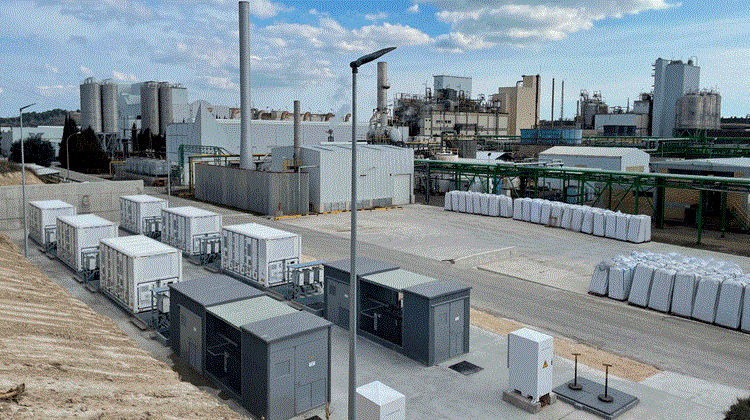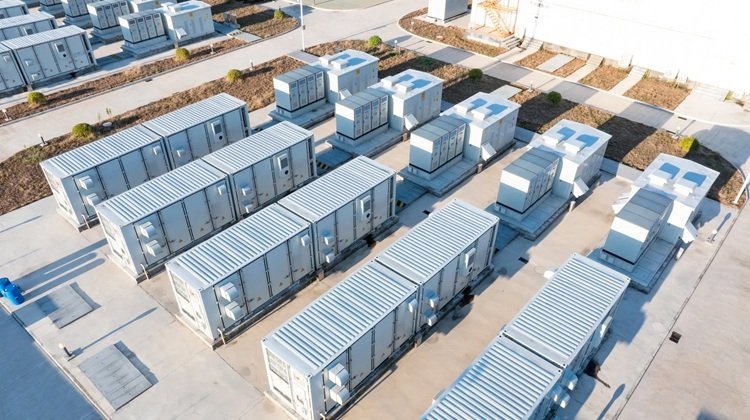













The Superintendencia de Electricidad (SIE) of the Dominican Republic has, for the first time, established a mandatory technical framework for the integration of batteries into renewable generation projects, through the issuance of Resolutions SIE-164-2025-MEM and SIE-178-2025-MEM.
The regulation requires BESS integrated into renewable projects to be capable of performing grid-forming operation, black start capability, voltage regulation and fast frequency response. In addition, systems must limit their power ramp rates to 25% per hour under scheduled conditions and 10% per minute in response to meteorological variations.
However, the regulation does not define how the mandatory services will be remunerated. Services such as black start, capacity firmness and ramp-rate control still lack a clear payment scheme.
“There is still no definition on how the services being required will be compensated. As a result, effective implementation will depend on completing the missing pieces,” energy and regulatory lawyer Enrique Segura told Energía Estratégica. He stressed that without this key element, incentives to invest in energy storage could be undermined.
While the Superintendencia de Electricidad has stated that future regulations on services such as frequency or voltage regulation will include compensation mechanisms, it has not yet provided timelines or specific details.
On another front, the new technical framework not only affects project design but also daily operation. Storage systems will be required to send real-time operational data on state of charge, available power and operating mode to the Energy Control Centre and the system operator.
One of the most debated provisions is the requirement to deliver 100% of nominal power within five minutes and to respond to frequency variations in less than 200 milliseconds.
During the public consultation process, private-sector comments highlighted the complexity of implementing these requirements. Developers pointed out that short periods of cloud cover can drive generation to zero within minutes, implying the need to oversize storage capacity. At the same time, continuous operation to smooth output curves accelerates battery degradation.
Against this backdrop, the Grid Connection Code, currently under public consultation, is expected to resolve part of the remaining technical ambiguities, such as quantitative parameters for grid-forming operation.
The new framework positions the Dominican Republic as a regional benchmark, making it one of the first Caribbean countries to establish specific technical requirements for battery energy storage systems integrated with renewable generation, Segura explained.
“There is a defined technical framework, which is necessary. But the success of this regulation will be measured in practice, not on paper,” the specialist concluded.