











Colombia’s Ministry of Mines and Energy has released for public consultation a draft resolution regulating the Colombia Solar programme. The policy allows residential solar self-generation to replace the traditional electricity subsidy for households classified under social strata 1, 2 and 3 within the country’s National Interconnected System.
Under the proposed regulation, the government sets out the contractual, technical and financial instruments required for implementation, alongside clear rules on ownership, operation and maintenance of solar infrastructure. These provisions are designed to ensure the long-term sustainability of installations for up to 25 years.
The regulation also establishes clear criteria for targeting and prioritisation, with a strong focus on multidimensional poverty, energy poverty and electricity service costs, ensuring that benefits reach the most vulnerable communities.
Colombia Solar has been designated a Project of National and Strategic Interest (PINES) and has secured technical, fiscal and budgetary approval. It is positioned as a key tool to advance Colombia’s Just Energy Transition, expand access to clean energy, and reduce pressure on the Solidarity Fund for Subsidies and Income Redistribution, which currently finances electricity subsidies.
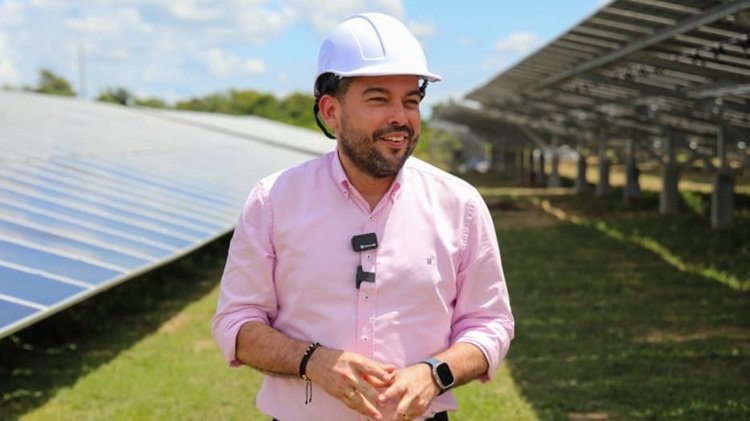
“Through Colombia Solar, we are transforming subsidies into energy autonomy, delivering clean and affordable power to households that have historically paid the highest electricity tariffs—particularly along the Caribbean coast,” said Edwin Palma, Colombia’s Minister of Mines and Energy.
The minister added that the policy not only democratises access to solar PV but also strengthens the sustainability of the power system. “We are changing the model: less dependence on permanent subsidies and more installed capacity at the local level, with transparency and fiscal responsibility,” he said.
Palma stressed that the programme has a strong social and territorial focus. “Colombia Solar represents an energy transition with social justice. It is clean energy for people, neighbourhoods and regions that the market has historically left behind,” he concluded.