





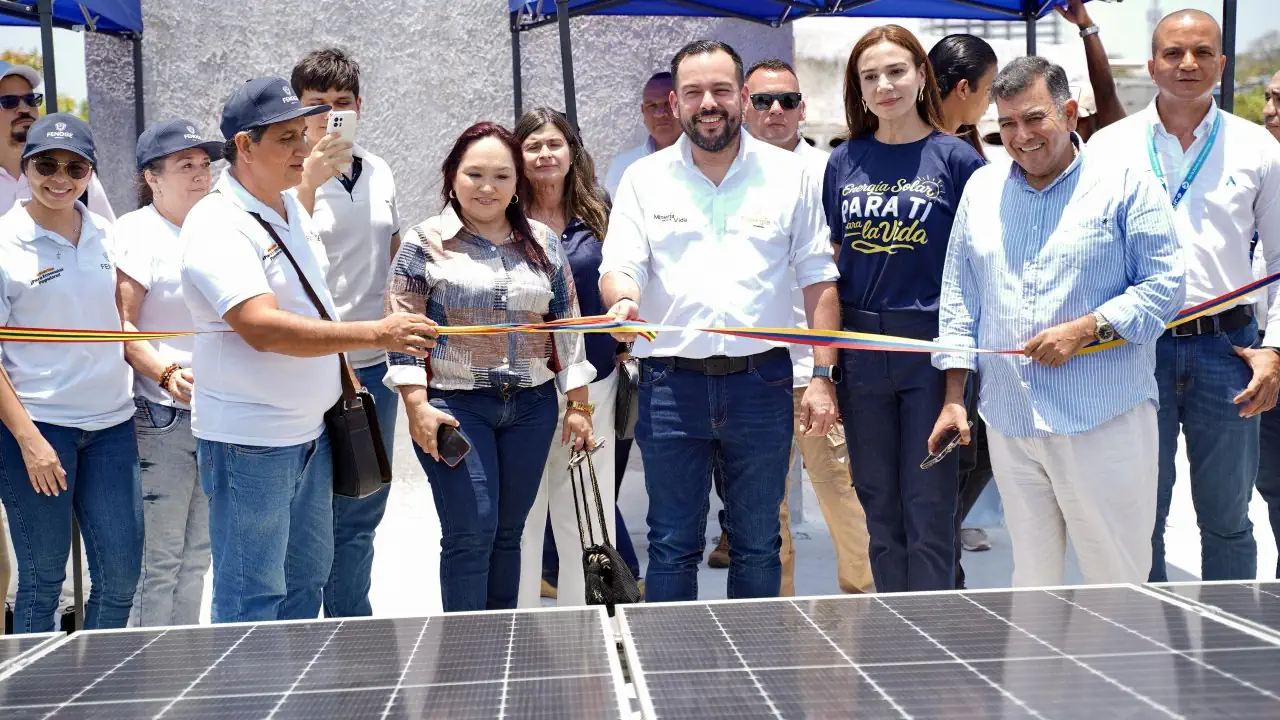
The Colombian government has opened for public consultation a draft resolution regulating Colombia Solar, a flagship public policy that allows households in socio-economic strata 1, 2 and 3 to generate their own solar power as an alternative to conventional electricity subsidies.
The initiative, led by the Ministry of Mines and Energy, applies to users connected to the National Interconnected System and represents a structural shift in how energy support is delivered to low-income consumers. Instead of permanent tariff subsidies, the programme promotes distributed solar PV generation at the household level.
Under the new regulation, the government establishes the contractual, technical and financial instruments required for implementation, as well as clear rules on ownership, operation and maintenance of the solar infrastructure. The framework is designed to ensure the long-term sustainability of the systems, with an operational horizon of up to 25 years.
The resolution also defines targeting and prioritisation criteria, focusing on multidimensional poverty, energy poverty and electricity service costs. This approach seeks to maximise social impact while improving fiscal efficiency and expanding access to clean, reliable and affordable energy across the country.
Colombia Solar has been classified as a Project of National and Strategic Interest (PINES) and has already secured technical, fiscal and budgetary approval. The government sees it as a key instrument to advance Colombia’s Just Energy Transition, improve energy access and reduce pressure on the Fondo de Solidaridad para Subsidios y Redistribución de Ingresos, the fund that finances electricity subsidies.
“With Colombia Solar, we are transforming subsidies into energy autonomy, delivering clean and low-cost power to households that have historically paid the highest tariffs, especially in the Caribbean region,” said Edwin Palma, Minister of Mines and Energy.
According to the minister, the policy not only democratises access to solar energy but also strengthens the sustainability of the power system. “We are changing the model: less dependence on permanent subsidies and more installed capacity in the territories, with transparency and fiscal responsibility,” he added.
Palma concluded by stressing the programme’s strong social and regional focus. “Colombia Solar is ean nergy transition with social justice. It is clean energy for people, for neighbourhoods and for regions that the market has historically left behind.”