











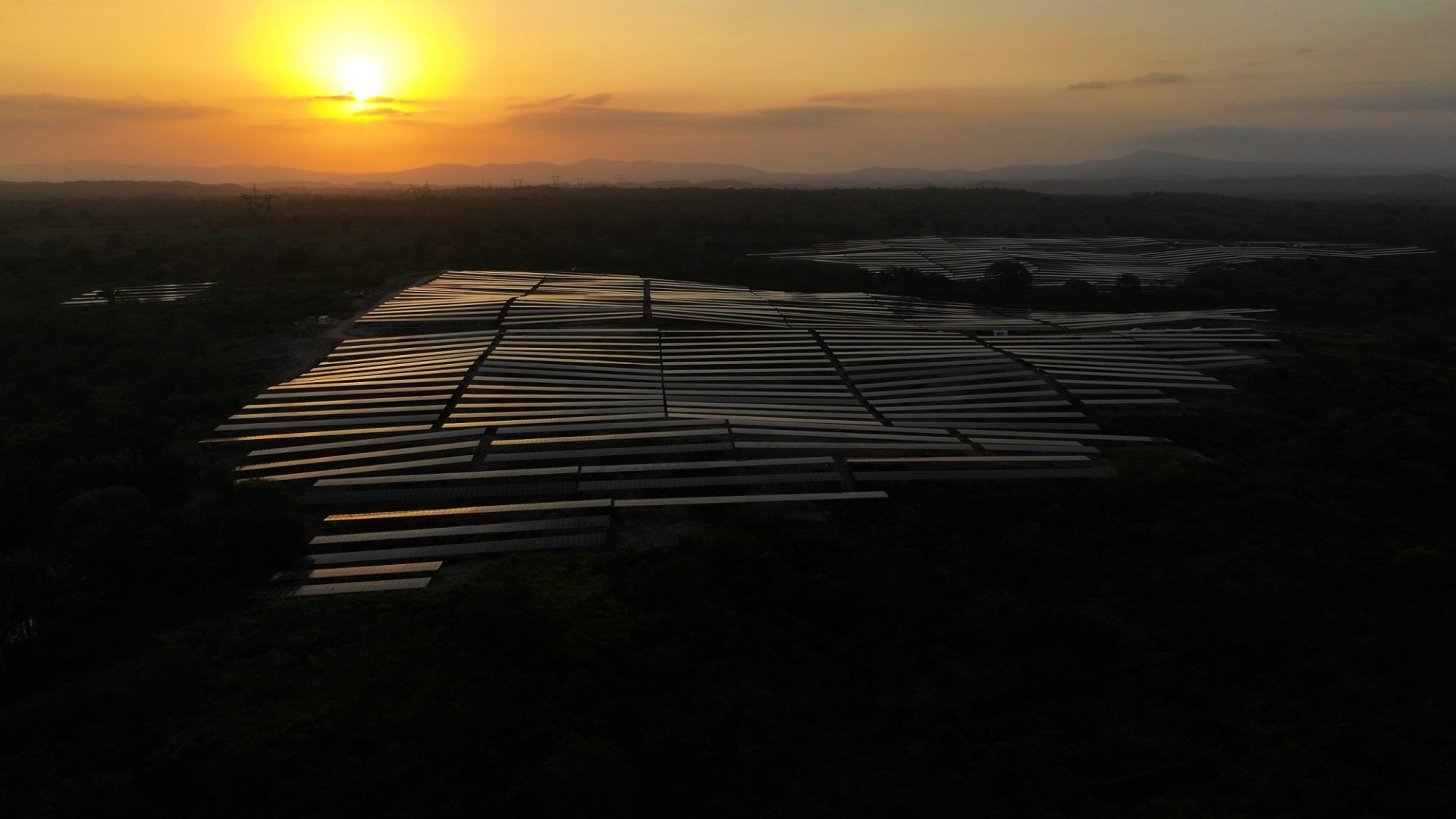
Colombia’s Minister of Mines and Energy, Edwin Palma, announced that the country has reached 4 GW of clean energy generation capacity, equivalent to 17.09% of the national electricity mix, following the commissioning of the new Atlántico Solar Park.
With the testing phase of the solar power plant now underway, Colombia is 2 GW away from reaching the renewable generation target set by the government of President Gustavo Petro under the 6 GW Plus plan, a strategy aimed at accelerating the country’s energy transition and expanding renewable energy capacity.
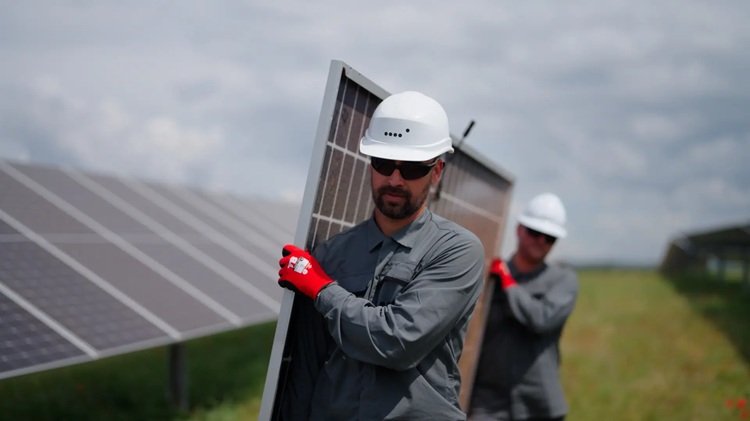
The project includes 403,920 solar photovoltaic (PV) panels, interconnected across 34 subfields using tracking technology that allows them to rotate and follow the movement of the sun, enabling optimal solar radiation capture throughout the day.
The modern clean energy generation facility will be capable of supplying electricity to around 800,000 people in the region, mainly residents of the municipalities of Usiacurí and Sabanalarga in northern Colombia.
“With the production of 180 MW from this solar plant, clean energy now accounts for 17.09% of Colombia’s electricity mix, consolidating itself as a growing pillar for development and well-being across the country,” stated Edwin Palma, Colombia’s Minister of Mines and Energy.
The head of the country’s energy portfolio also stressed that this milestone demonstrates the sector’s commitment to an orderly, secure and sustainable energy transition.
Further market context
Colombia currently has two structural decisions underway for its electricity system: the long-term contracts auction, which incorporates energy storage, and the reliability charge auction, a central mechanism designed to guarantee firm capacity and supply security within the country’s energy mix.
The new long-term auction in Colombia is being launched under very different conditions from previous rounds. While in 2019 the market lacked sufficient contracts to support structured financing, today developers are negotiating power purchase agreements (PPAs) of up to 15 years, with conditions that allow projects to secure project finance without necessarily relying on the state mechanism.
This shift in market context responds to a clear signal: the possible tightening of the electricity system towards 2027–2028, in an environment marked by delays in grid expansion and limitations in the allocation of grid connection points. In response, energy retailers and large electricity consumers have begun securing supply earlier, boosting activity in the bilateral PPA market.
In addition, the process is taking place during a pre-election year, with presidential elections scheduled for 31 May 2026, introducing an additional institutional variable. Regulatory predictability and the independence of the energy regulator will be decisive factors in maintaining investor confidence.
As the energy transition advances and signals of potential system constraints appear on the horizon, Colombia is entering a different stage in which the auction mechanism no longer acts as the initial driver of renewable expansion, but rather as a fine-tuning tool in a rapidly maturing electricity market, which now demands more sophisticated contractual and financial structures.