












The Colombian government has reopened the debate on renewable energy auctions with the publication of a draft resolution that would reactivate long-term power procurement mechanisms. The initiative seeks to address one of the country’s most persistent challenges: ensuring that awarded renewable energy projects actually reach commercial operation.
The proposal marks the fourth attempt by Colombia’s Ministry of Mines and Energy to implement a long-term contracting mechanism for non-conventional renewable energy sources (FNCER). The scheme is grounded in Decree 1091 of 2025 and supported by Laws 143 of 1994, 1715 of 2014 and 2099 of 2021. It forms part of a broader policy toolkit designed to help electricity retailers meet the obligation to cover at least 10% of demand with renewable energy.
The mechanism is not intended to replace Colombia’s existing reliability-based auctions under the Capacity Charge (Cargo por Confiabilidad). Instead, it aims to provide stable revenue signals—particularly for solar PV, wind power and energy storage projects—while reducing buyers’ exposure to wholesale market price volatility.
Compared with previous iterations, the new design introduces changes to both auction products and participation requirements. Notably, it allows for the explicit inclusion of energy storage systems and introduces a controlled session model to strengthen compliance—an unprecedented feature in the Colombian market.
“The auction currently being structured builds on the strengths of earlier mechanisms but explicitly incorporates lessons learned. That is why the design is open for public consultation until 3 February, to gather and assess sector feedback before finalising the rules,” said Sara Pulgarín, an engineer specialising in power contract structuring.
The mechanism is structured around two delivery timelines:
-
Projects entering commercial operation by 1 January 2030, which must already have a defined grid connection point.
-
Projects starting operation by 1 January 2035, which will not be required to have a connection point at the time of bidding and will contract constant, 24-hour energy supply.
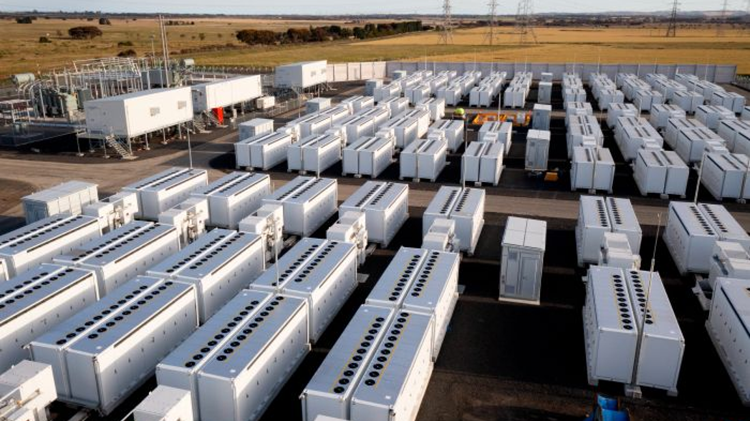
In addition, the auction design includes dedicated products for projects incorporating energy storage. These recognise the distinct delivery profiles of storage assets and their higher system value during specific time windows. The approach aligns with Law 2099 of 2021, Resolution MME 40283 of 2022, the 2025 draft decree issued by the Ministry, and the draft Resolution CREG 701 103 of 2025.
Juanita Villanueva, a lawyer specialising in electricity regulation, noted that the design “seeks to incentivise key technologies for the energy transition, such as battery energy storage systems (BESS), while still addressing the need for firm and reliable supply”.
However, she cautioned that incorporating batteries before finalising the commercial rules for BESS services—and without fully defined connection, remuneration and system integration conditions—could create misalignment with the existing regulatory framework.
Another distinctive feature is the introduction of controlled assignment of contractual obligations. Unlike previous processes, where non-compliance triggered rigid contractual penalties, the new mechanism introduces greater flexibility.
“This flexibility could put demand at risk, as it may no longer guarantee the delivery of contracted energy under the conditions awarded—precisely what has happened in previous auctions,” warned Natalia García, CEO of Enermant.
According to García, while the government transfers investment risk to private developers, it remains responsible for ensuring service provision. “That requires stronger state involvement in supporting project development and more robust monitoring and oversight of investors, so the system can respond proactively,” she said.
Although the mechanism offers greater revenue stability for developers, experts agree that significant challenges remain. Claudia Ballesteros, a lawyer with over 12 years of experience in Colombia’s power sector, highlighted the need for effective coordination between institutions such as the Ministry, the Energy and Gas Regulatory Commission, the environmental authority ANLA, the Mining and Energy Planning Unit and the grid operator bodies.
Without post-award institutional support, she warned, the mechanism could repeat the shortcomings of earlier processes. “Awarding contracts is not enough. Authorities must ensure that projects can actually move forward, including grid connection approvals, network studies and environmental permits,” García added.
Ultimately, stakeholders stress that the success of the long-term contracting mechanism will depend on regulatory clarity and stability. “If rules change during execution, or if there is uncertainty about market behaviour, banks and investors will pull back,” García concluded. “Confidence is essential, and confidence is built on clear and stable rules.”
The return of long-term renewable auctions represents a meaningful step in Colombia’s energy transition strategy and introduces innovative elements into the market. Yet, as industry experts underline, the instrument will only deliver results if it is matched by strong institutional management, continuous technical support and long-term regulatory certainty.