











Colombia is unlikely to meet its 2026 target of 6 GW of renewable capacity. As of December 2025, the country has added just 2,000 MW of new clean generation. Of this total, 1,300–1,400 MW comes from utility-scale projects, while the remainder corresponds to distributed generation.
Despite dozens of projects having already secured grid connection rights, many were due to enter operation two or three years ago and have yet to progress—or are now well behind schedule. Against this backdrop, additional capacity coming online in 2026 remains highly uncertain, even for developments with approved connections.
Expectations have therefore shifted to projects awarded reliability charge (cargo por confiabilidad) obligations starting in 2024, which are scheduled to enter operation in 2027.
“Projecting how much capacity will be added in 2026 would be very bold,” Alejandro Lucio, CEO of Óptima Consultores, told Energía Estratégica.
A market still built around reliability charges
Colombia’s current expansion mechanism remains the reliability charge, a technology-neutral scheme designed to ensure firm supply during hydrological shortages, which are common during El Niño events. Under this framework, projects with expected start-up in 2027 have recently been awarded, and a new auction round has already been scheduled.
However, since the renewables-focused auctions of 2019 and 2021, the country has not launched new tenders offering long-term contracts specifically for renewable energy. While the current administration has assigned these processes to an independent operator, the regulatory phase is still at an early stage, with no clear roadmap for future calls.
In practice, the market has evolved on its own. More than 95% of Colombia’s current project pipeline involves non-conventional renewable technologies, predominantly solar PV.
According to Lucio, dedicated renewable auctions are no longer strictly necessary. Companies now understand the importance of signing long-term power purchase agreements (PPAs), and today the only available supply at scale comes from solar projects. As a result, he argues, “off-takers have no real option other than contracting long term.”
Rising risk of shortages
Even so, the overall outlook remains fragile. With less than a year left in the current government’s term, political uncertainty is growing as the electoral process gets underway. Regardless of who takes office next, the incoming administration will face an unprecedented scenario: a real risk of electricity rationing, something Colombia has not experienced for more than three decades.
Historically, supply gaps were addressed by commissioning large hydroelectric or thermal power plants. That approach is no longer sufficient. Today’s system depends on multiple renewable projects being delivered simultaneously, yet execution across the sector is effectively paralysed. Without an immediate change of course, the risk of supply shortfalls by 2027 is tangible, consultants warn.
Why the market reform is unavoidable
At the heart of the challenge lies a market design still shaped by a hydro-thermal logic, built around large reservoirs and natural gas-fired backup. This framework no longer reflects Colombia’s current—or future—energy mix.
The country is already grappling with gas supply constraints, higher costs from LNG imports, and growing limitations on liquid fuels. Without regulatory reform, the system will struggle to support an expansion led primarily by solar energy, with a smaller contribution from wind power.
Lucio argues that the solutions have been clear for years: modernising dispatch rules, enabling intraday and balancing markets, redesigning the reliability charge, and improving liquidity conditions for new PPAs.
“The recipe is already on the table. All that’s left is to apply it,” he said.
Energy storage: a different role for Colombia
While energy storage is rapidly gaining ground in countries such as Chile as a key enabler of renewable integration, its role in Colombia is expected to be different.
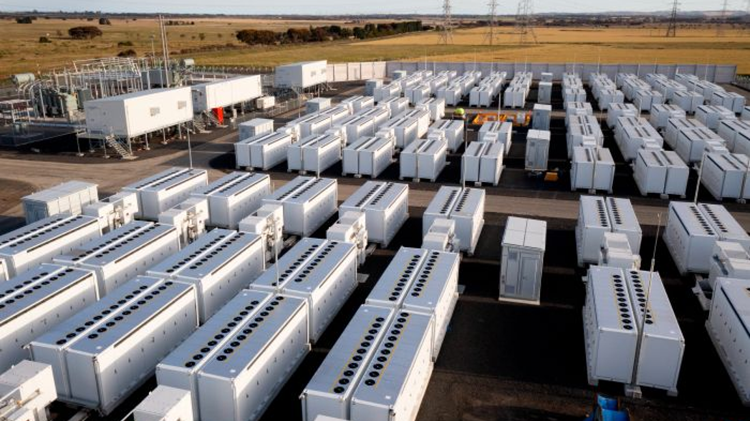
According to the consultancy, storage solutions will be valuable—but with a slower deployment pace and different objectives. Rather than easing solar curtailment or unlocking new utility-scale projects, storage in Colombia is more likely to strengthen the grid, reinforce available capacity, and optimise end-user consumption.
To achieve this, storage assets would need to be incorporated into regulated revenue streams for distribution companies, requiring additional regulatory adjustments. As with hybrid projects, storage is also closely linked to the development of intraday markets and demand response mechanisms—reforms that remain pending and, for now, delayed.