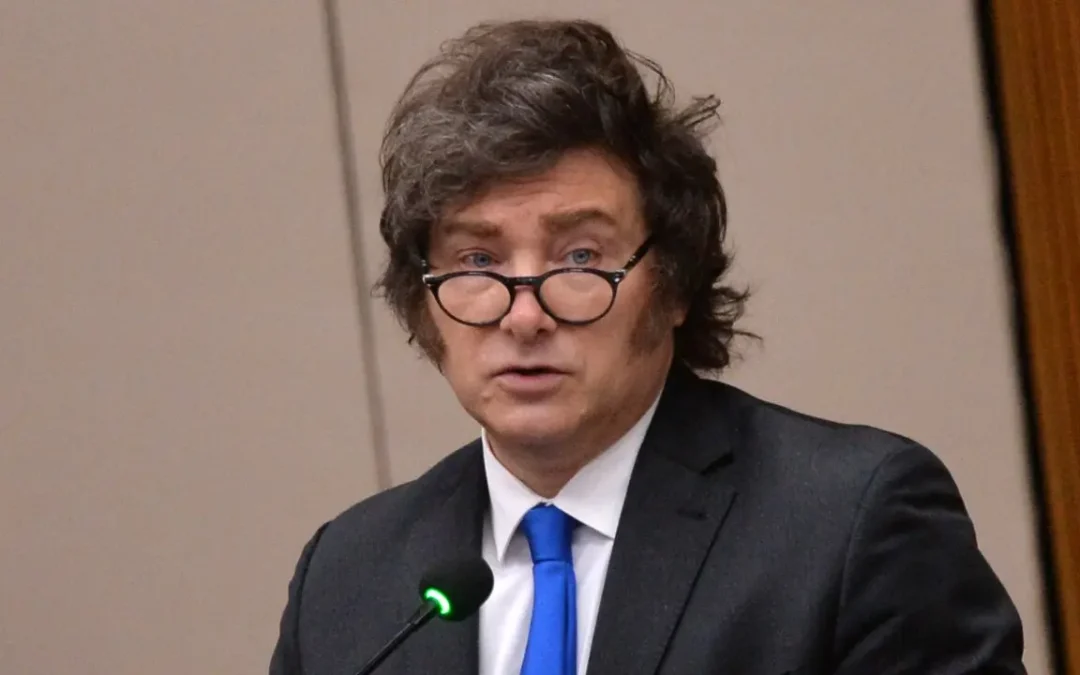













“Chile has a serious oversupply problem: we have 40,000 MW of installed capacity for demand of barely 10,000 MW,” said José Ignacio Escobar, CEO of Colbún, highlighting one of the country’s main challenges today: the misalignment between the pace of capacity expansion and the slow growth of electricity demand.
The executive issued a direct call to the authorities of Chile’s new government in 2026 to design a clear and urgent action plan to reactivate economic growth and, consequently, electricity demand.
“I hope that within the first 100 days of the new government a clear, to-the-point plan is put in place,” Escobar said during the Future Energy Summit (FES) Southern Cone, held on 26 November. It is worth noting that the statement was made weeks before the presidential run-off election on 14 December, which resulted in José Antonio Kast being elected president.
“Without investment there is no demand, and without demand we are distributing scarcity, not abundance,” he argued, stressing that while other countries in the region grow their electricity consumption by around 3% per year, Chile’s growth remains below 1%.
This bottleneck is compounded by a structural factor: permitting processes. Escobar warned that approval procedures for large-scale energy or industrial projects are excessively slow in Chile. “In Chile, permits only come through after eight years,” he lamented, contrasting this with other markets where authorisations take roughly half that time. In his view, this delays the arrival of energy-intensive industries, such as desalination plants or data centres, which could play a key role in unlocking stagnant demand.
For this reason, the executive called for a deep institutional reform, including the modernisation of the Environmental Evaluation Council (CEA) and faster implementation of regulations required under laws that have already been approved. He also proposed reviewing the country’s electricity sector regulators, seeking greater political independence and stronger execution capacity.
“Today, there are four or five different trade associations in power generation. It’s absurd,” he criticised, arguing that fragmentation weakens the sector’s representation before Congress and the Executive Branch. In his view, it is urgent to rebuild a shared roadmap, similar to that of the previous decade, when consensus-based energy scenarios led to key legislation on renewables, transmission and power auctions.
From Colbún’s perspective, this diagnosis is matched by concrete action. The company recently inaugurated Horizonte, the largest wind farm in the country. To support its operation and improve power evacuation in highly congested areas, Colbún is also building the Don Eduardo substation, which will benefit not only its own assets but also projects developed by other generators.
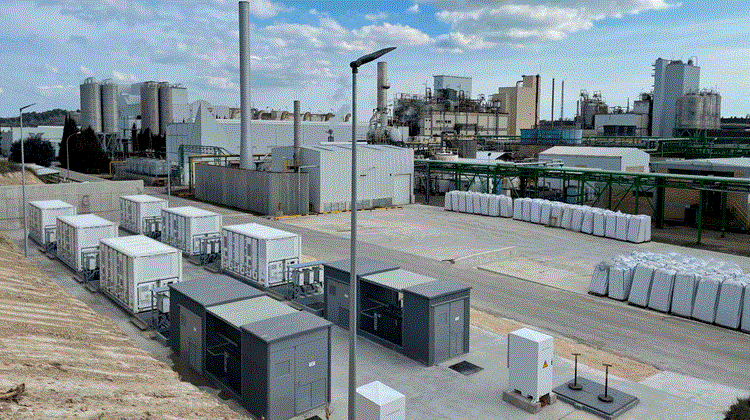
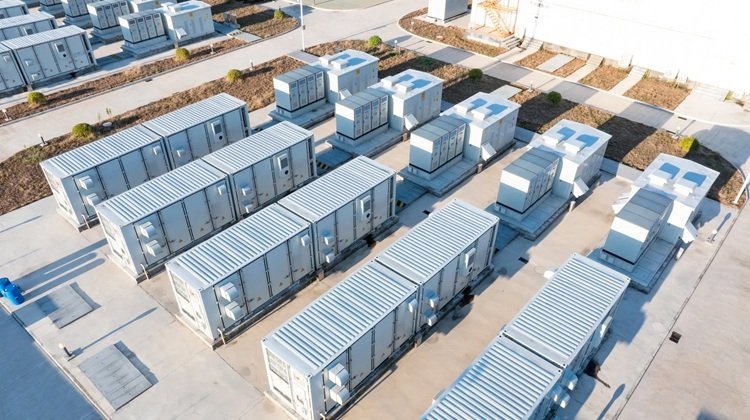
At the same time, the company is exploring energy storage solutions to align solar and wind generation ramps with actual consumption profiles, integrating new technologies without destabilising the grid. Escobar describes this as a “perfect symphony”, in which each technology plays a complementary role, without antagonism between renewables, thermal generation or batteries.
In parallel, he stressed that the transformation of the system will remain incomplete if consumers do not perceive tangible benefits. “Today, customers are not seeing the benefits of the energy transition. They only see more expensive and less secure energy,” he warned. While acknowledging that sector emissions have fallen by 50% over the past decade, he emphasised that this technical achievement has not translated into lower tariffs or improved reliability.
He concluded with a broader call to the entire energy value chain, challenging the audience—mostly sector executives—with a direct question: “How many of you still have LPG at home? How many still drive internal combustion vehicles?”
For Escobar, the energy transition cannot remain confined to speeches or system-level macroeconomics. If users—including players within the sector itself—do not adopt changes in consumption patterns, oversupply will remain without an outlet, and the model will prove unsustainable.