











The Committee of Experts for the Review of Chile’s Electricity Sector Regulatory System, led by Chile’s Minister of Energy and Minister of Economy, Development and Tourism, Álvaro García, presented a proposal for reforms primarily focused on the electricity distribution segment, which will be handed over to the country’s next administration.
The document is based on a diagnosis showing that the current regulatory design for electricity distribution — built around the concept of an efficient model company used to define tariffs and remuneration — requires adjustments to facilitate the incorporation of new technologies. It also seeks to improve the system’s adaptability to changing electricity consumption and generation patterns, as well as to risks associated with natural disasters.
Among the proposed measures is the implementation of smart meters through pilot programmes tailored to specific customers and geographic areas; the modernisation of electricity tariff structures to better align demand consumption patterns with the system’s need for flexibility; and a modification of the remuneration model so that it recognises grid asset investment plans and introduces incentives to strengthen the distribution network.
The proposal also includes the integration of distributed energy resources (DERs) in order to enable new business models that can provide flexibility to the power system. In addition, it suggests the introduction of pilot programmes and regulatory sandboxes to test technological, operational, tariff-related or market innovations. The report also calls for a review of the sector’s governance and institutional framework, promoting both technical and citizen participation in tariff-setting processes.
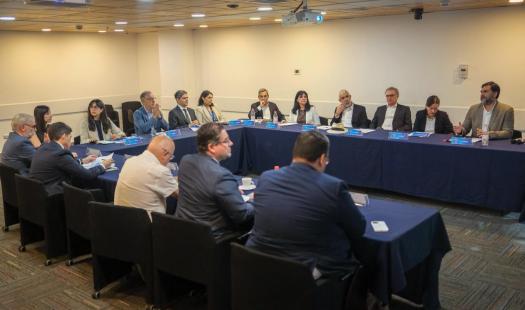
The committee, composed of ten energy sector experts, held five working sessions that resulted in a proposed roadmap aimed at improving the resilience and security of Chile’s electricity system.
“A broad, technical and responsible agreement has been reached, which we will leave as a legacy to the next government in the hope that it will implement it and thus improve the security, resilience and cost efficiency of the electricity system, benefiting both consumers and electricity producers,” Minister García said while highlighting and thanking the professionals involved.
Hermann González, a member of the committee and vice-president of Chile’s Autonomous Fiscal Council (CFA), also emphasised: “I would like to highlight the intention to contribute to the public debate and to provide the future government with a roadmap outlining the administrative and regulatory changes required in an industry that has not undergone significant reforms for 40 years, but which is now experiencing profound transformation and is essential for the quality of electricity supply reaching households.”
In this context, Rodrigo Moreno, professor at the University of Chile and director of the Energy Centre for Latin America and the Caribbean (Enlace), stressed the importance of reforming the distribution sector in light of the changes experienced by consumers.
“The country is undergoing an energy transition, while consumers are facing a technological and digital transformation that is rapidly changing their behaviour. In this context, distribution is the segment that interacts directly with the end consumer, acting as the final link in the electricity supply chain,” he said.