






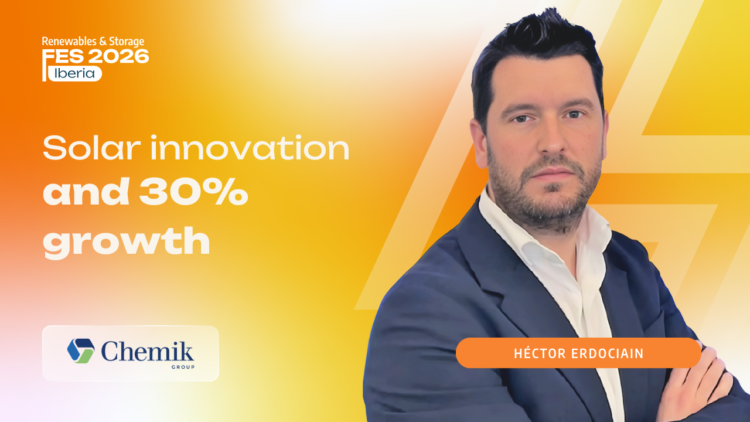
Chemik Group has introduced two new technological solutions for solar PV projects aimed at optimising installations, improving asset safety and accelerating adoption in a market under increasing pressure to reduce costs. The company expects these innovations to support its global growth in the coming years.
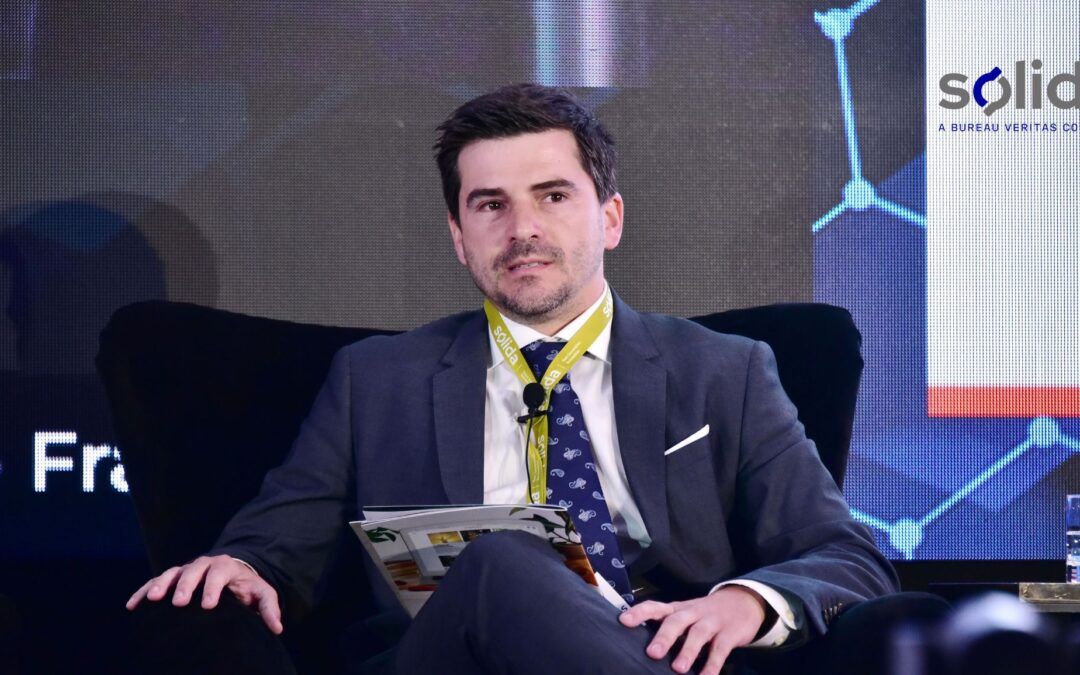
“There is such a strong need to reduce CAPEX that adoption will be very rapid,” said Héctor Erdociain, CSO & CTO of Chemik Group, during an exclusive interview at Future Energy Summit (FES) Iberia 2026, an event that brought together more than 400 executives from the energy sector.
The launch of these technologies comes at a time of expansion for the company, which supplied 6 GW of products over the past year and expects to maintain growth of around 30% through 2026.
The first solution is TCS String, a system designed to optimise cabling and reduce issues associated with field-made connections.
“The problem with string inverter projects is the massive use of copper, which is a material we all know has a high rate of theft on project sites,” the executive explained.
This challenge is compounded by the manual connection process carried out during installation, which can lead to operational failures over time.
“Installations require manual connections to be made on site,” noted the CSO & CTO of Chemik Group. According to the executive, these practices can generate electrical problems in the long term.
“After speaking with many companies in the sector that perform operations and maintenance, it becomes clear that the number of hotspots that appear later in projects is very significant,” he warned.
To address this issue, the system enables cable assembly to be automated at the factory using industrial machinery that prepares the connectors before they arrive at the installation site.
“What we achieve with this is to completely eliminate the problem of hotspots, because the connectors will already come crimped,” Erdociain stated.
The second innovation presented by the company is Chekar, a technology designed to improve the operational safety of solar plants against potential fires caused by electrical arcs. The system is installed at the beginning of the string and allows these events to be detected so that the affected circuit can be automatically isolated.
“It is installed at the beginning of the string, identifies the arc and opens the string so that the arc remains contained there,” the executive explained.
In addition to interrupting the circuit, the system sends an automatic alert to the operations and maintenance team to facilitate field inspection. According to Erdociain, this type of solution responds to a growing market need to improve the reliability of photovoltaic assets.
“Projects must increase their reliability over time in order to guarantee the generation that the asset has committed to deliver,” he added.
In addition to expanding its technology portfolio, the company aims to strengthen its international presence through strategic partnerships in different markets.
“We have reached partnerships in several markets because there are countries where it is better to go with partners rather than alone,” explained Erdociain, who identifies opportunities in countries such as Australia, Japan and the United States.