









The company will supply batteries for Central Puerto projects in the Buenos Aires metropolitan area, creating the country’s largest battery storage development. At FES Argentina, CATL highlighted CAMMESA tenders and renewable hybridization as key growth drivers for the sector.
CATL is moving forward with its first large-scale energy storage project in Argentina, deploying battery systems that will exceed 1.1 GWh of nominal capacity, at a time when the local power market is beginning to open new opportunities for this technology.
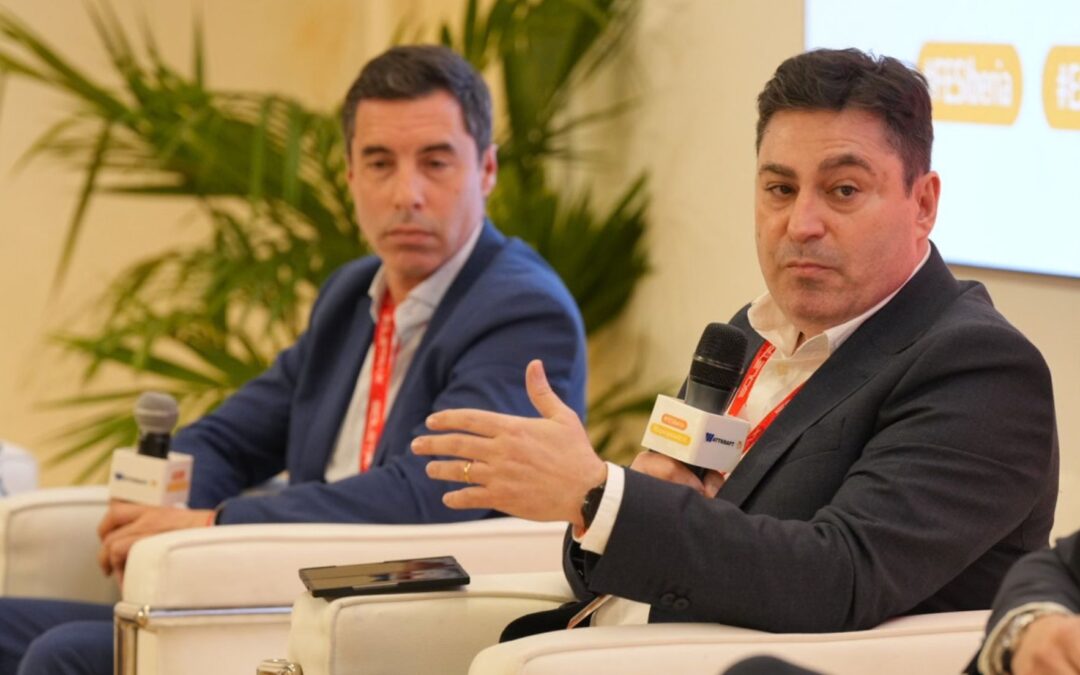
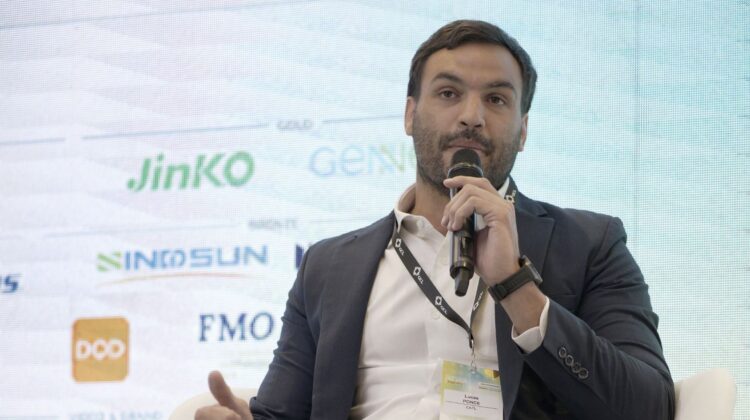
“We already have more than 1 GWh on the way to the country that will be connected to the system this year. This first project makes us very proud and represents a major commitment by the company to Argentina,” said Lucas Ponce, ESS Sales Representative at CATL, during his participation at FES Argentina, an event that brought together more than 600 energy sector executives.
The project is linked to Central Puerto, one of Argentina’s leading power generation companies, which will purchase new batteries from CATL for power plants located in the Buenos Aires Metropolitan Area (AMBA).
Together, these systems will provide more than 1.1 GWh of nominal storage capacity, making the initiative the largest battery energy storage development in Argentina to date.
From the manufacturer’s perspective, the expansion of energy storage in Argentina is closely tied to the opportunities emerging from CAMMESA, the company responsible for operating the country’s wholesale electricity market.
“As a BESS manufacturer, the clearest opportunity obviously comes from the CAMMESA side,” Ponce said.
Recently, the Argentine government launched the ALMA SADI tender, aimed at incorporating 700 MW of energy storage capacity through 15-year contracts in order to improve grid stability and reinforce nodes with transmission constraints.
“These projects are meant to solve issues in nodes that are saturated and require this technology to generate stability in the system,” the executive explained.
In this context, the Argentine market is beginning to show growing technological competition in energy storage solutions, in line with the procurement processes that are emerging in the sector.
“We experienced situations in Argentina where we submitted several proposals during the ALMA GBA process and some clients initially rejected them, only to come back later because other suppliers had offered prices they ultimately could not sustain,” Ponce said.
Faced with this scenario, the manufacturer says its strategy focuses on competing through technology reliability and long-term sustainability, rather than entering into an aggressive price race.
At the same time, the company is also observing new opportunities linked to the hybridization of renewable energy projects, a trend that is gaining traction as clean energy penetration increases in the system.
“We have been contacted by many companies with wind power projects that are beginning to plan hybrid configurations that combine wind generation with storage solutions,” he said.
In terms of project development, CATL aims to position itself as a BESS system integrator, assuming responsibility for the different components of the system to ensure performance and bankability.
“We assume the guarantees of all the components that are part of the system to ensure bankability, generate the energy and maintain the required power availability,” he added.
This approach aims to provide greater certainty for developers and project financiers. “Our main objective is that the client can sleep peacefully,” the executive summarized.
He also highlighted improvements in system reliability: “We have moved from a parts-per-million certification to parts-per-billion failure rates, which places us at reliability standards comparable to nuclear and aviation industries.”
These developments are part of CATL’s trajectory as one of the main global players in the energy storage industry.
According to Ponce, the company has ranked as the world’s leading energy storage system supplier for nine consecutive years and aims to extend that leadership to a full decade. That position, he said, is based on two fundamental pillars: operational safety and technological innovation.
“Our first flag is the safety we provide in our systems. We have never had an incident in more than 2,000 utility-scale installations worldwide,” he stated.
Based on this global experience, the company aims to leverage its technological track record in emerging markets such as Argentina, where energy storage is beginning to gain prominence within the country’s energy transition.
“We are here to run a marathon in the country. We see Argentina as a fully strategic market,” Ponce concluded.