
A report by the SmartEN association warns that the full activation of demand-side flexibility could drastically reduce grid reinforcement costs, avoid renewable energy curtailment, and eliminate the need to build 137 gas power plants by 2030.


A report by the SmartEN association warns that the full activation of demand-side flexibility could drastically reduce grid reinforcement costs, avoid renewable energy curtailment, and eliminate the need to build 137 gas power plants by 2030.
Germany’s Energy Minister Katherina Reiche presented a “monitoring report” on the progress of the German energy transition. With this “reality check” her Ministry aims to keep the transition science-based and affordable. The report suggests targeted tweaks to German energy policy rather than a categorical reorientation.
The Galician Minister for Economy and Industry warned that the sector’s paralysis discourages investment and risks Galicia missing the opportunity to attract offshore wind projects and complete the industrial value chain.
Minister Sara Aagesen defended in Parliament the electricity transmission plan with €13.59 billion, an attractive remuneration framework and measures to optimise the grid, amid rapid growth in renewables and electrification.
The report, presented by Deloitte during the information breakfast “Connecting the Future: Electricity Grids for a More Competitive Spain,” warns of an unattractive remuneration framework for investment and suggests several key factors for taking advantage of the country’s opportunity. To date, Spain has the lowest Financial Return on Investment in Distribution Networks in Europe (5.58%).
In August, 9 PPAs were signed in Europe totalling 437 MW, with Spain taking the lead (181.7 MW). Solar PV accounted for 54% of total capacity, while corporate deals rose to 58% of the volume.
This month, 19 resolutions were published in the BOE for solar-wind hybridisation and storage projects. In addition, 115 MW of wind capacity were rejected, corresponding to Repsol and Aspiravi.
In the second week of September, prices in most of the main European electricity markets rose, although the weekly average remained below €75/MWh. Several exceeded €100/MWh on some days, with Germany leading the way by reaching its highest daily price since February on September 9, at €142.45/MWh.
The public hearing begins on the draft royal decree regulating investment plans for electricity networks.
The nXL family delivers up to 9 MVA in 20 feet, with a record 622 kVA/m³ and a sealed IP65 design. The company already has initial manufacturing commitments supported by the Innovation Fund (€27.5 million).
Sara Aagesen chaired the presentation of the results of the PRTR (Plan for Investment in the Ecological Transition), held at the Madrid College of Architects. The ministry recognizes 39 exemplary initiatives in the implementation of the Recovery, Transformation and Resilience Plan.
Grid saturation is leaving no capacity for new industries and electrification projects, hindering stand‑alone batteries and putting downward pressure on PPAs. Experts are calling for urgent measures to enable flexible connections and accelerate investment in networks.
In her 2025 State of the Union address EU Commission President Ursula von der Leyen highlighted the new geopolitical reality in which economic competition and national security are intertwined. She stressed the need for Europe to massively invest in digital and clean technologies to ensure the future continues to be made in Europe.
The publication of firm demand capacity maps confirms that 83.4% of nodes are saturated and shows 0 MW available in key substations, constraining new industry, renewables and green hydrogen. The sector is calling for flexible connections and investment in networks with clear rules from CNMC and MITECO.
The informal ministerial meeting discussed the future of Europe’s energy architecture beyond 2030, as well as digitisation, clean technologies, and energy infrastructure issues.
The Government has postponed the bidding process until October 6–7, 2025, to give potential participants more time to prepare and ensure stronger competition at competitive prices.
Methane accounts for 18.62% of net emissions in Spain and is 84 times more potent than CO2 over 20 years. Environmental groups and experts are calling for an intersectoral plan to boost renewables and curb dependence on gas.
In the first week of September, the weekly prices of the main European electricity markets fell compared to the previous week, with most falling below €75/MWh. On some days, most markets registered daily prices below €30/MWh, although Italy and Germany reached over €100/MWh.
The MITECO is processing seven renewable projects from Iberdrola, Boreas Energy, Naturgy, Siemens Gamesa and Sistemas Energéticos, involving hybridisation, batteries and repowering in Cáceres, Burgos, Aragón, Navarra, Ciudad Real and Zaragoza.
New data from ACER reveals that EU countries only made available 54% of transmission capacity on the most congested lines in 2024—well below the 70% regulatory threshold—resulting in €580 million in lost welfare and €4.3 billion in congestion management costs.
The MiCA framework paves the way for transferring principles of backing, traceability and trust to the energy sector. Jorge Viñuelas, Head of European Affairs at beBartlet, analyses how blockchain can drive the green transition.
A report by the SmartEN association warns that the full activation of demand-side flexibility could drastically reduce grid reinforcement costs, avoid renewable energy curtailment, and eliminate the need to build 137 gas power plants by 2030.
Germany’s Energy Minister Katherina Reiche presented a “monitoring report” on the progress of the German energy transition. With this “reality check” her Ministry aims to keep the transition science-based and affordable. The report suggests targeted tweaks to German energy policy rather than a categorical reorientation.
The Galician Minister for Economy and Industry warned that the sector’s paralysis discourages investment and risks Galicia missing the opportunity to attract offshore wind projects and complete the industrial value chain.
Minister Sara Aagesen defended in Parliament the electricity transmission plan with €13.59 billion, an attractive remuneration framework and measures to optimise the grid, amid rapid growth in renewables and electrification.
The report, presented by Deloitte during the information breakfast “Connecting the Future: Electricity Grids for a More Competitive Spain,” warns of an unattractive remuneration framework for investment and suggests several key factors for taking advantage of the country’s opportunity. To date, Spain has the lowest Financial Return on Investment in Distribution Networks in Europe (5.58%).
In August, 9 PPAs were signed in Europe totalling 437 MW, with Spain taking the lead (181.7 MW). Solar PV accounted for 54% of total capacity, while corporate deals rose to 58% of the volume.
This month, 19 resolutions were published in the BOE for solar-wind hybridisation and storage projects. In addition, 115 MW of wind capacity were rejected, corresponding to Repsol and Aspiravi.
In the second week of September, prices in most of the main European electricity markets rose, although the weekly average remained below €75/MWh. Several exceeded €100/MWh on some days, with Germany leading the way by reaching its highest daily price since February on September 9, at €142.45/MWh.
The public hearing begins on the draft royal decree regulating investment plans for electricity networks.
The nXL family delivers up to 9 MVA in 20 feet, with a record 622 kVA/m³ and a sealed IP65 design. The company already has initial manufacturing commitments supported by the Innovation Fund (€27.5 million).
Sara Aagesen chaired the presentation of the results of the PRTR (Plan for Investment in the Ecological Transition), held at the Madrid College of Architects. The ministry recognizes 39 exemplary initiatives in the implementation of the Recovery, Transformation and Resilience Plan.
Grid saturation is leaving no capacity for new industries and electrification projects, hindering stand‑alone batteries and putting downward pressure on PPAs. Experts are calling for urgent measures to enable flexible connections and accelerate investment in networks.
In her 2025 State of the Union address EU Commission President Ursula von der Leyen highlighted the new geopolitical reality in which economic competition and national security are intertwined. She stressed the need for Europe to massively invest in digital and clean technologies to ensure the future continues to be made in Europe.
The publication of firm demand capacity maps confirms that 83.4% of nodes are saturated and shows 0 MW available in key substations, constraining new industry, renewables and green hydrogen. The sector is calling for flexible connections and investment in networks with clear rules from CNMC and MITECO.
The informal ministerial meeting discussed the future of Europe’s energy architecture beyond 2030, as well as digitisation, clean technologies, and energy infrastructure issues.
The Government has postponed the bidding process until October 6–7, 2025, to give potential participants more time to prepare and ensure stronger competition at competitive prices.
Methane accounts for 18.62% of net emissions in Spain and is 84 times more potent than CO2 over 20 years. Environmental groups and experts are calling for an intersectoral plan to boost renewables and curb dependence on gas.
In the first week of September, the weekly prices of the main European electricity markets fell compared to the previous week, with most falling below €75/MWh. On some days, most markets registered daily prices below €30/MWh, although Italy and Germany reached over €100/MWh.
The MITECO is processing seven renewable projects from Iberdrola, Boreas Energy, Naturgy, Siemens Gamesa and Sistemas Energéticos, involving hybridisation, batteries and repowering in Cáceres, Burgos, Aragón, Navarra, Ciudad Real and Zaragoza.
New data from ACER reveals that EU countries only made available 54% of transmission capacity on the most congested lines in 2024—well below the 70% regulatory threshold—resulting in €580 million in lost welfare and €4.3 billion in congestion management costs.
The MiCA framework paves the way for transferring principles of backing, traceability and trust to the energy sector. Jorge Viñuelas, Head of European Affairs at beBartlet, analyses how blockchain can drive the green transition.

Select the sector you
want to know more about
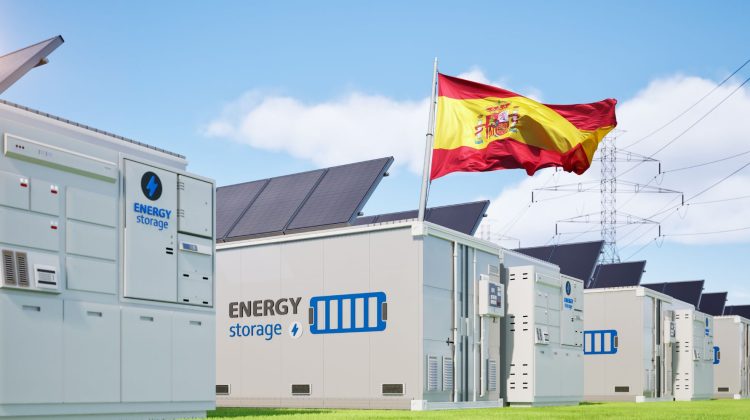
The company has announced a new energy storage solution offering 6.9 MWh per container, aligned with its growing footprint in the country, where it already has 4.8 GW under execution. Looking ahead to 2026, it plans to deepen technological integration, focusing on grid-forming, bankability, and green hydrogen.
Nextpower’s roadmap includes a new line of utility-scale power conversion systems (PCS), with first deliveries expected in 2026, alongside enhanced digital capabilities and system-level solutions designed to maximise long-term reliability and performance.
The Kahirós project will receive a US$20 million green loan from the International Finance Corporation (IFC) and will integrate solar energy, green hydrogen production and electric transport into a single system. Solar power will be used to produce green hydrogen that will fuel a fleet of six purpose-built trucks transporting timber to Montes del Plata, one of Uruguay’s largest pulp producers.