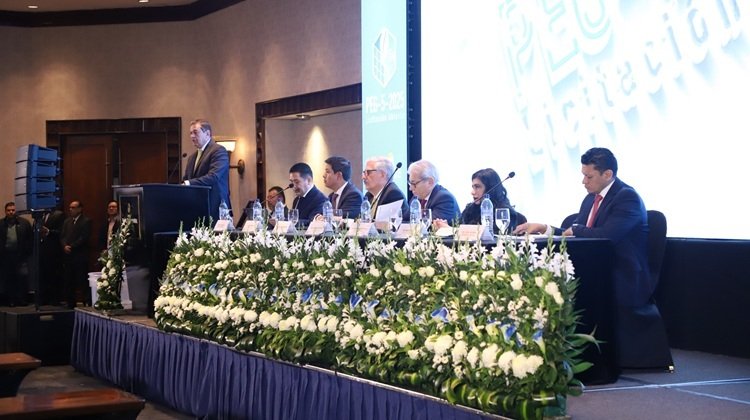
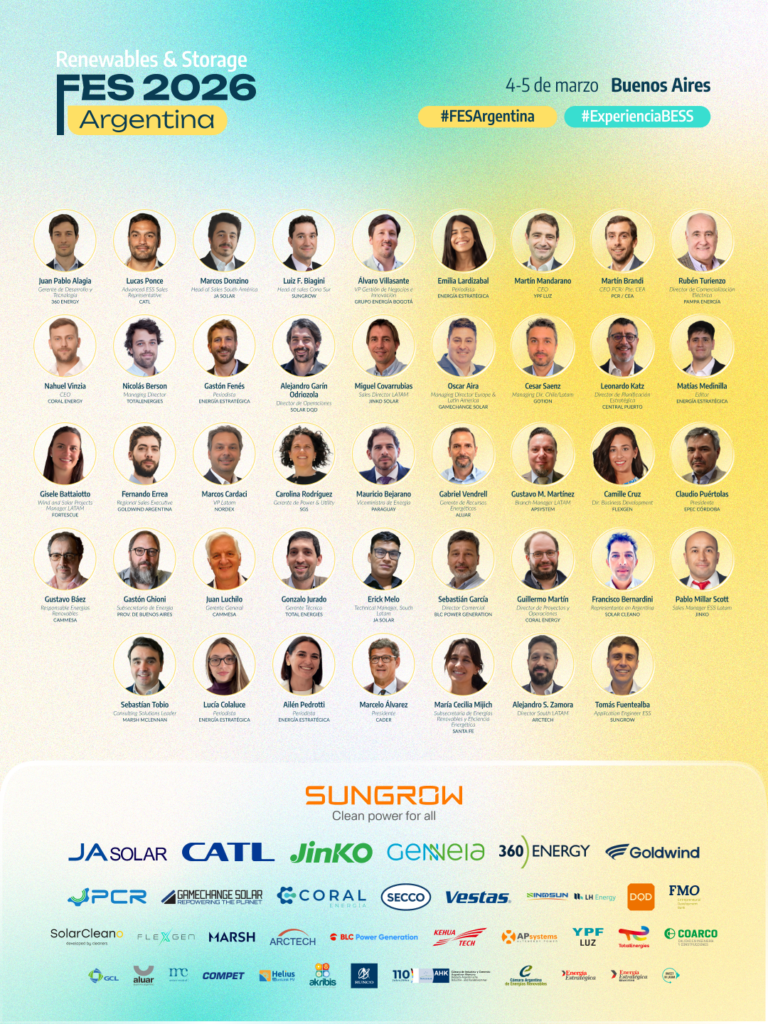
Next week, business leaders, authorities, and international experts will gather to debate technology, regulation, financing, and innovation, with the participation of companies such as Sungrow, JA Solar, Trina Solar, Solis, DIPREM, Nordex, and more.



Next week, business leaders, authorities, and international experts will gather to debate technology, regulation, financing, and innovation, with the participation of companies such as Sungrow, JA Solar, Trina Solar, Solis, DIPREM, Nordex, and more.
MITECO opens consultation to define how Spain will adapt its electricity market to the new European directive, aimed at protecting consumers, strengthening stability and increasing competition in the power system.
Electricity prices rose across Europe in mid-October as demand, gas and CO₂ costs increased, while lower solar and wind output in several markets further pushed rates above €75/MWh, with some exceeding €100/MWh.
The legal dispute shakes Spain’s electricity system, opening a new front between the main grid operator and one of the country’s largest utilities, in a conflict with major political, technical and reputational implications.
The country ranks as the second European destination for foreign investment in clean energy and the fourth most sustainable economy worldwide, while opening a new stage of cooperation with Asia focused on hydrogen, storage, digitalisation and industrial expansion.
During the 10th Energy Week, the head of the energy division at the World Economic Forum stressed that the region starts from an exceptional base in clean power generation, but must strengthen policy, finance, and human capital to scale up its global leadership.
The agency highlights the European Union as one of the most dynamic regions in the global expansion of renewable energy, with growth driven by new policies, capacity auctions and the rise of self-consumption solar.
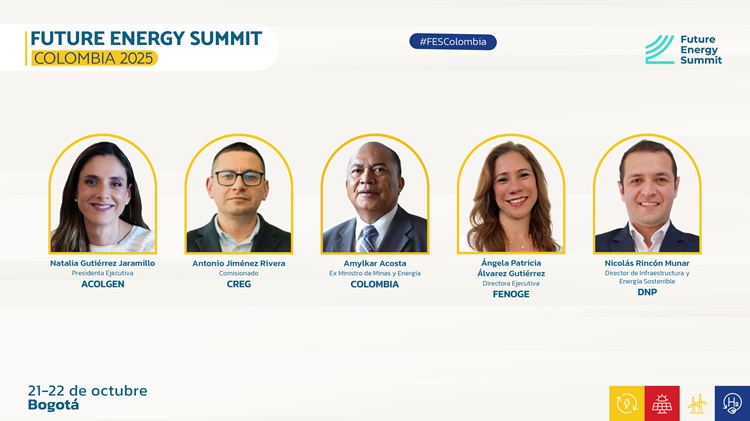
Representatives from CREG, ACOLGEN, FENOGE, the National Planning Department (DNP), and the Ministry of Mines and Energy will discuss the decisions that will mark the transition toward a more competitive, flexible, and sustainable electricity system at the most important renewable energy meeting in the sector.
With an associated investment of approximately 13.6 billion, it gives priority to covering the country’s industrial and development needs. The autonomous communities had the opportunity to assess the Proposal last September. Allegations can be submitted until December 16.
Nineteen PPAs totalling 653 MW were signed, driven by corporate agreements in Italy and Spain. While volumes increased compared to August, the solar share continues to decline and the market approaches year-end cautiously.
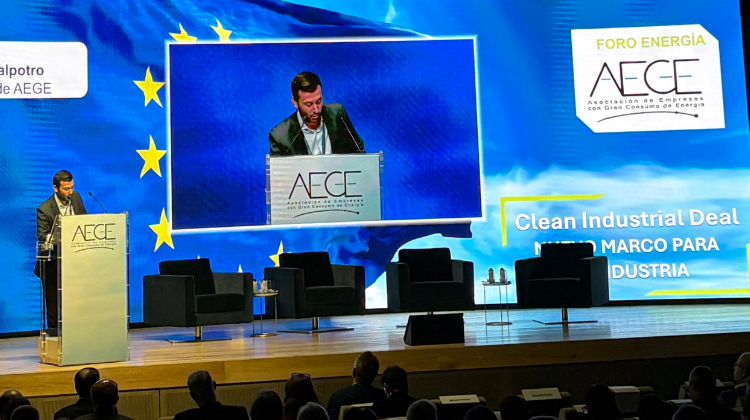
During the AEGE Energy Forum 2025, industry representatives proposed a new model of three-party contracts between the public sector, energy producers and electro‑intensive consumers — a formula aimed at reducing volatility and accelerating decarbonisation.
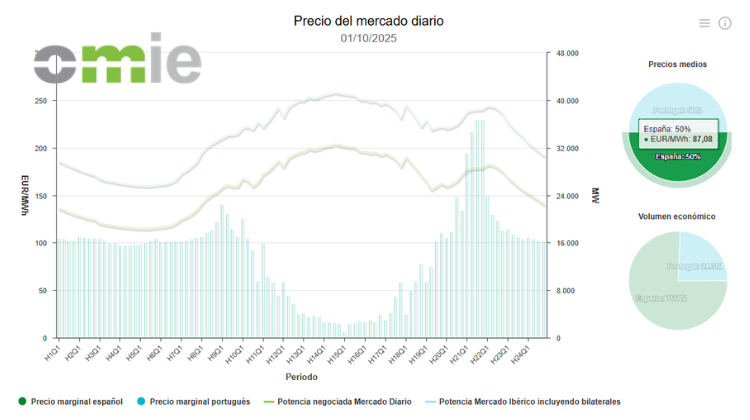
Photovoltaic production reached historic records for a single day in October in the main European markets, and wind energy also reached record levels in several of them. The increase in renewable generation, along with lower electricity demand in most markets and the drop in gas prices, were the main factors behind the price decline. For their part, CO2 futures reached their highest settlement price since mid-February, above €79/t, and Brent futures reached their lowest since the end of May.
Denmark, Germany and the Netherlands are scrapping negative bidding in offshore wind auctions and adopting Contracts for Difference (CfDs) after years of failed tenders and stalled investment. WindEurope hails the shift as key to cutting costs and accelerating offshore expansion.
Strategies must target persisting underrepresentation of women across the global renewable energy landscape.
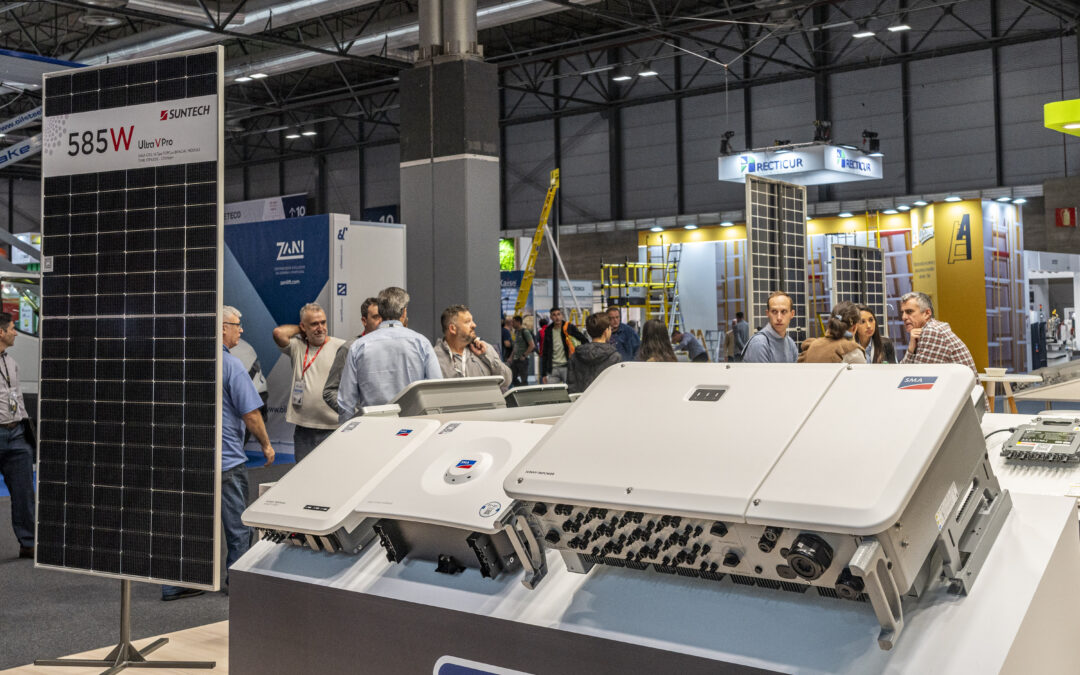
The International Electrification and Decarbonization Week will feature over 34,000 square meters of exhibition space where you can discover the latest developments in renewable energy, electrification, and technological solutions for the electrical industry. The International Electrification and Decarbonization Week, which includes the GENERA and MATELEC trade fairs, will be held from November 18 to 20, 2025, at IFEMA Madrid.
Wales’ natural deep-water ports, proximity to major leasing zones and strong supply chains position the nation as a key hub for offshore wind. The sector could create 29,000 jobs and £4.5 billion in economic value by 2030.
Over 80% acknowledge human impact on the climate crisis, yet most fell for false claims about the 28 April blackout. A study warns that digital manipulation is threatening public debate in Spain and the United Kingdom.
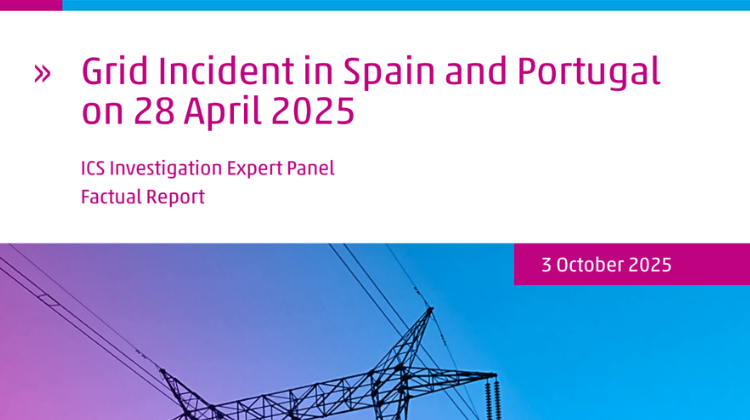
The report presents facts and data on the system conditions during the Iberian blackout on 28 April 2025, as well as a detailed sequence of events. The report did not analyse the root causes of the blackout.
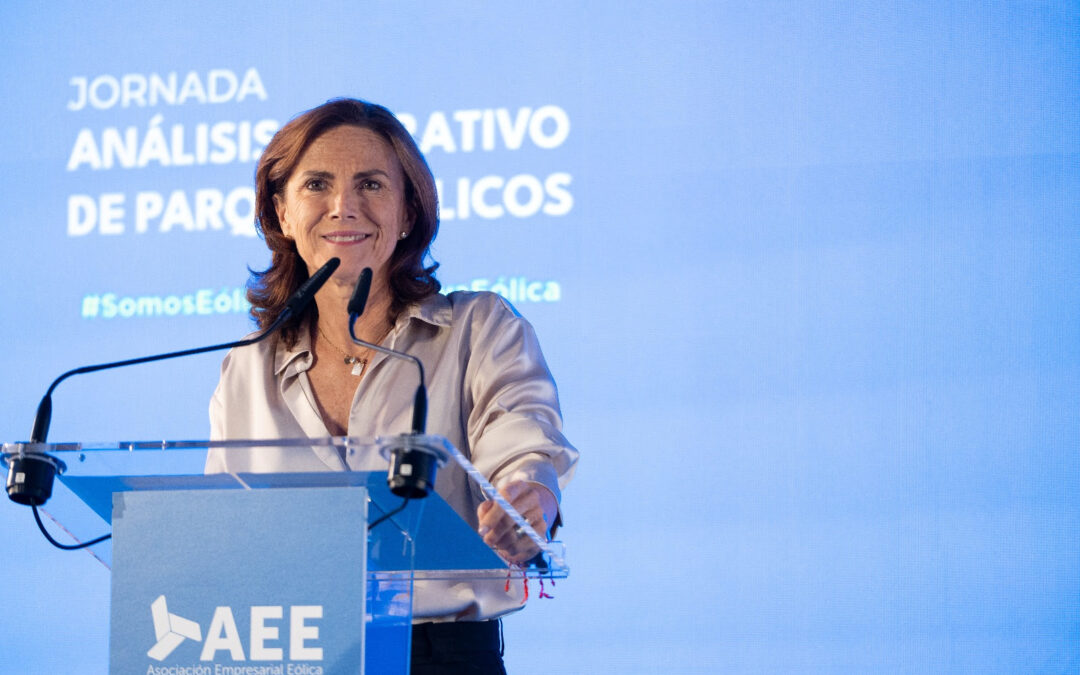
During the Wind Farm Operational Analysis session, Rocío Sicre, President of the Wind Energy Business Association, mentioned 10 points that should guide the roadmap for the coming years to promote the technology.
The AEGE Energy Barometer for September 2025 reveals that domestic electro-intensive consumers pay 2.5 times more than in France and 34% more than in Germany, widening the competitive gap in the industrial sector.
Industry representatives stress that the change sharpens price signals, reduces deviations, demands greater forecasting accuracy and, at the same time, opens up new opportunities for profitability, flexibility, storage and demand management.
Next week, business leaders, authorities, and international experts will gather to debate technology, regulation, financing, and innovation, with the participation of companies such as Sungrow, JA Solar, Trina Solar, Solis, DIPREM, Nordex, and more.
MITECO opens consultation to define how Spain will adapt its electricity market to the new European directive, aimed at protecting consumers, strengthening stability and increasing competition in the power system.
Electricity prices rose across Europe in mid-October as demand, gas and CO₂ costs increased, while lower solar and wind output in several markets further pushed rates above €75/MWh, with some exceeding €100/MWh.
The legal dispute shakes Spain’s electricity system, opening a new front between the main grid operator and one of the country’s largest utilities, in a conflict with major political, technical and reputational implications.
The country ranks as the second European destination for foreign investment in clean energy and the fourth most sustainable economy worldwide, while opening a new stage of cooperation with Asia focused on hydrogen, storage, digitalisation and industrial expansion.
During the 10th Energy Week, the head of the energy division at the World Economic Forum stressed that the region starts from an exceptional base in clean power generation, but must strengthen policy, finance, and human capital to scale up its global leadership.
The agency highlights the European Union as one of the most dynamic regions in the global expansion of renewable energy, with growth driven by new policies, capacity auctions and the rise of self-consumption solar.
Representatives from CREG, ACOLGEN, FENOGE, the National Planning Department (DNP), and the Ministry of Mines and Energy will discuss the decisions that will mark the transition toward a more competitive, flexible, and sustainable electricity system at the most important renewable energy meeting in the sector.
With an associated investment of approximately 13.6 billion, it gives priority to covering the country’s industrial and development needs. The autonomous communities had the opportunity to assess the Proposal last September. Allegations can be submitted until December 16.
Nineteen PPAs totalling 653 MW were signed, driven by corporate agreements in Italy and Spain. While volumes increased compared to August, the solar share continues to decline and the market approaches year-end cautiously.
During the AEGE Energy Forum 2025, industry representatives proposed a new model of three-party contracts between the public sector, energy producers and electro‑intensive consumers — a formula aimed at reducing volatility and accelerating decarbonisation.
Photovoltaic production reached historic records for a single day in October in the main European markets, and wind energy also reached record levels in several of them. The increase in renewable generation, along with lower electricity demand in most markets and the drop in gas prices, were the main factors behind the price decline. For their part, CO2 futures reached their highest settlement price since mid-February, above €79/t, and Brent futures reached their lowest since the end of May.
Denmark, Germany and the Netherlands are scrapping negative bidding in offshore wind auctions and adopting Contracts for Difference (CfDs) after years of failed tenders and stalled investment. WindEurope hails the shift as key to cutting costs and accelerating offshore expansion.
Strategies must target persisting underrepresentation of women across the global renewable energy landscape.
The International Electrification and Decarbonization Week will feature over 34,000 square meters of exhibition space where you can discover the latest developments in renewable energy, electrification, and technological solutions for the electrical industry. The International Electrification and Decarbonization Week, which includes the GENERA and MATELEC trade fairs, will be held from November 18 to 20, 2025, at IFEMA Madrid.
Wales’ natural deep-water ports, proximity to major leasing zones and strong supply chains position the nation as a key hub for offshore wind. The sector could create 29,000 jobs and £4.5 billion in economic value by 2030.
Over 80% acknowledge human impact on the climate crisis, yet most fell for false claims about the 28 April blackout. A study warns that digital manipulation is threatening public debate in Spain and the United Kingdom.
The report presents facts and data on the system conditions during the Iberian blackout on 28 April 2025, as well as a detailed sequence of events. The report did not analyse the root causes of the blackout.
During the Wind Farm Operational Analysis session, Rocío Sicre, President of the Wind Energy Business Association, mentioned 10 points that should guide the roadmap for the coming years to promote the technology.
The AEGE Energy Barometer for September 2025 reveals that domestic electro-intensive consumers pay 2.5 times more than in France and 34% more than in Germany, widening the competitive gap in the industrial sector.
Industry representatives stress that the change sharpens price signals, reduces deviations, demands greater forecasting accuracy and, at the same time, opens up new opportunities for profitability, flexibility, storage and demand management.

Select the sector you
want to know more about
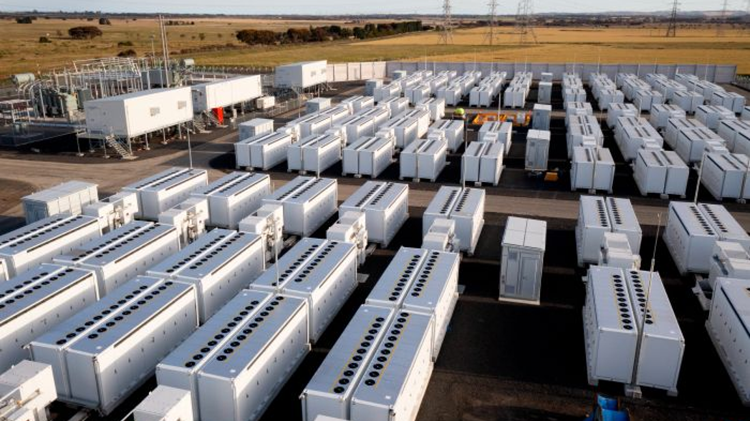
Six lithium-ion battery projects secure 14-year contracts, exceeding targets and accelerating New South Wales’ long-duration storage roadmap towards 2030 and 2034.
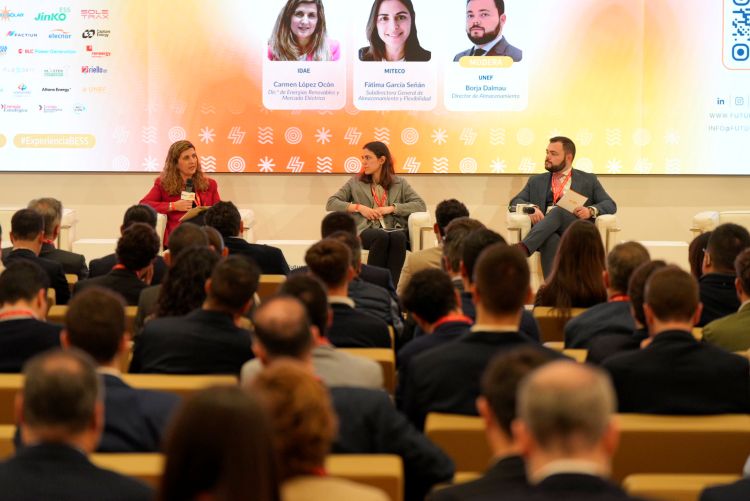
Authorities from Spain’s energy ministry and IDAE reveal unprecedented demand for renewable and storage funding, signalling that 2026 will mark a structural shift in the role of flexibility within the power system.
The auction to secure power supply for 2030–2033 attracts 51 companies and could mobilise more than USD 3.7 billion, marking a new phase of competition, renewable energy growth and long-term system planning.