The Spanish renewable energy group has also obtained nearly €8 million in public funding for additional battery storage projects, reinforcing the rollout of its Greenbox platform across Europe, which now totals 31 GWh in stand-alone storage.


The Spanish renewable energy group has also obtained nearly €8 million in public funding for additional battery storage projects, reinforcing the rollout of its Greenbox platform across Europe, which now totals 31 GWh in stand-alone storage.
More than 4 GW are at stake in new competitive procurement processes across the region, many of which already require battery energy storage systems (BESS). However, traditional power purchase agreements (PPAs) continue to fall short of recognising the full value of storage, undermining bankability and increasing pressure on regulatory frameworks.
The president of the World Energy Council Panama chapter stressed that well-planned auction schemes encourage new entrants into the energy sector and help deliver more competitive power prices.
The Central American country has unveiled long-term plans to double installed power capacity by mid-century, expand its transmission grid by more than 5,600 km and create clear rules for private investment in clean energy technologies.
José Venegas, Rodrigo Álvarez, Francisco López and José Luis Daza are among the key figures being considered to shape Chile’s future energy agenda. Public-sector experience, technical expertise and strong links to the private sector define the profiles under evaluation.
The new regulation requires battery projects to deliver fast frequency response, black start and ramp-rate control. The Superintendence of Electricity plans further measures in 2025–2026 to expand the regulatory framework.

Chile’s renewable energy and storage association forecasts nearly 10 GW of new capacity in the next two years, driven mainly by BESS, solar PV and wind power projects, reinforcing the country’s clean energy dominance.
The regulation sets strict technical requirements for renewable projects with battery storage connected to the national grid. While experts welcome the regulatory progress, they warn that the lack of clear economic signals could weigh on investment.
The consultancy argues that batteries enable active market strategies in Spain’s volatile power market, reducing exposure to solar cannibalisation and improving project bankability.
Although renewables already account for 65% of installed capacity in Latin America and the Caribbean, the lack of operational flexibility and energy storage could push the regional power system towards a critical bottleneck by 2026, according to Antonio S.R. Lopez, CEO of A&M TECHNOLOGY.
The government activates six support schemes totalling €1.3695bn to boost strategic projects in energy storage, efficiency, offshore wind, thermal networks and industrial transition. A line-by-line overview of all active calls, including budgets, deadlines, requirements and eligible applicants.
With 420 MWh systems in Chile and 63 MWh in Argentina, the Chinese company strengthens its regional expansion, targets key tenders such as AlmaGBA in Argentina and prepares for Brazil’s upcoming auctions with solutions of up to 6 MWh.
As he prepares to leave office, Honduras’ Energy Secretary highlights the financial recovery of the state utility, the deployment of Central America’s largest energy storage system and a 1.5 GW power tender that the next administration will need to carry forward. Nasry Asfura will take office as president on 26 January.
Madrid will host the first major energy event of 2026, with a strong focus on energy storage, regulatory frameworks and partnerships driving technological and financial innovation in the energy transition.
Honduras’ upcoming power auction will mark a turning point in national energy policy. The government is already working on new terms that will replace the BOT model, open the market and redesign the country’s contracting strategy.
Negative prices, a deeper duck curve and widening hourly spreads are creating a concrete investment window for energy storage in Spain, according to the country’s power market operator.
The company is accelerating its regional expansion with a strong focus on BESS solutions, technology integration and a local footprint across four countries. It is also rolling out new solar modules of up to 725 Wp and smart solutions for complex geographies.
In an electricity system with more than three times installed capacity than peak demand, the company is accelerating its deployment in Chile through eleven battery energy storage projects and a new technology that emulates the behaviour of synchronous machines.
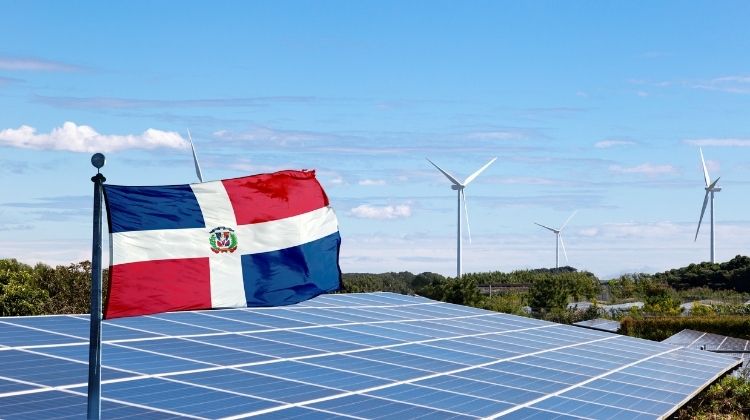
The Dominican government’s latest renewable energy tender has triggered an overwhelming market response, with 32 solar and wind projects—most of them including battery energy storage—competing for just 600 MW. The process, to be decided in May 2026, could be expanded in future rounds given the strong level of participation.
The country installed 8.85 GW of new renewable capacity last year—88% solar PV. As Spain looks to 2026, grid saturation and permitting bottlenecks are emerging as the main risks to sustaining growth.
Genneia strengthens its solar and wind portfolio beyond 1.54 GW in operation and targets more than 2 GW by 2026, supported by unprecedented financing conditions. The company is also adding battery storage, developing its own transmission assets and supplying power to data centres.
The Spanish renewable energy group has also obtained nearly €8 million in public funding for additional battery storage projects, reinforcing the rollout of its Greenbox platform across Europe, which now totals 31 GWh in stand-alone storage.
More than 4 GW are at stake in new competitive procurement processes across the region, many of which already require battery energy storage systems (BESS). However, traditional power purchase agreements (PPAs) continue to fall short of recognising the full value of storage, undermining bankability and increasing pressure on regulatory frameworks.
The president of the World Energy Council Panama chapter stressed that well-planned auction schemes encourage new entrants into the energy sector and help deliver more competitive power prices.
The Central American country has unveiled long-term plans to double installed power capacity by mid-century, expand its transmission grid by more than 5,600 km and create clear rules for private investment in clean energy technologies.
José Venegas, Rodrigo Álvarez, Francisco López and José Luis Daza are among the key figures being considered to shape Chile’s future energy agenda. Public-sector experience, technical expertise and strong links to the private sector define the profiles under evaluation.
The new regulation requires battery projects to deliver fast frequency response, black start and ramp-rate control. The Superintendence of Electricity plans further measures in 2025–2026 to expand the regulatory framework.

Chile’s renewable energy and storage association forecasts nearly 10 GW of new capacity in the next two years, driven mainly by BESS, solar PV and wind power projects, reinforcing the country’s clean energy dominance.
The regulation sets strict technical requirements for renewable projects with battery storage connected to the national grid. While experts welcome the regulatory progress, they warn that the lack of clear economic signals could weigh on investment.
The consultancy argues that batteries enable active market strategies in Spain’s volatile power market, reducing exposure to solar cannibalisation and improving project bankability.
Although renewables already account for 65% of installed capacity in Latin America and the Caribbean, the lack of operational flexibility and energy storage could push the regional power system towards a critical bottleneck by 2026, according to Antonio S.R. Lopez, CEO of A&M TECHNOLOGY.
The government activates six support schemes totalling €1.3695bn to boost strategic projects in energy storage, efficiency, offshore wind, thermal networks and industrial transition. A line-by-line overview of all active calls, including budgets, deadlines, requirements and eligible applicants.
With 420 MWh systems in Chile and 63 MWh in Argentina, the Chinese company strengthens its regional expansion, targets key tenders such as AlmaGBA in Argentina and prepares for Brazil’s upcoming auctions with solutions of up to 6 MWh.
As he prepares to leave office, Honduras’ Energy Secretary highlights the financial recovery of the state utility, the deployment of Central America’s largest energy storage system and a 1.5 GW power tender that the next administration will need to carry forward. Nasry Asfura will take office as president on 26 January.

Madrid will host the first major energy event of 2026, with a strong focus on energy storage, regulatory frameworks and partnerships driving technological and financial innovation in the energy transition.
Honduras’ upcoming power auction will mark a turning point in national energy policy. The government is already working on new terms that will replace the BOT model, open the market and redesign the country’s contracting strategy.
Negative prices, a deeper duck curve and widening hourly spreads are creating a concrete investment window for energy storage in Spain, according to the country’s power market operator.
The company is accelerating its regional expansion with a strong focus on BESS solutions, technology integration and a local footprint across four countries. It is also rolling out new solar modules of up to 725 Wp and smart solutions for complex geographies.
In an electricity system with more than three times installed capacity than peak demand, the company is accelerating its deployment in Chile through eleven battery energy storage projects and a new technology that emulates the behaviour of synchronous machines.
The Dominican government’s latest renewable energy tender has triggered an overwhelming market response, with 32 solar and wind projects—most of them including battery energy storage—competing for just 600 MW. The process, to be decided in May 2026, could be expanded in future rounds given the strong level of participation.
The country installed 8.85 GW of new renewable capacity last year—88% solar PV. As Spain looks to 2026, grid saturation and permitting bottlenecks are emerging as the main risks to sustaining growth.
Genneia strengthens its solar and wind portfolio beyond 1.54 GW in operation and targets more than 2 GW by 2026, supported by unprecedented financing conditions. The company is also adding battery storage, developing its own transmission assets and supplying power to data centres.

Select the sector you
want to know more about
ACESOL and the Energy Ministry agree to advance regulatory reform, distributed generation and solar technologies to strengthen Chile’s clean energy transition and reduce electricity costs.
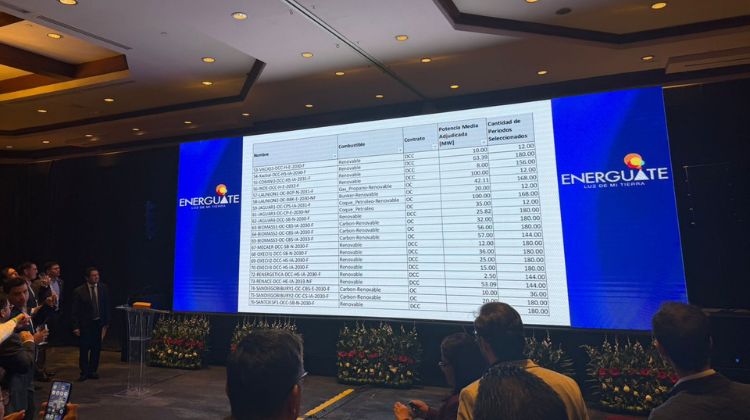
After 14 hours of bidding, preliminary results from the reverse auction suggest 48 winning offers—45 including renewable energy—exceeding 1.35 GW of capacity. Official results will be confirmed on 16 April.
Miguel Covarrubias, LATAM Sales Director at Jinko Solar, explains how dialogue among manufacturers helped drive the photovoltaic sector towards TOPCon architecture, module standardisation and higher power output.