
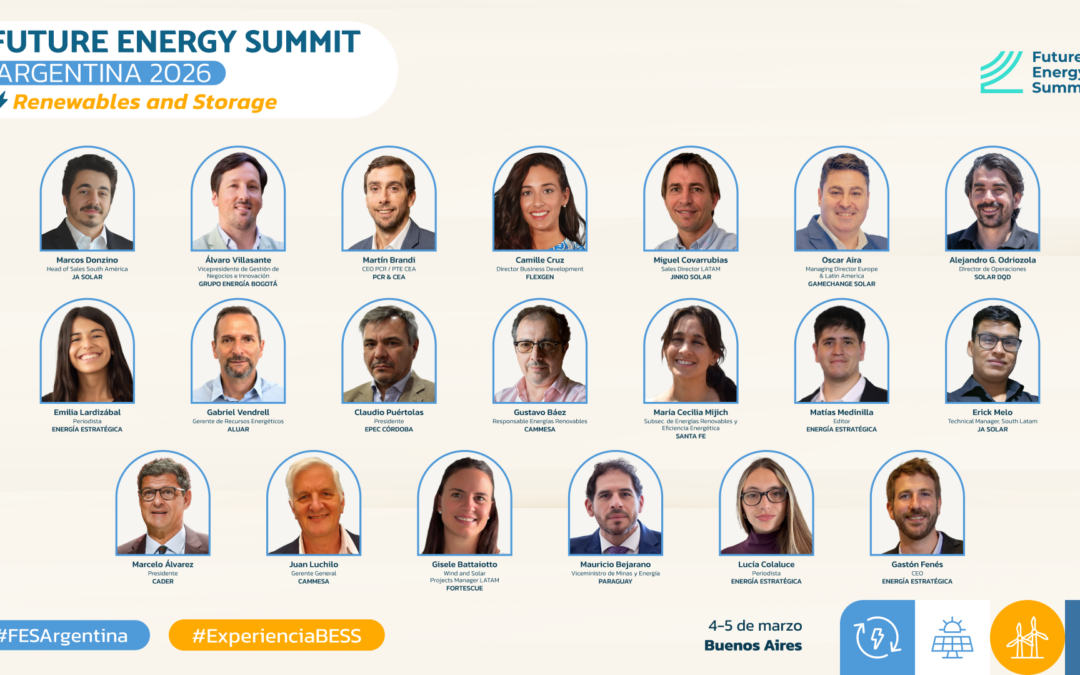
The event, taking place on 4–5 March in Buenos Aires, will bring together senior executives and energy authorities to analyse investments, technologies and market prospects amid a structural shift in Argentina’s power sector.


The event, taking place on 4–5 March in Buenos Aires, will bring together senior executives and energy authorities to analyse investments, technologies and market prospects amid a structural shift in Argentina’s power sector.
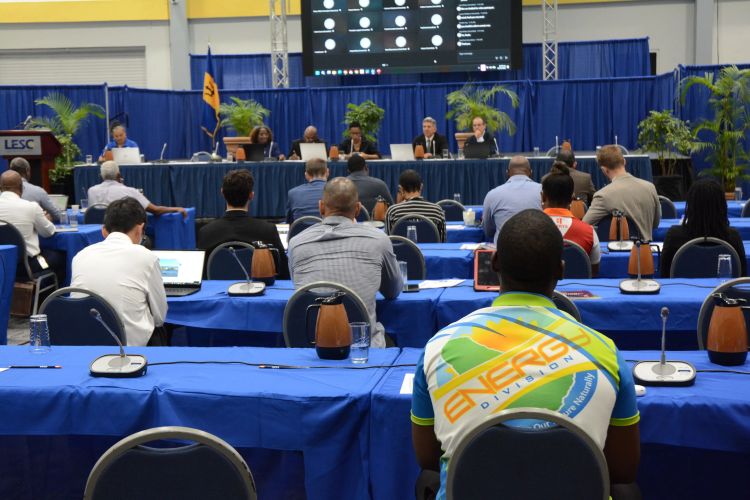
The competitive process will award 60 MW / 240 MWh of battery energy storage systems. It marks the first time Barbados has used price-based competition in its power sector, creating a potential blueprint for other Caribbean markets.
The Ministry of Mines and Energy has released a draft resolution to relaunch long-term renewable energy auctions. The redesigned mechanism aims to accelerate renewable deployment, stabilise project revenues and hedge demand exposure, as part of the government’s 6GW+ Plan and its broader energy transition strategy.
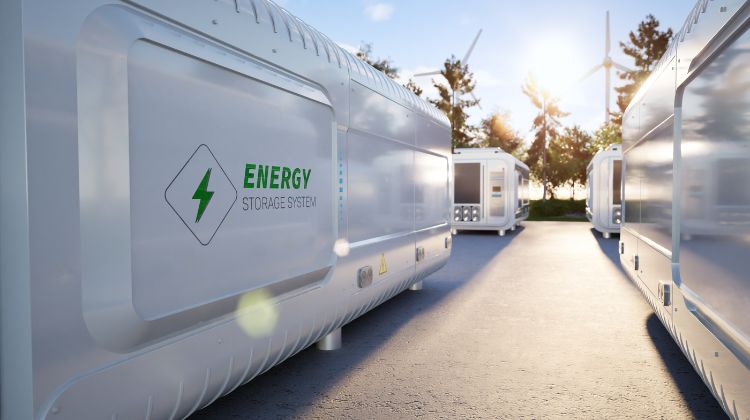
The legal transformation of ETED under Decree 55-26 grants operational autonomy and expanded powers to provide ancillary services, including energy storage. According to AABI Group, this allows the deployment of stand-alone battery energy storage systems (BESS) without further regulatory changes, in line with the methodology issued by the electricity regulator.
The engineer, former National Secretary of Energy of Panama and current global energy and climate adviser, looks back on her personal and professional journey, during which she led more than 15 public policy instruments, promoted distributed generation and left a deep mark on energy inclusion and democratisation.
SilverBlue acquires the financing platform Solage and unveils a major investment plan focused on renewable energy projects for commercial and industrial customers across Mexico.
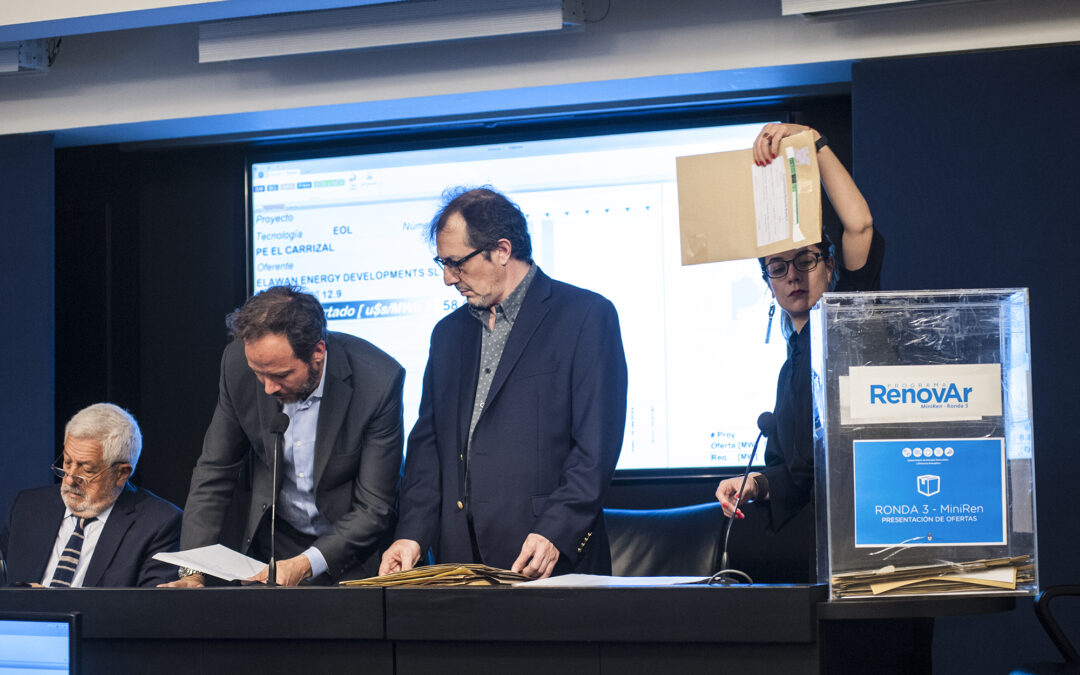
CAMMESA received eight applications in a new round of the Renewable Energy Term Market, although only 50 MW have full, unrestricted evacuation capacity. Five of the eight projects are solar and are competing for space in corridors with technical limitations.
Selected projects may gain access to funding through IRENA-backed platforms such as the Climate Investment Platform (CIP) and the Energy Transition Accelerator Financing (ETAF), with proposals submitted before 1 March 2026 receiving priority consideration.

Argentina’s main renewable energy association will formally incorporate energy storage into its name, reflecting the rapid growth of battery systems. Its president says the upcoming AlmaSADI tender will drive strong market momentum.
The new president signals continuity with evolution in energy policy, focusing on regulatory efficiency, public–private partnerships, emerging technologies and legal certainty.
The non-reimbursable funds will support the strengthening of state-owned utility CELEC EP, accelerate the expansion of the National Transmission System, and structure a pipeline of strategic power projects ready for future financing.
The technical–strategic document sets out the Chilean renewables association’s vision of energy storage as a key enabler of system stability, project bankability and long-term investment in a power system with high renewable penetration.
Engineer Eduardo Oviedo has taken over the Energy Ministry and the state utility ENEE amid an institutional reset. His technical profile aims to stabilise the power system and move forward with a flagship tender that has already attracted more than ten companies.
With more than 25 years of experience in the power sector, Pereira takes office at a critical juncture, with over 10 GW of renewable projects under development, USD 12 billion in investments awaiting regulation, and presidential elections scheduled for 2026.
After adding more than 7.8 GW of solar capacity in 2025, Spain’s photovoltaic ecosystem faces regulatory bottlenecks and technical constraints that could slow its momentum. Industry players are calling for legal certainty to sustain growth and attract investment.
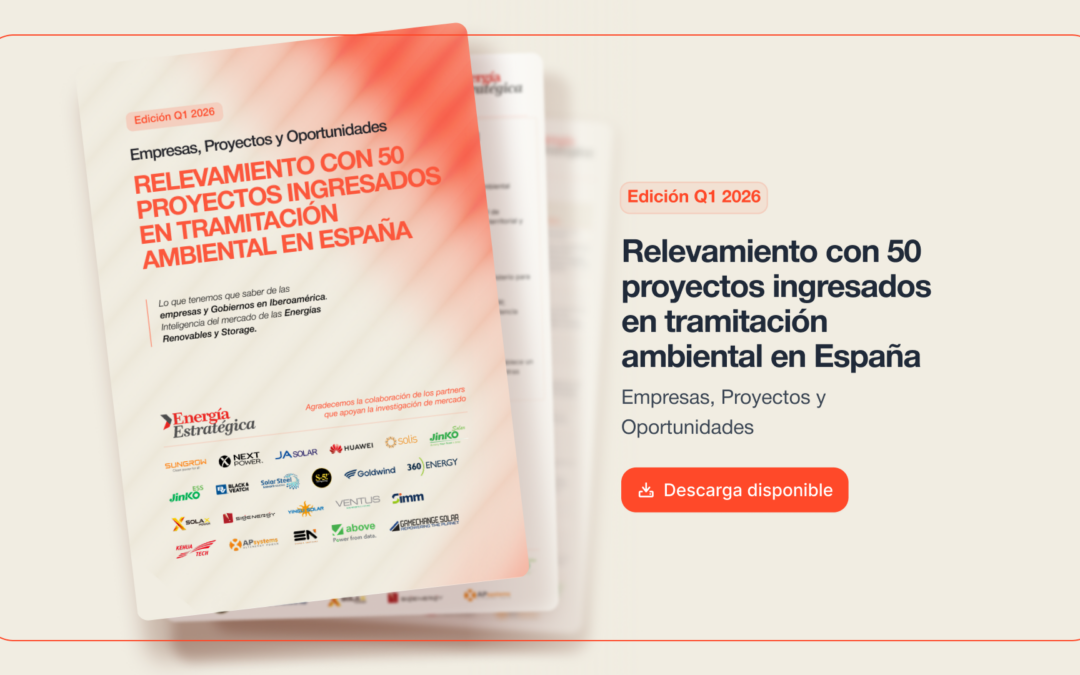
An Energía Estratégica report identifies more than 3 GW of solar, wind and battery storage projects in Spain, highlighting investment opportunities amid regulatory and grid constraints.
In 2025, nearly 189 GWh of renewable electricity were not injected into the Dominican power system, causing economic losses of more than USD 30 million. Technical analyses point to battery energy storage systems (BESS) as a key solution to manage solar oversupply and unlock further renewable integration.
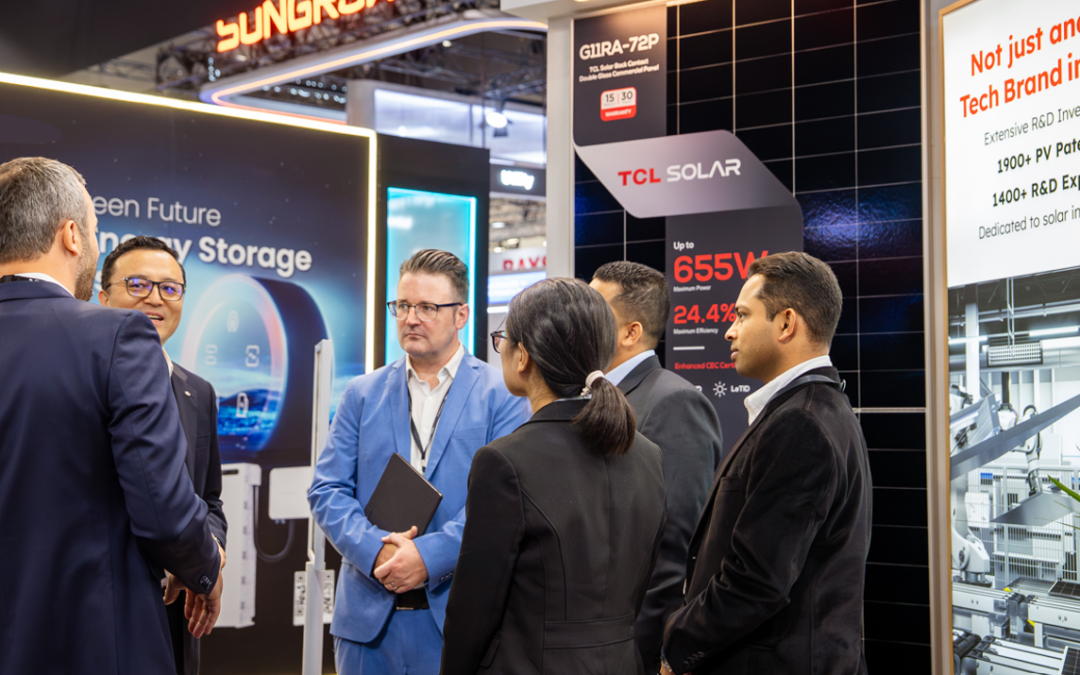
The company outlines a flexible expansion strategy to strengthen its presence in strategic Latin American markets, supported by high-efficiency solar PV solutions, local technical support and a long-term vision. By 2026, TCL Solar aims to establish itself as a relevant player within the region’s solar ecosystem.
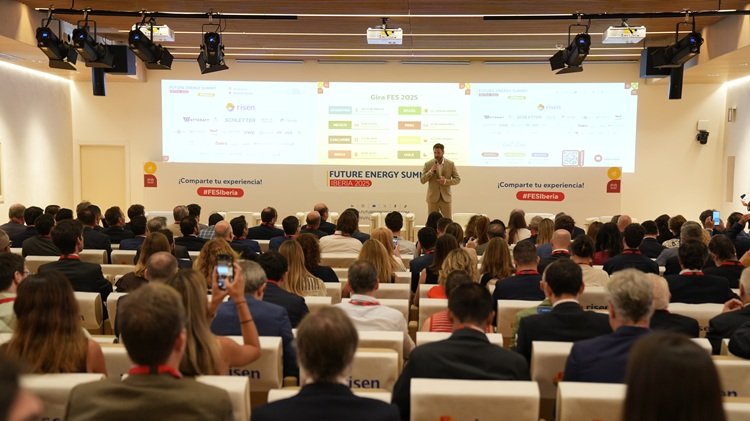
Future Energy Summit’s first major event of the year will bring leading companies, international experts and public authorities to Madrid to assess technological progress, regulatory frameworks and business opportunities in the Iberian renewable energy market.
Between regulated public schemes and private power purchase agreements, prices show a wide range. Recent awards stand at USD 60–70/MWh, but new rules and operational constraints will shape the pace of development and point to a market facing growing competition from other generation sources.
Panama adjusts long-term contracts to attract renewables, Costa Rica redefines its regulation in an election year, and the Dominican Republic sets the regional pace with competitive auctions and new battery rules. In all cases, capital demands one thing: certainty.
The event, taking place on 4–5 March in Buenos Aires, will bring together senior executives and energy authorities to analyse investments, technologies and market prospects amid a structural shift in Argentina’s power sector.
The competitive process will award 60 MW / 240 MWh of battery energy storage systems. It marks the first time Barbados has used price-based competition in its power sector, creating a potential blueprint for other Caribbean markets.
The Ministry of Mines and Energy has released a draft resolution to relaunch long-term renewable energy auctions. The redesigned mechanism aims to accelerate renewable deployment, stabilise project revenues and hedge demand exposure, as part of the government’s 6GW+ Plan and its broader energy transition strategy.
The legal transformation of ETED under Decree 55-26 grants operational autonomy and expanded powers to provide ancillary services, including energy storage. According to AABI Group, this allows the deployment of stand-alone battery energy storage systems (BESS) without further regulatory changes, in line with the methodology issued by the electricity regulator.
The engineer, former National Secretary of Energy of Panama and current global energy and climate adviser, looks back on her personal and professional journey, during which she led more than 15 public policy instruments, promoted distributed generation and left a deep mark on energy inclusion and democratisation.
SilverBlue acquires the financing platform Solage and unveils a major investment plan focused on renewable energy projects for commercial and industrial customers across Mexico.
CAMMESA received eight applications in a new round of the Renewable Energy Term Market, although only 50 MW have full, unrestricted evacuation capacity. Five of the eight projects are solar and are competing for space in corridors with technical limitations.
Selected projects may gain access to funding through IRENA-backed platforms such as the Climate Investment Platform (CIP) and the Energy Transition Accelerator Financing (ETAF), with proposals submitted before 1 March 2026 receiving priority consideration.

Argentina’s main renewable energy association will formally incorporate energy storage into its name, reflecting the rapid growth of battery systems. Its president says the upcoming AlmaSADI tender will drive strong market momentum.
The new president signals continuity with evolution in energy policy, focusing on regulatory efficiency, public–private partnerships, emerging technologies and legal certainty.
The non-reimbursable funds will support the strengthening of state-owned utility CELEC EP, accelerate the expansion of the National Transmission System, and structure a pipeline of strategic power projects ready for future financing.
The technical–strategic document sets out the Chilean renewables association’s vision of energy storage as a key enabler of system stability, project bankability and long-term investment in a power system with high renewable penetration.
Engineer Eduardo Oviedo has taken over the Energy Ministry and the state utility ENEE amid an institutional reset. His technical profile aims to stabilise the power system and move forward with a flagship tender that has already attracted more than ten companies.
With more than 25 years of experience in the power sector, Pereira takes office at a critical juncture, with over 10 GW of renewable projects under development, USD 12 billion in investments awaiting regulation, and presidential elections scheduled for 2026.
After adding more than 7.8 GW of solar capacity in 2025, Spain’s photovoltaic ecosystem faces regulatory bottlenecks and technical constraints that could slow its momentum. Industry players are calling for legal certainty to sustain growth and attract investment.
An Energía Estratégica report identifies more than 3 GW of solar, wind and battery storage projects in Spain, highlighting investment opportunities amid regulatory and grid constraints.
In 2025, nearly 189 GWh of renewable electricity were not injected into the Dominican power system, causing economic losses of more than USD 30 million. Technical analyses point to battery energy storage systems (BESS) as a key solution to manage solar oversupply and unlock further renewable integration.
The company outlines a flexible expansion strategy to strengthen its presence in strategic Latin American markets, supported by high-efficiency solar PV solutions, local technical support and a long-term vision. By 2026, TCL Solar aims to establish itself as a relevant player within the region’s solar ecosystem.
Future Energy Summit’s first major event of the year will bring leading companies, international experts and public authorities to Madrid to assess technological progress, regulatory frameworks and business opportunities in the Iberian renewable energy market.
Between regulated public schemes and private power purchase agreements, prices show a wide range. Recent awards stand at USD 60–70/MWh, but new rules and operational constraints will shape the pace of development and point to a market facing growing competition from other generation sources.
Panama adjusts long-term contracts to attract renewables, Costa Rica redefines its regulation in an election year, and the Dominican Republic sets the regional pace with competitive auctions and new battery rules. In all cases, capital demands one thing: certainty.

Select the sector you
want to know more about
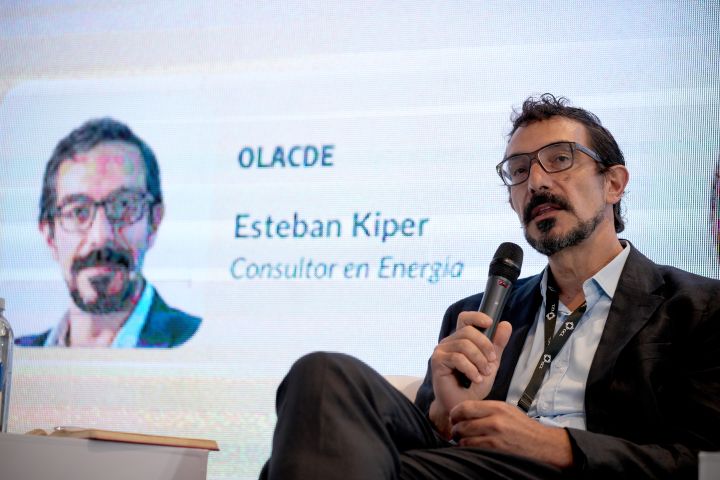
Esteban Kieper, consultant at the Latin American Energy Organization (OLADE), analysed Argentina’s energy transition. The country has reached nearly 19% renewable generation and is entering a phase where renewables begin to compete with natural gas, alongside new storage tenders and transmission projects.
As the country’s solar PV sector expands, storage begins to gain traction, with global manufacturer JA Solar targeting utility-scale and C&I opportunities after reaching 14% global market share and nearly 300 GW in shipments.
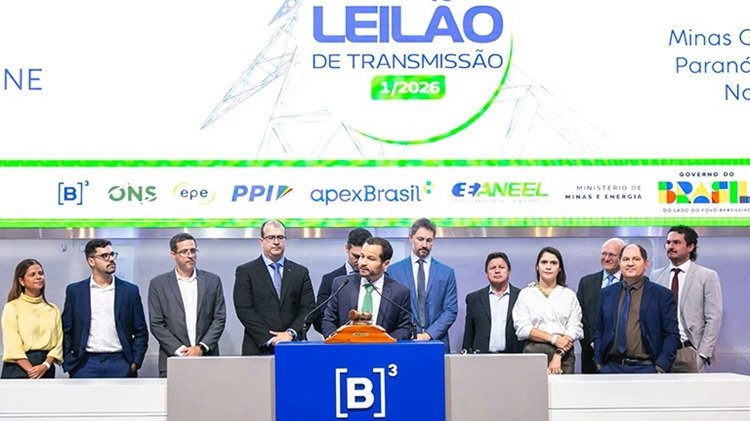
CYMI Brasil, ENGIE and Enind Engenharia secured five lots covering nearly 800 km of new transmission lines. The auction mobilised R$3.3 billion in investment, with a 50.69% tariff discount expected to save consumers R$7.6 billion.