
Renewables accounted for 53.3% of the electricity mix with 11,555 GWh generated. Solar PV led production with a 23.2% share, followed by wind and hydro, amid rising demand and ongoing network access challenges.
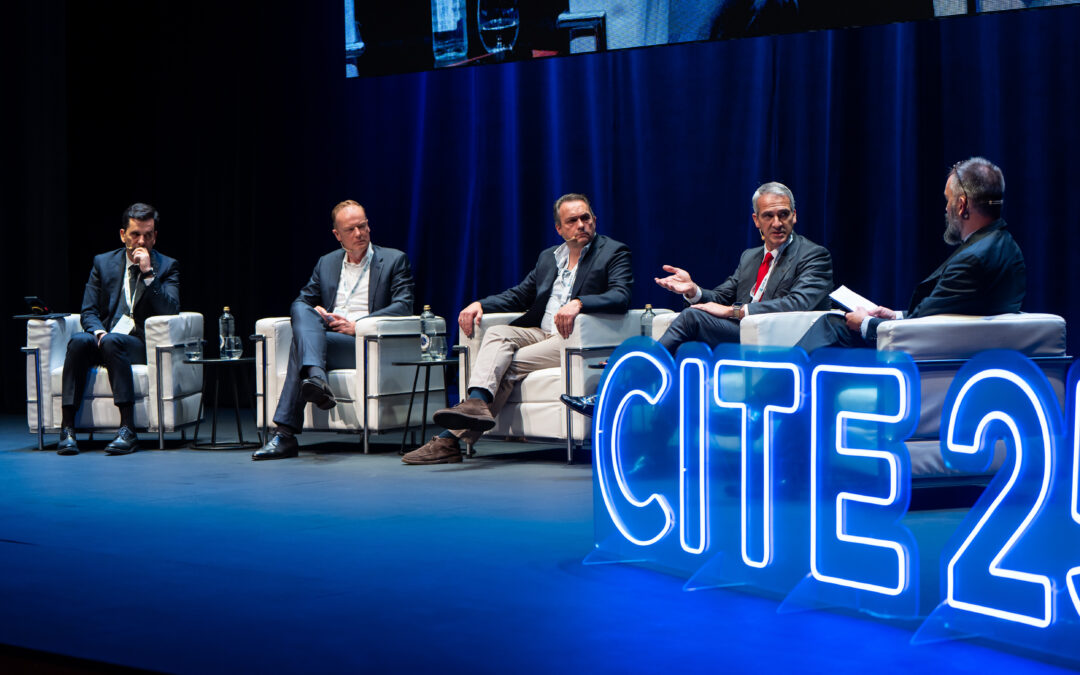
The speakers at the 4th International Congress on Industry for the Energy Transition, organized by Enercluster in collaboration with the Government of Navarre, called for political unity to boost the European value chain as a whole, as well as investment in local networks and infrastructure. At the event, held this Thursday in Baluarte and attended by more than 400 professionals linked to the renewable energy industry, it was also pointed out that driving reindustrialization requires measures beyond subsidies and that the benefits of decarbonization must be better disseminated and communicated to the public.
The CEO of the AEE, Juan Virgilio Márquez, admits the market’s disappointment with the lack of progress and warns that China is gaining ground. He proposes launching floating wind power with a pilot market in the Canary Islands to reactivate the national industry and take advantage of potential savings of more than €120 million annually.
The electricity-intensive industry is calling for price stabilization to avoid the volatility that affects its bills and is proposing to transfer a significant portion of energy prices and technical restrictions to electricity tolls.
The CNMC has approved exceptional measures to mitigate voltage fluctuations in the electricity network. Wind power resists the adjustment, while solar PV bears the brunt. The AEE warns of curtailments and additional costs in a scheme with no defined horizon.
Both organizations warn that the lack of progress in the development of offshore wind power is causing harm to the industrial fabric and a loss of competitiveness, in addition to helping perpetuate the excessive cost of electricity generation in areas such as the Canary Islands.
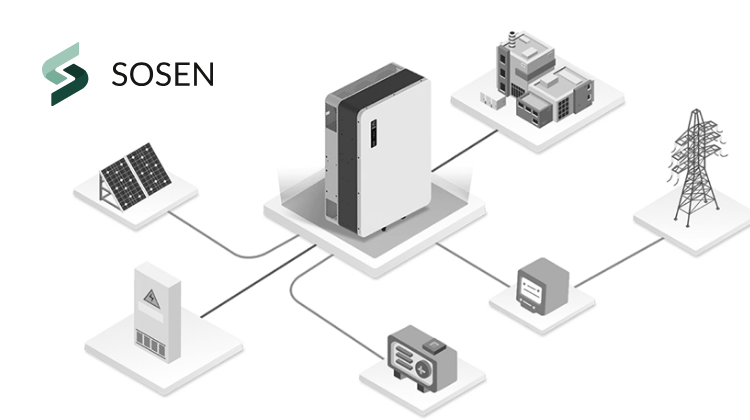
Sosen introduces its SSE-HH40-60K-P3EU model — a high-voltage system featuring simultaneous charging and ultra-fast response, designed to deliver efficiency, backup and autonomy amid potential blackouts and regulatory changes.
Around 85% of Spain’s electrical nodes can no longer admit new demand. While the photovoltaic market faces negative prices and excess capacity, developers are redirecting their projects towards data centres and energy storage.
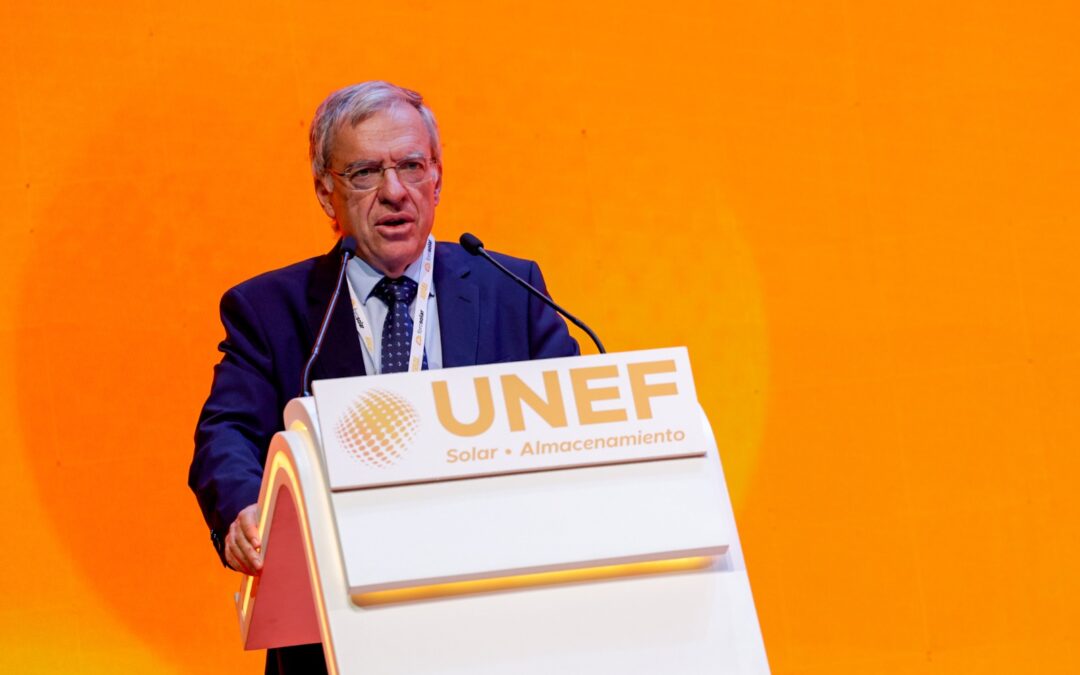
At the sector’s annual congress, the 12th Solar Forum, UNEF Director General José Donoso highlighted the significant reindustrialization opportunity that photovoltaic energy represents for the country, stating that “there is 70 GW of demand, attracted by the low energy prices offered by photovoltaics in Spain.” Redeia President Beatriz Corredor emphasized that “we are working as quickly as possible to implement the new OP 7.4, for which we began permitting last week.”
The Spanish electricity sector warns that the CNMC’s new regulatory proposal, despite certain improvements, continues to hinder the investments needed to electrify demand and meet decarbonization goals. Aelēc denounces inconsistencies between the CNMC and the Ministry for Ecological Transition, inadequate financial limits, and a cut in OPEX that jeopardizes the quality of supply and the viability of the model.
The reform of Royal Decree 413/2014 provides relief for special-regime plants, removes barriers to battery integration, and redefines dispatch priority — generating positive expectations within the sector, albeit with nuances regarding its industrial impact.
The Minister of Industry and Tourism, Jordi Hereu, will participate in the institutional opening of this biennial event, organized by Enercluster with the special collaboration of the Government of Navarre. For this edition, a program has been prepared with national and international experts in wind, solar, storage, and green hydrogen, who will convene on October 23 at the Baluarte Conference Center in Pamplona.
The Minister of Industry, Energy, and Mines, Jorge Paradela, points out that this is an “essential” investment and that the Regional Government will not accept this “injustice.”
“The commitment to renewables is a commitment to industry,” emphasized Joan Groizard, Secretary of State for Energy, at the opening of the meeting. The panel discussion of energy company CEOs highlighted photovoltaics as a vehicle for geopolitical security in Spain and Europe.
Estimated electrolysis capacity by 2030 stands at 13.3 GW, a figure aligned with the PNIEC target (12 GW) and with the 2026–2030 Electricity Planning Proposal (13.1 GW reserved for renewable hydrogen).
MITECO opens consultation to define how Spain will adapt its electricity market to the new European directive, aimed at protecting consumers, strengthening stability and increasing competition in the power system.
The legal dispute shakes Spain’s electricity system, opening a new front between the main grid operator and one of the country’s largest utilities, in a conflict with major political, technical and reputational implications.
The country ranks as the second European destination for foreign investment in clean energy and the fourth most sustainable economy worldwide, while opening a new stage of cooperation with Asia focused on hydrogen, storage, digitalisation and industrial expansion.
With an associated investment of approximately 13.6 billion, it gives priority to covering the country’s industrial and development needs. The autonomous communities had the opportunity to assess the Proposal last September. Allegations can be submitted until December 16.
A new report reveals that accelerating the opening of balancing service markets and removing barriers that prevent consumer and aggregator participation will strengthen the stability of Spain’s electricity system in a context of high renewable penetration.
The new Royal Decree will remain open for public consultation until 24 October, although the sector does not foresee significant changes being demanded. Which areas hold the greatest potential under the new provisions?
Renewables accounted for 53.3% of the electricity mix with 11,555 GWh generated. Solar PV led production with a 23.2% share, followed by wind and hydro, amid rising demand and ongoing network access challenges.
The speakers at the 4th International Congress on Industry for the Energy Transition, organized by Enercluster in collaboration with the Government of Navarre, called for political unity to boost the European value chain as a whole, as well as investment in local networks and infrastructure. At the event, held this Thursday in Baluarte and attended by more than 400 professionals linked to the renewable energy industry, it was also pointed out that driving reindustrialization requires measures beyond subsidies and that the benefits of decarbonization must be better disseminated and communicated to the public.
The CEO of the AEE, Juan Virgilio Márquez, admits the market’s disappointment with the lack of progress and warns that China is gaining ground. He proposes launching floating wind power with a pilot market in the Canary Islands to reactivate the national industry and take advantage of potential savings of more than €120 million annually.
The electricity-intensive industry is calling for price stabilization to avoid the volatility that affects its bills and is proposing to transfer a significant portion of energy prices and technical restrictions to electricity tolls.
The CNMC has approved exceptional measures to mitigate voltage fluctuations in the electricity network. Wind power resists the adjustment, while solar PV bears the brunt. The AEE warns of curtailments and additional costs in a scheme with no defined horizon.
Both organizations warn that the lack of progress in the development of offshore wind power is causing harm to the industrial fabric and a loss of competitiveness, in addition to helping perpetuate the excessive cost of electricity generation in areas such as the Canary Islands.
Sosen introduces its SSE-HH40-60K-P3EU model — a high-voltage system featuring simultaneous charging and ultra-fast response, designed to deliver efficiency, backup and autonomy amid potential blackouts and regulatory changes.
Around 85% of Spain’s electrical nodes can no longer admit new demand. While the photovoltaic market faces negative prices and excess capacity, developers are redirecting their projects towards data centres and energy storage.
At the sector’s annual congress, the 12th Solar Forum, UNEF Director General José Donoso highlighted the significant reindustrialization opportunity that photovoltaic energy represents for the country, stating that “there is 70 GW of demand, attracted by the low energy prices offered by photovoltaics in Spain.” Redeia President Beatriz Corredor emphasized that “we are working as quickly as possible to implement the new OP 7.4, for which we began permitting last week.”
The Spanish electricity sector warns that the CNMC’s new regulatory proposal, despite certain improvements, continues to hinder the investments needed to electrify demand and meet decarbonization goals. Aelēc denounces inconsistencies between the CNMC and the Ministry for Ecological Transition, inadequate financial limits, and a cut in OPEX that jeopardizes the quality of supply and the viability of the model.
The reform of Royal Decree 413/2014 provides relief for special-regime plants, removes barriers to battery integration, and redefines dispatch priority — generating positive expectations within the sector, albeit with nuances regarding its industrial impact.
The Minister of Industry and Tourism, Jordi Hereu, will participate in the institutional opening of this biennial event, organized by Enercluster with the special collaboration of the Government of Navarre. For this edition, a program has been prepared with national and international experts in wind, solar, storage, and green hydrogen, who will convene on October 23 at the Baluarte Conference Center in Pamplona.
The Minister of Industry, Energy, and Mines, Jorge Paradela, points out that this is an “essential” investment and that the Regional Government will not accept this “injustice.”
“The commitment to renewables is a commitment to industry,” emphasized Joan Groizard, Secretary of State for Energy, at the opening of the meeting. The panel discussion of energy company CEOs highlighted photovoltaics as a vehicle for geopolitical security in Spain and Europe.
Estimated electrolysis capacity by 2030 stands at 13.3 GW, a figure aligned with the PNIEC target (12 GW) and with the 2026–2030 Electricity Planning Proposal (13.1 GW reserved for renewable hydrogen).
MITECO opens consultation to define how Spain will adapt its electricity market to the new European directive, aimed at protecting consumers, strengthening stability and increasing competition in the power system.
The legal dispute shakes Spain’s electricity system, opening a new front between the main grid operator and one of the country’s largest utilities, in a conflict with major political, technical and reputational implications.
The country ranks as the second European destination for foreign investment in clean energy and the fourth most sustainable economy worldwide, while opening a new stage of cooperation with Asia focused on hydrogen, storage, digitalisation and industrial expansion.
With an associated investment of approximately 13.6 billion, it gives priority to covering the country’s industrial and development needs. The autonomous communities had the opportunity to assess the Proposal last September. Allegations can be submitted until December 16.
A new report reveals that accelerating the opening of balancing service markets and removing barriers that prevent consumer and aggregator participation will strengthen the stability of Spain’s electricity system in a context of high renewable penetration.
The new Royal Decree will remain open for public consultation until 24 October, although the sector does not foresee significant changes being demanded. Which areas hold the greatest potential under the new provisions?
The transaction includes more than 1,200 MW of renewable energy assets and represents one of the most significant recent deals in Latin America’s power sector.
Energía Estratégica’s digital catalogue launches its second edition with confirmed manufacturers and developers, expanding its technical platform featuring solar modules, inverters, battery storage systems and trackers.
Following the first tender that awarded 928 MW to industrial and green hydrogen projects, the sector is assessing the outcomes and looking ahead. Jorge González Onieva Johansson, from OSPREL, warns that access to grid capacity is becoming a strategic resource as Spain’s transmission system operator identifies 75 grid nodes that could be included in future tenders, with the next call potentially arriving between the first and second quarter of the year.