
There are already 679 energy communities in Spain, and Toledo is home to one of the most notable examples: the “Casco Histórico Ciudad de Toledo” Energy Community.


There are already 679 energy communities in Spain, and Toledo is home to one of the most notable examples: the “Casco Histórico Ciudad de Toledo” Energy Community.
The autonomous communities will be responsible for managing the funds, the distribution of which will be approved by the Energy Sector Conference.
While the Portuguese government consolidates its progress in renewables with strong public investment and institutional coordination, Spain continues to search for pathways to implement definitive solutions.
With 2.7 GW installed in a single year, Andalusia has raised its ambitions by setting new 2030 targets, advancing in green hydrogen, biogas and storage, and calling for greater regulatory autonomy to secure its strategic role in the energy transition.
At FES Iberia 2025, Gonzalo Barba, Managing Director of TotalEnergies, emphasized the need to adapt Power Purchase Agreements (PPAs) to the new energy market landscape. He also called for increasing electrification, attracting industrial investment, and streamlining regulation to maintain Spain’s renewable leadership.
At FES Iberia 2025, Óscar Martín Pacios, CFO of Ingenostrum, highlighted the key role of data centres in balancing the power grid in an energy-surplus Spain, calling for regulatory updates to meet the new demands of a transforming electricity market.
In July, 43 projects totalling 1,991.35 MW were approved, while 24 projects amounting to 1,336.11 MW were rejected. The leading companies were GECAMA (325 MW), Enel Green Power (315.33 MW), Statkraft (153.78 MW), and Naturgy (198 MW).
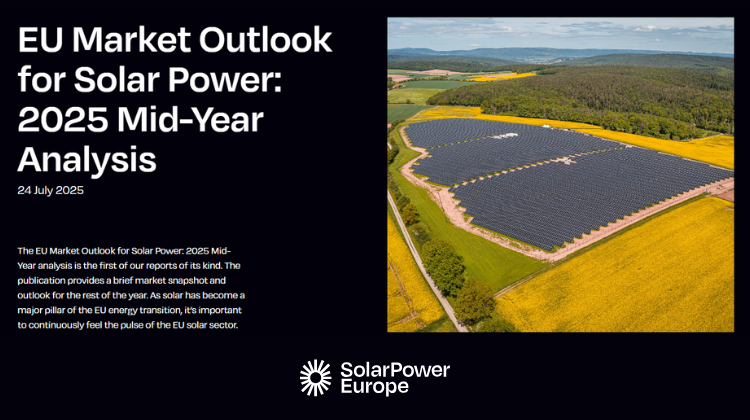
New mid-year market analysis for EU solar forecasts -1.4% annual growth for 2025. This would mark the first year of negative market growth since 2015, putting the continent’s 2030 targets at risk. Despite forecasted negative growth, years of solar boom mean that the EU will meet the RePower EU 2025 solar target of 400 GW* – by the end of the year the bloc should host 402 GW.

The regulatory framework and call for proposals for a new aid program for industrial value chain projects linked to the energy transition are being made public.
La compañía desarrolla proyectos de autoconsumo, almacenamiento con baterías y carports solares en España, Italia, Brasil y México, con el foco puesto en soluciones energéticas integrales para un mercado cada vez más competitivo.
In an exclusive interview with Strategic Energy during FES Iberia 2025, José Irastorza outlines Risen Energy’s technology roadmap, including high-efficiency HJT modules, plug-and-play stackable batteries, and cycle-based warranties tailored for industrial clients.
The company is developing self-consumption projects, battery storage systems and solar carports in Spain, Italy, Brazil and Mexico, focusing on comprehensive energy solutions for an increasingly competitive market.
Chema Zabala, Managing Director of Alantra Energy Transition and moderator of Panel 5 at FES Iberia 2025, stated that energy storage is already a mature technology, but delays persist due to a lack of clear regulatory signals. He highlighted the high structural costs of the system and called for a stable legal framework to support market growth.
“We cannot afford, as a country, for such a necessary and widely agreed-upon regulation to be halted due to interests unrelated to its content,” the association states.
In an exclusive interview, Alejandro Ramos, Sales Director Spain & Latam at Schletter, highlights the company’s strategy to consolidate its leadership in the UK, France, the Netherlands, and Germany, while replicating that model in Iberia through partnerships with European investors. At the same time, the company is expanding in Latin America with turnkey solutions and structures tailored to each country’s conditions.
The saturation and rigidity of the electricity grid are hindering urban development. Measures are proposed to streamline access to the grid and promote cleaner, more liveable cities.
During FES Iberia 2025, Agustín de la Fuente Palomino, Director of Renewable Energy Business Development at Grupo Elecnor, stressed the need to accelerate project development through more agile processes, clear rules, and balanced cooperation between companies and institutions.
The decision by Spain’s Congress of Deputies has sparked a wave of criticism from all corners. Key measures for storage, self-consumption, and demand electrification are lost, while investments worth billions of euros are now stalled.
New IRENA report confirms cost-competitiveness of renewables; warns of mounting grid integration and financing challenges notably in emerging and capital-constrained markets
Current administrative milestones remain in place, creating a bottleneck in the integration of renewables into the grid. Without a demand boost, the risk of imbalances and zero and negative price hours in the system will increase. An opportunity to promote collective self-consumption and system flexibility is being missed. Investments in storage, self-consumption and electrical grids remain in limbo. APPA Renovables warns of the collapse that will result from the inadequacy of the milestones, as well as the impact of not boosting storage and demand.
Royal Decree 7/2025 was essential to boost storage deployment and strengthen shared self-consumption. The rejection of the reform has no technical or ideological basis, but rather responds more to political tactics and the constant need to win the narrative.

There are already 679 energy communities in Spain, and Toledo is home to one of the most notable examples: the “Casco Histórico Ciudad de Toledo” Energy Community.
The autonomous communities will be responsible for managing the funds, the distribution of which will be approved by the Energy Sector Conference.
While the Portuguese government consolidates its progress in renewables with strong public investment and institutional coordination, Spain continues to search for pathways to implement definitive solutions.
With 2.7 GW installed in a single year, Andalusia has raised its ambitions by setting new 2030 targets, advancing in green hydrogen, biogas and storage, and calling for greater regulatory autonomy to secure its strategic role in the energy transition.
At FES Iberia 2025, Gonzalo Barba, Managing Director of TotalEnergies, emphasized the need to adapt Power Purchase Agreements (PPAs) to the new energy market landscape. He also called for increasing electrification, attracting industrial investment, and streamlining regulation to maintain Spain’s renewable leadership.
At FES Iberia 2025, Óscar Martín Pacios, CFO of Ingenostrum, highlighted the key role of data centres in balancing the power grid in an energy-surplus Spain, calling for regulatory updates to meet the new demands of a transforming electricity market.
In July, 43 projects totalling 1,991.35 MW were approved, while 24 projects amounting to 1,336.11 MW were rejected. The leading companies were GECAMA (325 MW), Enel Green Power (315.33 MW), Statkraft (153.78 MW), and Naturgy (198 MW).
New mid-year market analysis for EU solar forecasts -1.4% annual growth for 2025. This would mark the first year of negative market growth since 2015, putting the continent’s 2030 targets at risk. Despite forecasted negative growth, years of solar boom mean that the EU will meet the RePower EU 2025 solar target of 400 GW* – by the end of the year the bloc should host 402 GW.

The regulatory framework and call for proposals for a new aid program for industrial value chain projects linked to the energy transition are being made public.
La compañía desarrolla proyectos de autoconsumo, almacenamiento con baterías y carports solares en España, Italia, Brasil y México, con el foco puesto en soluciones energéticas integrales para un mercado cada vez más competitivo.
In an exclusive interview with Strategic Energy during FES Iberia 2025, José Irastorza outlines Risen Energy’s technology roadmap, including high-efficiency HJT modules, plug-and-play stackable batteries, and cycle-based warranties tailored for industrial clients.
The company is developing self-consumption projects, battery storage systems and solar carports in Spain, Italy, Brazil and Mexico, focusing on comprehensive energy solutions for an increasingly competitive market.
Chema Zabala, Managing Director of Alantra Energy Transition and moderator of Panel 5 at FES Iberia 2025, stated that energy storage is already a mature technology, but delays persist due to a lack of clear regulatory signals. He highlighted the high structural costs of the system and called for a stable legal framework to support market growth.
“We cannot afford, as a country, for such a necessary and widely agreed-upon regulation to be halted due to interests unrelated to its content,” the association states.
In an exclusive interview, Alejandro Ramos, Sales Director Spain & Latam at Schletter, highlights the company’s strategy to consolidate its leadership in the UK, France, the Netherlands, and Germany, while replicating that model in Iberia through partnerships with European investors. At the same time, the company is expanding in Latin America with turnkey solutions and structures tailored to each country’s conditions.
The saturation and rigidity of the electricity grid are hindering urban development. Measures are proposed to streamline access to the grid and promote cleaner, more liveable cities.
During FES Iberia 2025, Agustín de la Fuente Palomino, Director of Renewable Energy Business Development at Grupo Elecnor, stressed the need to accelerate project development through more agile processes, clear rules, and balanced cooperation between companies and institutions.
The decision by Spain’s Congress of Deputies has sparked a wave of criticism from all corners. Key measures for storage, self-consumption, and demand electrification are lost, while investments worth billions of euros are now stalled.
New IRENA report confirms cost-competitiveness of renewables; warns of mounting grid integration and financing challenges notably in emerging and capital-constrained markets
Current administrative milestones remain in place, creating a bottleneck in the integration of renewables into the grid. Without a demand boost, the risk of imbalances and zero and negative price hours in the system will increase. An opportunity to promote collective self-consumption and system flexibility is being missed. Investments in storage, self-consumption and electrical grids remain in limbo. APPA Renovables warns of the collapse that will result from the inadequacy of the milestones, as well as the impact of not boosting storage and demand.
Royal Decree 7/2025 was essential to boost storage deployment and strengthen shared self-consumption. The rejection of the reform has no technical or ideological basis, but rather responds more to political tactics and the constant need to win the narrative.
Select the sector you
want to know more about
Ahead of Future Energy Summit (FES) Iberia 2026, we revisit the key takeaways from the previous edition: the post-blackout debate and failed decree, pressure from regional governments, CEOs’ announcements and the regulatory challenges that shaped the energy roadmap.
The state-owned utility and the Energy Ministry have unveiled a 25-year investment model to deploy large-scale solar PV, wind and concentrated solar power across seven regions. Two projects are already under development, while private developers can submit applications until 20 February.
At SER 2026, the country presented a long-term plan to expand clean generation, modernise its power grid and attract investment, while Central America launched its first regional renewables alliance.