
The paper calls for a comprehensive strategy to strengthen Europe’s energy resilience that moves beyond fossil fuel supply and builds energy security on solar, storage, flexibility and electrification.
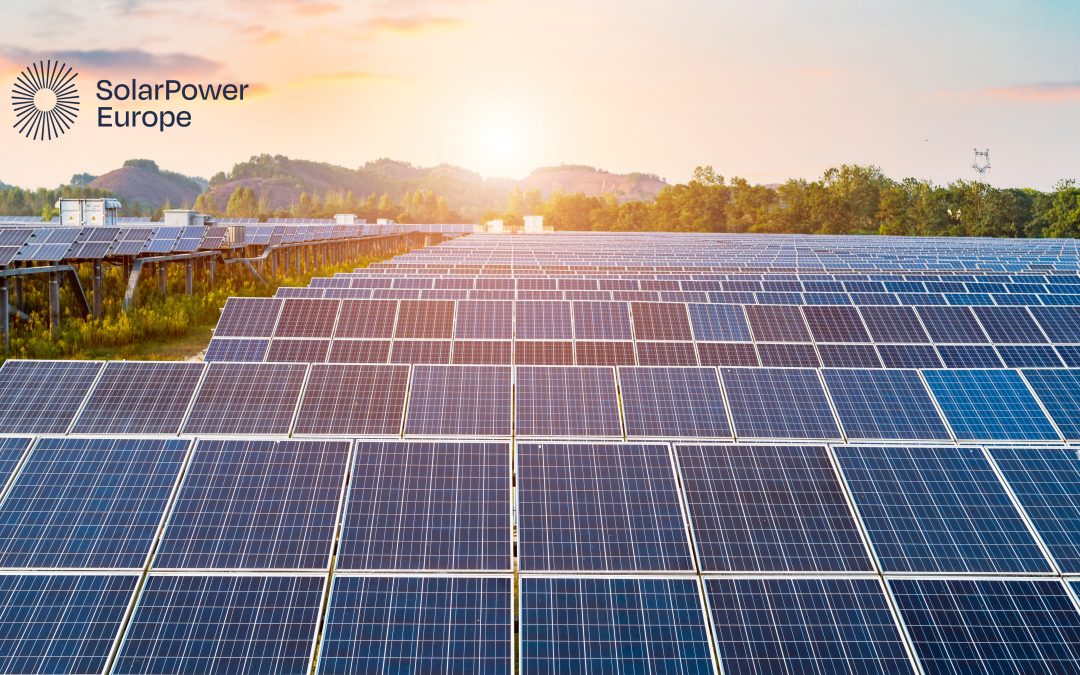


The paper calls for a comprehensive strategy to strengthen Europe’s energy resilience that moves beyond fossil fuel supply and builds energy security on solar, storage, flexibility and electrification.
New global progress report flags bottlenecks in investment, grids and supply chains, urging governments for bolder renewable targets before COP30.
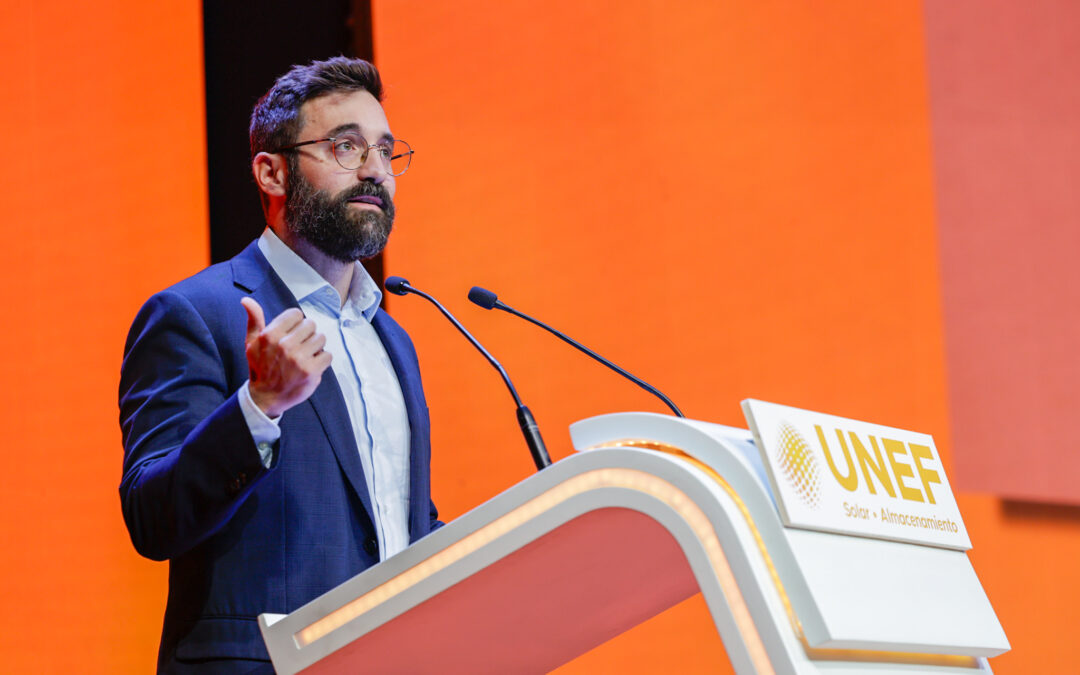
“The commitment to renewables is a commitment to industry,” emphasized Joan Groizard, Secretary of State for Energy, at the opening of the meeting. The panel discussion of energy company CEOs highlighted photovoltaics as a vehicle for geopolitical security in Spain and Europe.
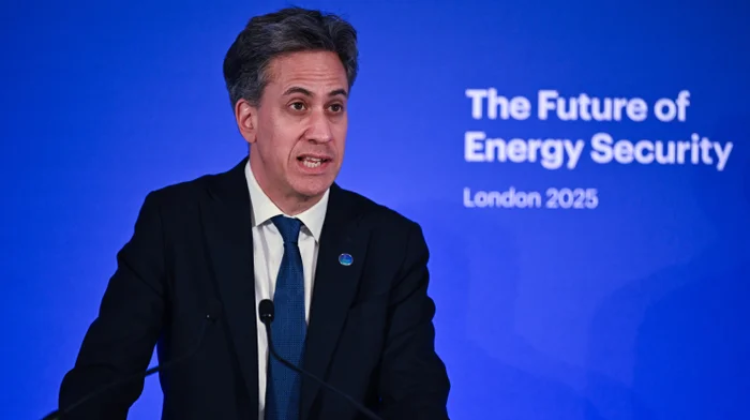
The United Kingdom is accelerating its energy transition and seeking to strengthen a public–private alliance to ensure independence, green jobs, and stable energy prices.
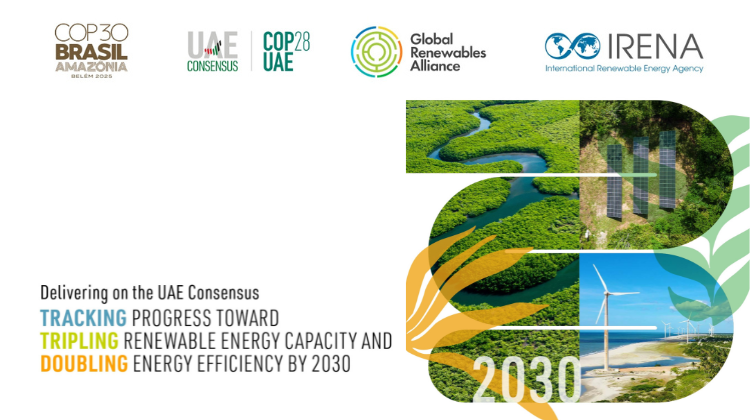
A joint report by IRENA, the COP30 Presidency, and the Global Renewables Alliance reveals that while 582 GW of new renewable capacity were installed in 2024 — a record figure — this growth remains insufficient to meet the goal of tripling global renewables by 2030. The world must now expand capacity by 1,122 GW annually from 2025 onwards, supported by major investments in grids, storage, and energy efficiency.

Energía Estratégica has launched a new specialised website that will offer analysis, data and perspectives on the battery market, positioning itself as a key source of information for executives, developers and all stakeholders within the energy-storage value chain.
Next week, business leaders, authorities, and international experts will gather to debate technology, regulation, financing, and innovation, with the participation of companies such as Sungrow, JA Solar, Trina Solar, Solis, DIPREM, Nordex, and more.
MITECO opens consultation to define how Spain will adapt its electricity market to the new European directive, aimed at protecting consumers, strengthening stability and increasing competition in the power system.
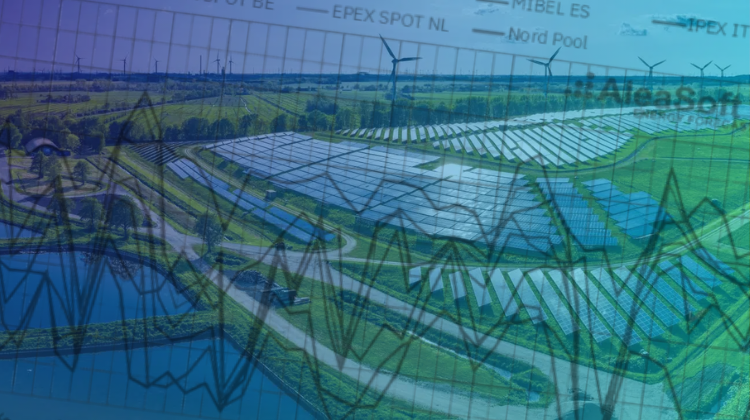
Electricity prices rose across Europe in mid-October as demand, gas and CO₂ costs increased, while lower solar and wind output in several markets further pushed rates above €75/MWh, with some exceeding €100/MWh.
The legal dispute shakes Spain’s electricity system, opening a new front between the main grid operator and one of the country’s largest utilities, in a conflict with major political, technical and reputational implications.
The country ranks as the second European destination for foreign investment in clean energy and the fourth most sustainable economy worldwide, while opening a new stage of cooperation with Asia focused on hydrogen, storage, digitalisation and industrial expansion.
During the 10th Energy Week, the head of the energy division at the World Economic Forum stressed that the region starts from an exceptional base in clean power generation, but must strengthen policy, finance, and human capital to scale up its global leadership.
The agency highlights the European Union as one of the most dynamic regions in the global expansion of renewable energy, with growth driven by new policies, capacity auctions and the rise of self-consumption solar.
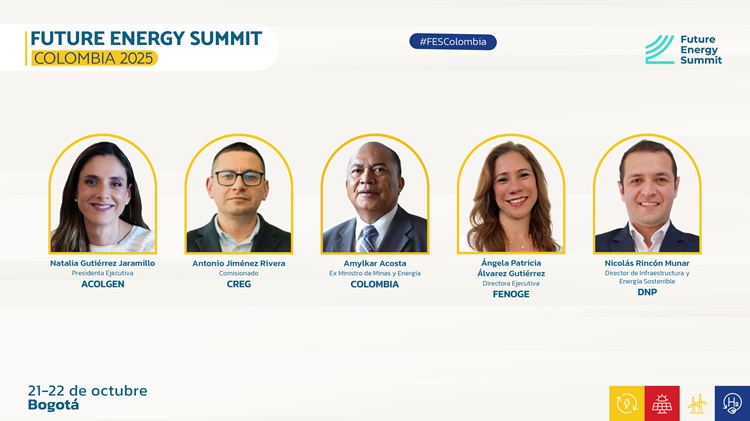
Representatives from CREG, ACOLGEN, FENOGE, the National Planning Department (DNP), and the Ministry of Mines and Energy will discuss the decisions that will mark the transition toward a more competitive, flexible, and sustainable electricity system at the most important renewable energy meeting in the sector.
With an associated investment of approximately 13.6 billion, it gives priority to covering the country’s industrial and development needs. The autonomous communities had the opportunity to assess the Proposal last September. Allegations can be submitted until December 16.
The company showcases three of its flagship products in PVBook, the international strategic catalogue: the SG350HX inverter and the ST5015UX-2H and ST5015UX-4H storage systems, designed to maximise efficiency.
The new Royal Decree will remain open for public consultation until 24 October, although the sector does not foresee significant changes being demanded. Which areas hold the greatest potential under the new provisions?
Nineteen PPAs totalling 653 MW were signed, driven by corporate agreements in Italy and Spain. While volumes increased compared to August, the solar share continues to decline and the market approaches year-end cautiously.
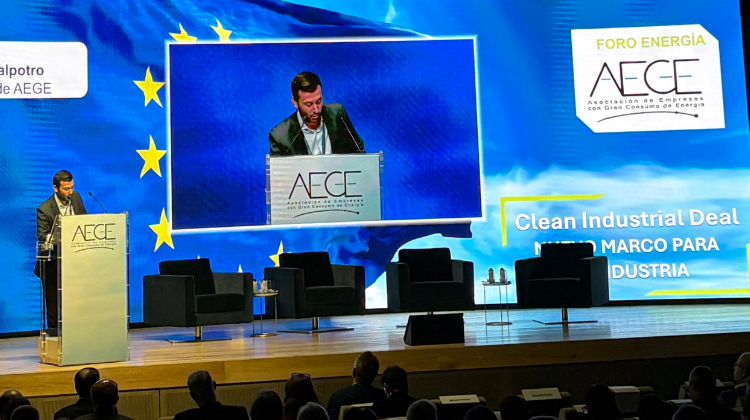
During the AEGE Energy Forum 2025, industry representatives proposed a new model of three-party contracts between the public sector, energy producers and electro‑intensive consumers — a formula aimed at reducing volatility and accelerating decarbonisation.
Photovoltaic production reached historic records for a single day in October in the main European markets, and wind energy also reached record levels in several of them. The increase in renewable generation, along with lower electricity demand in most markets and the drop in gas prices, were the main factors behind the price decline. For their part, CO2 futures reached their highest settlement price since mid-February, above €79/t, and Brent futures reached their lowest since the end of May.
Strategies must target persisting underrepresentation of women across the global renewable energy landscape.

The paper calls for a comprehensive strategy to strengthen Europe’s energy resilience that moves beyond fossil fuel supply and builds energy security on solar, storage, flexibility and electrification.
New global progress report flags bottlenecks in investment, grids and supply chains, urging governments for bolder renewable targets before COP30.
“The commitment to renewables is a commitment to industry,” emphasized Joan Groizard, Secretary of State for Energy, at the opening of the meeting. The panel discussion of energy company CEOs highlighted photovoltaics as a vehicle for geopolitical security in Spain and Europe.
The United Kingdom is accelerating its energy transition and seeking to strengthen a public–private alliance to ensure independence, green jobs, and stable energy prices.
A joint report by IRENA, the COP30 Presidency, and the Global Renewables Alliance reveals that while 582 GW of new renewable capacity were installed in 2024 — a record figure — this growth remains insufficient to meet the goal of tripling global renewables by 2030. The world must now expand capacity by 1,122 GW annually from 2025 onwards, supported by major investments in grids, storage, and energy efficiency.
Energía Estratégica has launched a new specialised website that will offer analysis, data and perspectives on the battery market, positioning itself as a key source of information for executives, developers and all stakeholders within the energy-storage value chain.
Next week, business leaders, authorities, and international experts will gather to debate technology, regulation, financing, and innovation, with the participation of companies such as Sungrow, JA Solar, Trina Solar, Solis, DIPREM, Nordex, and more.
MITECO opens consultation to define how Spain will adapt its electricity market to the new European directive, aimed at protecting consumers, strengthening stability and increasing competition in the power system.
Electricity prices rose across Europe in mid-October as demand, gas and CO₂ costs increased, while lower solar and wind output in several markets further pushed rates above €75/MWh, with some exceeding €100/MWh.
The legal dispute shakes Spain’s electricity system, opening a new front between the main grid operator and one of the country’s largest utilities, in a conflict with major political, technical and reputational implications.
The country ranks as the second European destination for foreign investment in clean energy and the fourth most sustainable economy worldwide, while opening a new stage of cooperation with Asia focused on hydrogen, storage, digitalisation and industrial expansion.
During the 10th Energy Week, the head of the energy division at the World Economic Forum stressed that the region starts from an exceptional base in clean power generation, but must strengthen policy, finance, and human capital to scale up its global leadership.
The agency highlights the European Union as one of the most dynamic regions in the global expansion of renewable energy, with growth driven by new policies, capacity auctions and the rise of self-consumption solar.
Representatives from CREG, ACOLGEN, FENOGE, the National Planning Department (DNP), and the Ministry of Mines and Energy will discuss the decisions that will mark the transition toward a more competitive, flexible, and sustainable electricity system at the most important renewable energy meeting in the sector.
With an associated investment of approximately 13.6 billion, it gives priority to covering the country’s industrial and development needs. The autonomous communities had the opportunity to assess the Proposal last September. Allegations can be submitted until December 16.
The company showcases three of its flagship products in PVBook, the international strategic catalogue: the SG350HX inverter and the ST5015UX-2H and ST5015UX-4H storage systems, designed to maximise efficiency.
The new Royal Decree will remain open for public consultation until 24 October, although the sector does not foresee significant changes being demanded. Which areas hold the greatest potential under the new provisions?
Nineteen PPAs totalling 653 MW were signed, driven by corporate agreements in Italy and Spain. While volumes increased compared to August, the solar share continues to decline and the market approaches year-end cautiously.
During the AEGE Energy Forum 2025, industry representatives proposed a new model of three-party contracts between the public sector, energy producers and electro‑intensive consumers — a formula aimed at reducing volatility and accelerating decarbonisation.
Photovoltaic production reached historic records for a single day in October in the main European markets, and wind energy also reached record levels in several of them. The increase in renewable generation, along with lower electricity demand in most markets and the drop in gas prices, were the main factors behind the price decline. For their part, CO2 futures reached their highest settlement price since mid-February, above €79/t, and Brent futures reached their lowest since the end of May.
Strategies must target persisting underrepresentation of women across the global renewable energy landscape.
Select the sector you
want to know more about
The five-day event in Foz do Iguaçu will bring together energy and utilities experts from across Latin America to address regulatory challenges, tariff design and the energy transition.
The two groups expand their long-term alliance with the addition of 646 MW of solar PV, bringing total operational capacity to 1.5 GW and reinforcing a €2 billion-plus co-investment strategy to accelerate electrification.
In its updated 2026–2030 strategy, the country lowers production targets, revises cost assumptions upwards and shifts its focus towards domestic demand and hydrogen derivatives to build a sustainable, competitive industry.