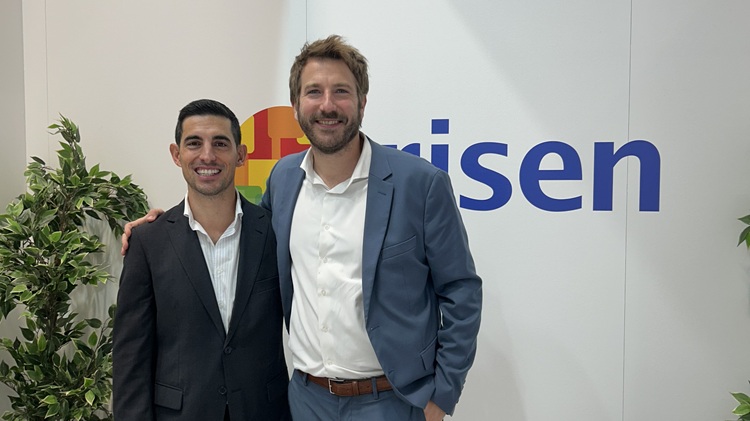



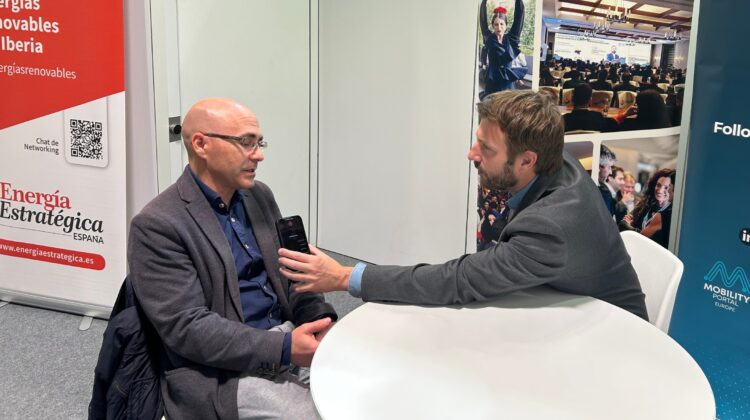
The Swedish-origin company Capture Energy has rapidly scaled across Northern Europe thanks to its integrated energy-storage offering and its ability to connect battery systems to flexibility markets. Now, the firm is accelerating its expansion into southern Europe. In an exclusive conversation with Energía Estratégica, Daniel Boluda, Capture Energy’s Regional Director for Southern Europe, explains how the company plans to replicate its model in Spain, Portugal and Italy, what opportunities they identify in Latin America, and the installation targets set for 2026.
For those unfamiliar with Capture Energy, how would you describe the company?
Capture Energy is an energy-storage company founded in the Scandinavian markets. What makes it different is its fully integrated approach: the company does not just supply a battery system but also delivers all complementary services—financing, installation, operations and, crucially, the connection to energy-balancing and flexibility markets. The aim is to help clients generate revenues from flexibility services, not merely save through time-of-use arbitrage. This applies both to large-scale assets and to industrial or commercial sites with significant energy consumption.
Why is this added value particularly relevant in southern Europe today?
Because many customers receive only the hardware and are then left on their own. What we aim for is that any company—whether it operates a factory or an agricultural facility—can use its battery not only for self-consumption but also to participate actively in the electricity system. That means helping regulate frequency, voltage or power. This already happens in the Nordic countries, and it will inevitably take off in southern Europe. Spain does not yet have a fully open flexibility market, but it is clearly moving in that direction. Now is exactly the right moment to be present.
Your background was closely tied to major technology companies. What motivated you to join this project?
I came from other firms where we worked with commercial and industrial energy solutions. But this project had something unique: the chance to build within a young, dynamic company with a model that already works. It is very motivating to start something new while knowing there is a tested approach behind it. It combined my desire to do things differently with a company that has the energy and ambition to grow in a new market.
Where are the systems you offer manufactured?
We have two battery lines. One uses European components produced in Poland, and the other uses alternatives sourced from China. The controller that enables connection to flexibility markets is manufactured entirely in Sweden. We also develop our own software, which integrates with aggregator and optimiser platforms. All the cloud-based infrastructure is developed in Sweden. It is a fully integrated solution.
What did you find when you began presenting this proposal in the Spanish market?
We encountered something very interesting: many industrial and commercial players are still unaware that batteries can generate income beyond price arbitrage. Flexibility services remain unfamiliar to most. But rather than a barrier, this is an opportunity. If you are the first to explain this and make it work, you gain ground quickly. The market is very active. Spain is undergoing a deep transformation, and we see similar dynamics in Portugal and Italy, the first countries we are focusing on.
Why did you choose to start with Spain, Portugal and Italy?
Because these markets are already seeing growth in energy storage, yet the potential of flexibility services is far from fully developed. They are beginning to regulate new roles, such as independent aggregators. Once these frameworks are fully in place, the boom will be significant. Our objective is to be prepared before this happens, as we were in northern Europe.
What type of projects are you most interested in?
We work in both the commercial-industrial segment and the utility-scale sector. In utility-scale, we are developing projects of different sizes, including some exceeding 150 MWh, although our sweet spot is below 50 MWh—projects that often fall outside the radar of major manufacturers. In the commercial-industrial segment, we work with systems ranging from 500 kW to 10 MWh, mainly designed for self-consumption with the option to connect to the grid. There is a great deal of room for growth here, and we see strong momentum across the region.
How are you approaching local-content requirements and the European value chain?
Many support programmes, such as those managed by Spain’s Institute for Energy Diversification and Saving (IDAE), require certain components to be manufactured in Europe. We already offer a solution with six points of local content, with all components made in Poland. This is very valuable, as some projects demand it from the outset. Having this option available strengthens our competitiveness.
Are you considering markets outside Europe?
Yes. Latin America is a clear objective. We do not yet have direct presence there, but we are already analysing projects in Brazil, leveraging contacts we have from our base in Spain. Once our operations in southern Europe are consolidated, we aim to move quickly into Latin America. We see substantial potential there as well.
Looking towards 2026, what concrete goals have you set?
This year has been one of preparation—we have been operating for only three months. But by 2026, we aim to have at least 100 MWh installed across industrial and medium-scale utility projects. We consider this entirely achievable given the nature of our solutions and the interest we are seeing in the market. We are not only delivering batteries; we are enabling clients to unlock additional revenue streams.
From a personal standpoint, what would you like to have achieved by 2026?
Beyond the numbers, I would like to have helped build a solid ecosystem in Spain, Portugal and Italy. I would like Capture Energy to be present in key segments, but above all, to have a motivated team that feels this project is growing and that the journey we are undertaking together is worthwhile. If we manage that, it will be a great success.
Capture Energy’s strategy is rooted in flexibility, drawing on a proven northern European model now entering a phase of expansion across southern Europe. With a focus on emerging markets, integrated solutions and a committed team, the company is preparing to enter Latin America and reach 100 MWh of installed capacity by 2026.