











Until just a few years ago, talking about energy storage in Argentina was little more than an expression of intent. Today, that opportunity has moved beyond an abstract promise and has begun to take shape in concrete projects.
Coral Energía, one of the main awardees of the AlmaGBA tender (100 MW out of the 700 MW allocated), has around 400 MW of renewable capacity either contracted or under construction and is preparing to take the next step in a market that is still emerging.
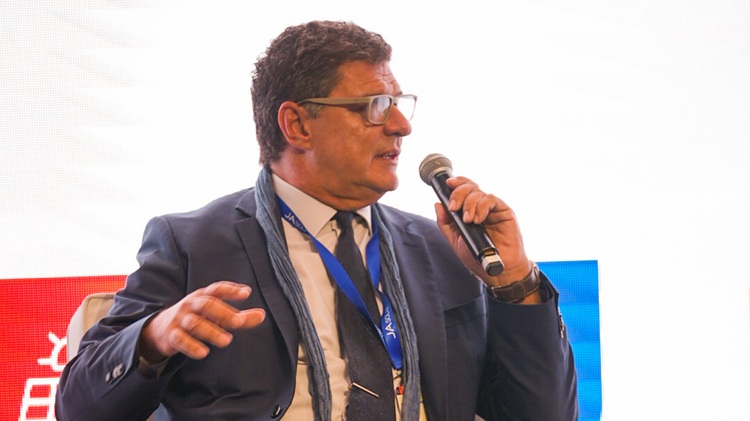
“The way in which the Argentine electricity market is being restructured, together with the exponential downward curve in battery prices, will lead to a crossover point in 2026 or 2027. I believe that is where there is a clear opportunity for energy storage systems,” said Marcelo Álvarez, Director of Strategy and Institutional Relations at Coral, during the Future Energy Summit Argentina.
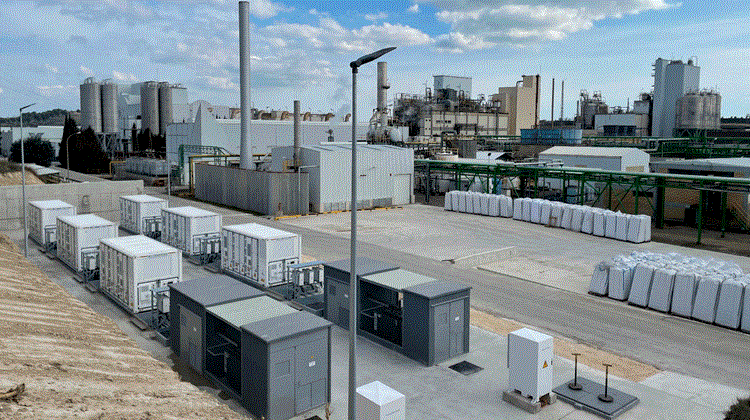
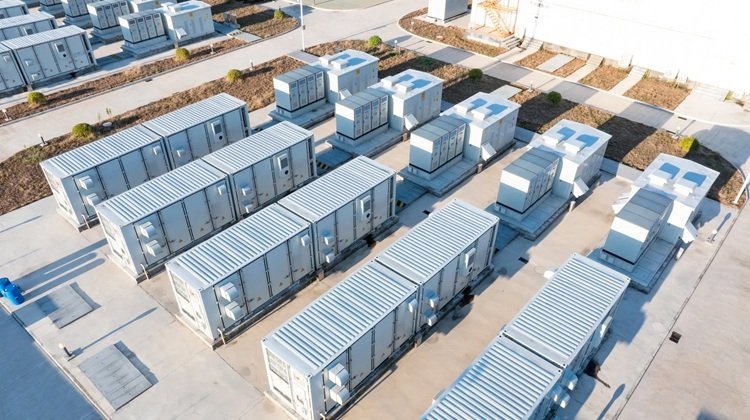
This perspective is not rooted in optimism, but in technical analysis and a concrete strategic commitment. Coral Energía was one of the standout winners of AlmaGBA, with two 50 MW projects: BESS Pilar and BESS Parque, both connected to the grid operated by Edenor and awarded at prices of USD 11,461 per MW-month and USD 11,979 per MW-month, respectively.
These 100 MW mark the beginning of a hybrid operating model, in which the company aims to integrate renewable generation with batteries and capitalise on the learning curve in a transitioning market.
“There is an opportunity in storage. It is a growing segment, and I believe there will be peak shaving, arbitrage, a new niche within the market and new players. The storage market in Argentina is still in formation, and I think there will be opportunities, with solar PV plus storage set to grow,” Álvarez stressed.
The company is also closely monitoring potential new calls that could emerge in the short term. According to industry sources, Argentina is preparing a new public energy storage tender following the success of AlmaGBA in the Buenos Aires Metropolitan Area, which awarded more than 700 MW, exceeding the original 500 MW target.
According to information obtained by Energía Estratégica, the new tender would be launched under the name AlmaSADI and is expected to cap around 500–600 MW of BESS capacity to replace forced generation at different points across the country. This tender would therefore represent another step towards consolidating an energy storage market that remains at an early stage.
Despite this momentum, the executive identified two structural constraints that have historically limited the expansion of renewables: transmission capacity within the interconnected system and access to bankable financing.
While the former requires infrastructure investments with timelines of between four and eight years from tendering to certification, the latter has a more systemic dimension.
“The Argentine market is undergoing a transformation, seeking to achieve a model similar to that of the 1990s, with full demand contracting,” the executive observed. However, he explained that within this process, off-takers with very different credit profiles are emerging, which can complicate financing.
“There are some interesting credit counterparts and others that are not, such as distribution companies and cooperatives, which will struggle to be bankable,” he explained. For this reason, he believes it is urgent to create a support mechanism that enables these actors to access competitive financing.
Energy Transition Law: a necessary roadmap
Against this backdrop, a proposed energy transition law is being promoted as a key instrument to unlock international financing under competitive conditions. Such legislation would allow Argentina to access climate finance lines with subsidised interest rates and extended tenors, which is essential in the current context of economic constraints.
“The only way to access subsidised financing over longer periods in the short or medium term is through climate finance. And in order to access that, an energy transition law with an associated roadmap is required,” the executive insisted.
“We presented it to the government as a business opportunity, for job creation, to prevent non-tariff barriers, and to promote decentralisation and diversification,” he said.
In this context, he added a key point: “It would also place emphasis on developing a market-based mechanism that makes cooperatives and distribution companies financeable.”
Without such an approach, he warned, a segment of the country with significant renewable supply potential but without access to adequate financing would be left out of the energy transition.