




The province of Buenos Aires has taken a decisive step to expand distributed renewable energy by formally enabling community-based distributed generation. The new regulation allows several users—each with independent supply points—to jointly develop renewable energy projects, share self-consumption and sell excess electricity fed into the grid.
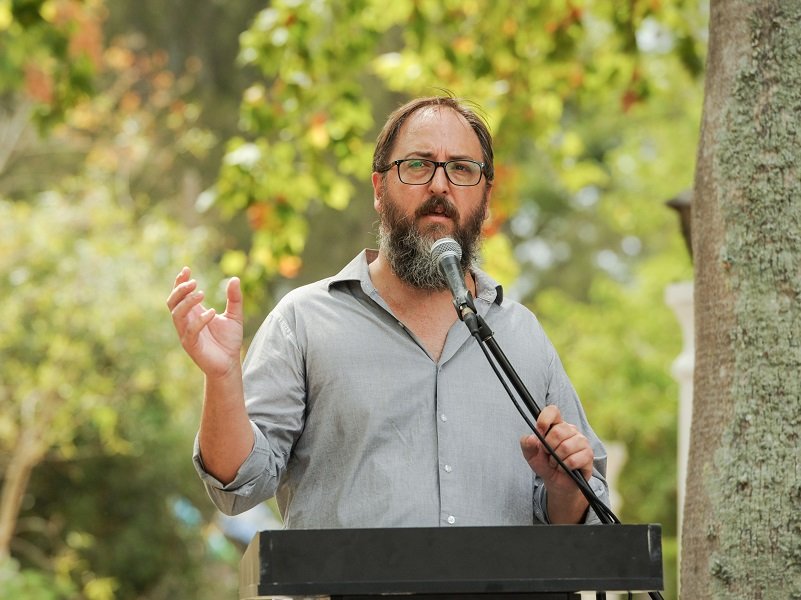
“This was about achieving scale to make investments viable,” said Gastón Ghioni, Undersecretary of Energy of the Province of Buenos Aires, in an interview with Energía Estratégica.
According to the provincial government, the decision followed extensive dialogue with public and private stakeholders across the energy sector, many of whom had flagged that individual, small-scale projects often struggle to reach the scale required for economic viability.
“It is part of the process of expanding distributed generation and diversifying our energy mix,” Ghioni explained. “But it also responds to the need of many sectors to access investments that are more balanced and realistic for them.”
Clear rules for investors and access to incentives
The regulation sets out technical, contractual and economic rules for projects above 10 kW, improving predictability for investors and developers. Participants registered with the RUGER (Single Registry of Renewable Energy Generators) will also be eligible for tax incentives under Law 15,325, including direct coordination with ARBA, the provincial tax agency, which helps optimise returns on investment.
The scheme is aimed at SMEs, cooperatives, municipalities, industrial parks and urban or rural communities, enabling them to act as both consumers and generators. In doing so, it seeks to expand the province’s current 22.61 MW of installed distributed generation capacity developed under Law 27,424.
“The potential is significant,” Ghioni noted. “But it will depend on economic factors: electricity tariffs, access to financing and exchange rate conditions. These three elements are key to determining the return on investment for users.”
Financing support and institutional backing
In this context, Banco Provincia is expected to play a central role. The public bank already offers financing lines for distributed generation projects, and Ghioni confirmed that these could be extended to cover the new community-based model.
The bank has also been actively involved in outreach and awareness initiatives related to the distributed generation law, reinforcing what officials describe as a supportive institutional framework.
“This is another step towards regulatory clarity, and Banco Provincia has consistently supported these projects,” Ghioni said, stressing that the new regulation is backed not only by legal certainty but also by practical financing tools.
Solar projects, storage and grid challenges
Beyond community generation, Buenos Aires continues to advance larger distributed solar projects. Ghioni confirmed that construction and commissioning of the province’s first solar park, developed on the Atlantic coast by state-owned company Buenos Aires Energía (BAESA), is expected to be completed this year.
In parallel, five additional solar parks are under construction through the PROINGED scheme, with further projects in the pipeline. The province is also working with municipalities and public bodies on energy efficiency and local energy transition initiatives aimed at reducing consumption and optimising resources.
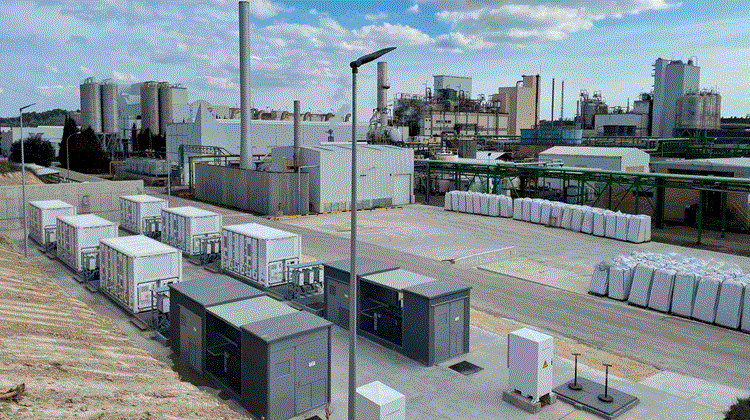
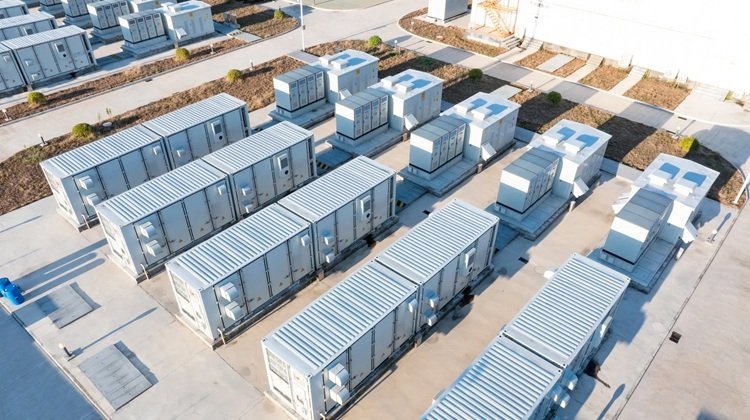
One of the most notable developments within PROINGED is the integration of battery energy storage systems, designed to address technical constraints in areas with weak distribution networks.
“We are assessing PROINGED projects because we need to solve specific grid issues,” Ghioni concluded. “Energy storage is proving to be an effective tool, and we will continue to expand its use.”