







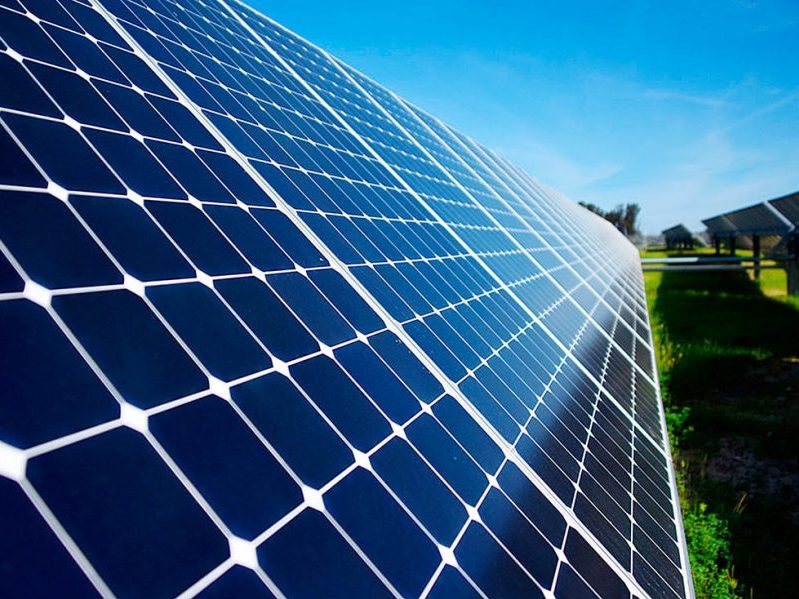
The Province of Buenos Aires has approved a new regulation for community distributed generation, marking a turning point in the expansion of decentralised renewable energy in Argentina.
For the first time, the framework allows multiple users with independent supply points across the province to associate in order to jointly produce renewable energy, share the benefits of self-consumption and monetise surplus electricity injected into the grid.
The regulation establishes clear technical, contractual and economic rules for projects above 10 kW. It is particularly aimed at SMEs, cooperatives, municipalities, industrial parks and urban and rural communities, moving beyond the experimental or pilot nature that characterised many previous initiatives.
“These are not pilot experiences, but a framework designed for medium-scale installations, with defined technical, contractual and economic rules. This enables a real project pipeline for engineering firms, EPC contractors, technology integrators and equipment suppliers,” said energy transition expert Dr.-Ing. Alejandro J. Gesino.
User associations may be formed through private agreements or legal entities, with each participant receiving monetary credits on their electricity bill proportional to their share of surplus energy injected into the grid.
“A key aspect is the clarity around surplus energy monetisation. This predictability significantly improves financial models, reduces regulatory risk and strengthens project bankability, allowing collective self-consumption schemes with measurable and sustainable returns,” Gesino added.
Projects registered under the RUGER—a mandatory registry to access the scheme—will be eligible for tax exemptions established under Law 15,325, including direct coordination with ARBA, the provincial tax authority. This directly enhances return on investment and overall project profitability.
Currently, Buenos Aires is the second-largest jurisdiction in Argentina for distributed generation under National Law No. 27,424, with 917 prosumers representing 22.61 MW of installed capacity. This accounts for more than 18% of the 119.24 MW operating nationwide. In addition, the province has 278 projects under development that could add a further 5.14 MW.
New business models and technological outlook
The new regulation also enables progressive technological evolution, laying the groundwork for the future integration of energy storage systems, smart demand management solutions and electromobility, all under predefined regulatory rules.
“From a strategic perspective, this framework enables new business models such as solar communities, shared industrial self-consumption, ‘energy-as-a-service’ schemes, energy cooperatives and municipal projects with strong local impact,” the specialist noted.
“While it does not create a wholesale market nor allow unrestricted energy trading, it consolidates a distributed energy transition infrastructure that is regulated, economically viable and highly scalable, with strong potential for future integration with storage, demand-side management and electric mobility,” he concluded.