











With 2026 just around the corner, Latin America’s next phase of renewable energy expansion is taking shape around three strategic pillars: stronger regulatory frameworks for energy storage systems, competitive and bankable power purchase agreements (PPAs), and the adoption of new technologies that lower project implementation costs.
These trends were highlighted by executives from Solis, GCL SI and Negratin during the opening panel of the virtual event “Strategies to Scale and Diversify Renewable and Storage Portfolios”, organized by Energía Estratégica, a leading Latin American energy industry media platform.
From a regulatory standpoint, Jorge Ospina, Service and Product Manager at Solis in Colombia, stressed that regulatory stability is a fundamental condition for attracting foreign investment. He emphasized that energy regulators must provide clear, long-term signals to support capital-intensive projects.
“Regulators need to move forward in a consistent and long-term manner to incentivize investment,” Ospina said.
A similar view was shared by Enrique Díaz, Development & Investment Managing Director at Negratin, who warned that frequent policy shifts following changes in government can undermine investment continuity.
“A clear and stable regulatory framework is derived from political consensus. These are long-term investments and cannot be subject to short-term political cycles,” Díaz noted during the live-streamed event.
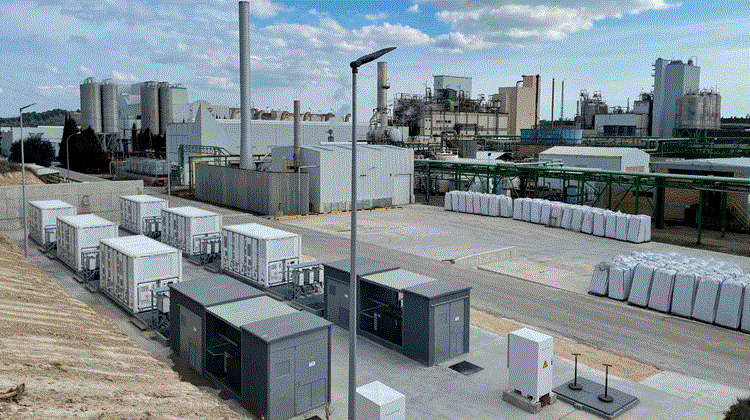
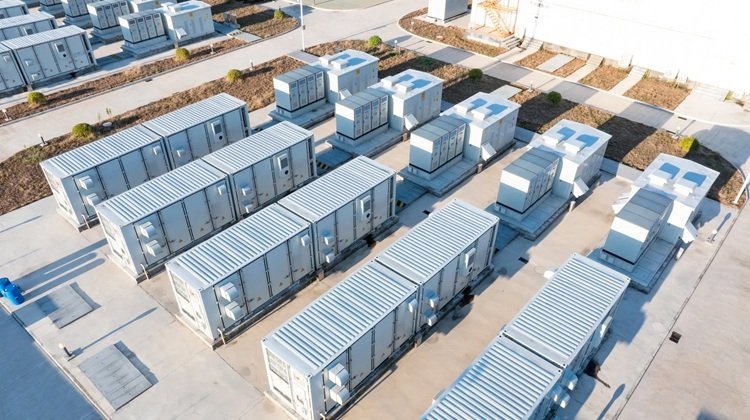
In this context, battery energy storage systems (BESS) are emerging as a critical technology in the new renewable cycle, although still constrained by regulatory gaps in several Latin American countries. According to Ospina, storage not only improves energy security, but also helps correct structural inefficiencies in power systems with high renewable penetration.
He argued that the region needs comprehensive storage regulations covering technical, operational and financial aspects.
“It is a positive step when innovative players with financial capacity deploy batteries. That builds confidence and allows future regulation to be more robust,” he added.
In Colombia, Ospina pointed out that the draft resolution issued by the Energy and Gas Regulation Commission (CREG)—which sets technical, commercial and operational conditions for integrating BESS—still requires refinement to provide greater clarity to market participants.
Claudio Loureiro, Country Manager for Brazil and Argentina at GCL SI, also weighed in, noting that the rapid expansion of dispatchable renewable generation is beginning to create system-level challenges such as the “duck curve”, making coordinated regulatory responses increasingly necessary.
“Storage regulation is essential because we are already starting to see demand imbalances. This will lead to duck curve effects, which require careful regulatory design and planning of the overall energy mix,” Loureiro explained.
Beyond regulation, PPA structures play a decisive role in unlocking financing. According to GCL SI, economic and legal certainty in contracts is key, as the balance between supply and demand ultimately determines PPA pricing and investment decisions.
“There are technical aspects that condition financing, such as the existence of an attractive PPA market and the presence of bankable off-takers in the countries where projects need to be financed,” Díaz added.
Against this backdrop, companies are activating expansion and technology diversification strategies.
Solis announced the launch of new models in its S6 inverter series, along with utility-scale BESS solutions. Ospina explained that the company’s 2026 focus will be on proper equipment installation, strengthening certification processes, and providing technical support to clients and distributors—a key challenge as hybrid solar-plus-storage projects gain momentum.
GCL SI, meanwhile, is accelerating its transition toward next-generation PV technologies, including tandem solar modules that could reach efficiencies of up to 45%, compared to roughly 30% for conventional monocrystalline panels.
“We are working with clients worldwide on pilot projects to understand the behavior, performance and field operation of perovskite tandem technology,” Loureiro said. In parallel, the company continues to develop N-type TOPCon modules and is introducing back-contact solutions for specific applications.
Negratin, for its part, is moving toward a hybrid business model, combining its traditional role as an engineering, procurement and construction (EPC) contractor with that of an independent power producer (IPP).
“We took a step forward by launching projects sponsored by the group itself,” Díaz said. The company expects to close the year with more than 100 MW of solar projects, while also evaluating energy storage initiatives without capacity payments in Colombia. Negratin is additionally exploring opportunities in Chile, focusing on smaller-scale projects located near urban areas.
Latin America’s new renewable cycle is no longer a hypothesis—it is actively unfolding. Its pace, stability and depth will be defined by smart regulation, bankable PPAs, and accessible, high-performance technologies. Together, these three vectors will determine how effectively the region scales clean energy investment and integrates storage into its power systems.