







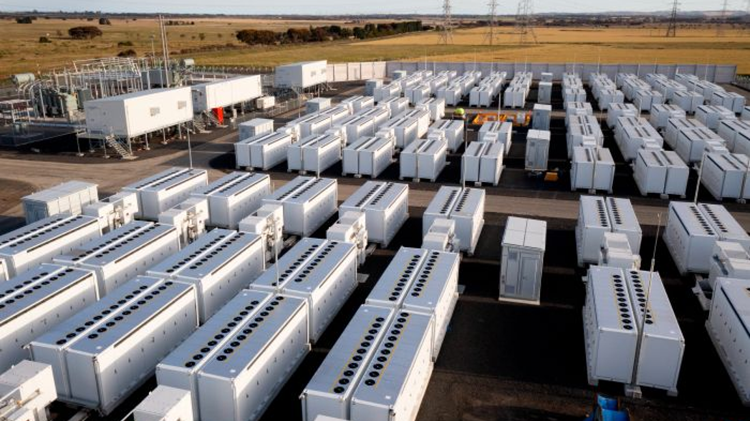
Australia has awarded 1.17 GW / 11.98 GWh of battery energy storage systems (BESS) in a landmark long-duration storage tender, marking the largest allocation in the country’s history both in contracted volume and number of projects.
The auction, managed by AusEnergy Services Limited (ASL) — formerly the Australian Energy Market Operator — was launched with an indicative target of 1 GW and at least 8 GWh. However, the final award reached 117% of the original goal, significantly accelerating the rollout of long-duration energy storage in New South Wales (NSW).
The process forms part of the NSW Electricity Infrastructure Roadmap and lifts total contracted storage capacity under the scheme to 30 GWh.
The latest round meets the Roadmap’s Minimum Objective of delivering 2 GW of long-duration storage capacity by 2030 and 28 GWh by 2034, effectively bringing forward deployment timelines before the end of the decade.
All six awarded projects are based on lithium-ion battery technology, reinforcing its dominance in the eight-to-eleven-hour duration range. Individual project capacities range from 100 MW to 330 MW, with nominal storage durations between 8.7 and 10.6 hours, and one project reaching 11.5 hours.
Awarded projects at a glance
| Project | Developer | Capacity (MW) | Energy (MWh) | Nominal Duration | Location |
|---|---|---|---|---|---|
| Great Western Battery | Neoen Australia | 330 | 3,500 | ~10.6 h | Wallerawang, near Lithgow |
| Bannaby BESS | BW ESS Australia | 233 | 2,676 | 11.5 h | Southern Tablelands |
| Bowmans Creek BESS | Ark Energy (subsidiary of Korea Zinc) | 250 | 2,414 | ~9.7 h | Upper Hunter |
| Armidale East BESS | FRV Services Australia | 158 | 1,440 | ~9.1 h | Armidale |
| Ebor BESS | Bridge Energy | 100 | 870 | 8.7 h | Armidale region |
| Kingswood BESS | Iberdrola Australia | 100 | 1,080 | ~10.8 h | Near Tamworth |
The largest scheme is the Great Western Battery, developed by Neoen Australia, with 330 MW / 3,500 MWh. It will be located in Wallerawang, near Lithgow in New South Wales.
It is followed by the 233 MW / 2,676 MWh Bannaby BESS in the Southern Tablelands, delivering a nominal 11.5-hour duration — one of the longest contracted under the scheme.
A key strategic element of the tender is its contractual framework. ASL has granted Long-Term Energy Service Agreements (LTESAs) with a duration of 14 years.
Under the scheme, projects must guarantee at least eight hours of storage capacity throughout the contract period. As lithium-ion batteries degrade over time, developers have opted to oversize systems to ensure compliance with minimum duration requirements over the full term.
This structure provides revenue certainty, supporting investment in renewables and grid integration while enabling the large-scale deployment of long-duration energy storage critical to Australia’s energy transition.
Next tenders: additional 24 GWh in pipeline
The roadmap includes further large-scale procurement rounds.
The next long-duration storage tender is scheduled for the second quarter of 2026 and will seek to award an additional 12 GWh.
A further 12 GWh round will follow in 2027, bringing the two-year pipeline to 24 GWh of additional storage capacity.
These future rounds will prioritise projects capable of entering operation by 2030 to meet the Minimum Objective, as well as longer lead-time developments targeting commercial operations in 2034.
With increasing penetration of renewable energy, particularly solar PV and wind power, large-scale BESS is becoming a cornerstone of Australia’s power system transformation, ensuring grid stability, peak shifting and long-duration flexibility in the National Electricity Market.