












International investment is closely watching the regulatory behaviour of Central American and Caribbean countries as they approach 2026. What will ultimately determine capital flows is each country’s ability to offer clear regulatory frameworks, well-structured tenders and credible long-term planning.
This is the lens through which international financing assesses opportunities in sectors such as energy, logistics infrastructure, energy storage, digitalisation and transport electrification. It is also the starting point for understanding the current situation in three key countries in the region: Panama, Costa Rica and the Dominican Republic.
“2026 will not be a year of euphoria, but it will be a very interesting and decisive one for investment,” warned William Villalobos, CEO of Core Alliance, in an interview with this outlet.
“Capital will be available, but it will be more selective: it will seek countries with clear rules, serious planning and well-structured projects, especially in energy and infrastructure,” he said.
Panama: firm contracts, but tender documents still under review
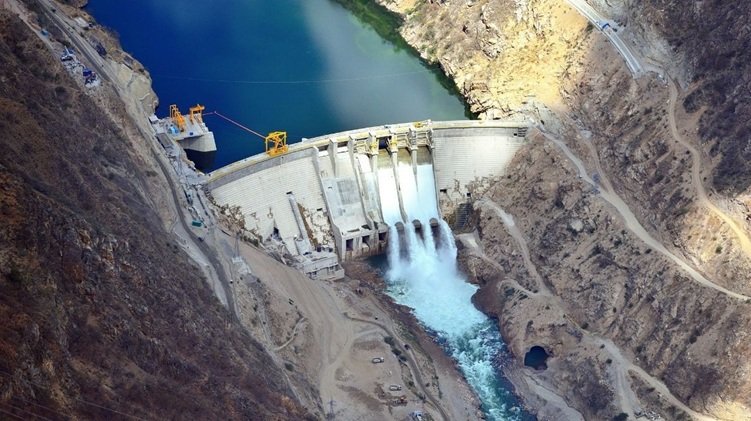
In a context where volatility in the electricity spot market has left its mark, Panama is working to reposition its energy mix under new rules. The official roadmap includes staggered tenders between 2026 and 2028, with contracts of up to 20 years for new wind and hydropower projects, and shorter terms depending on the technology.
This approach aims to reduce commercial risk, facilitate access to financing and ensure price stability. However, the tender specifications are still being adjusted. The postponement of the LPI ETESA 01-25 tender reflected the need to balance competition among renewable technologies and to provide greater flexibility for proposals incorporating energy storage or hybrid schemes.
“Panama enters 2026 with a very clear opportunity to consolidate itself as a logistics and energy hub,” Villalobos said. “It has data, planning and institutions that the market recognises. The key will be turning that planning into concrete market signals: well-designed auctions and clear rules for firm capacity, storage and grid expansion.”
Costa Rica: election year and restrained expectations
Despite having a clean energy mix with high renewable penetration, the country needs to renew its electricity concession framework and make room for new players. Cooperative and municipal distribution companies grouped under CEDET are promoting solar, wind and energy storage projects under public–private partnership schemes that require more flexible regulatory approvals.
The Ministry of Environment and Energy (MINAE) is working on updating the regulation governing these concessions. Its scope will be decisive in enabling investment in key segments of the energy transition.
Villalobos explained that “investment will largely depend on whether the country manages to provide regulatory certainty and enable new projects without introducing unnecessary rigidities.” He stressed that Costa Rica can unlock investment without sacrificing its model or regional leadership, if regulation, concessions and planning are aligned with this reality.
Dominican Republic: new renewable auction and battery regulation
With almost 3,000 MW offered in a tender for 600 MW of renewable capacity with storage, the Dominican Republic is not only attracting investment — it is setting the trend. The massive participation of companies in this process reflects an ecosystem combining demand growth, political will and regulatory incentives.
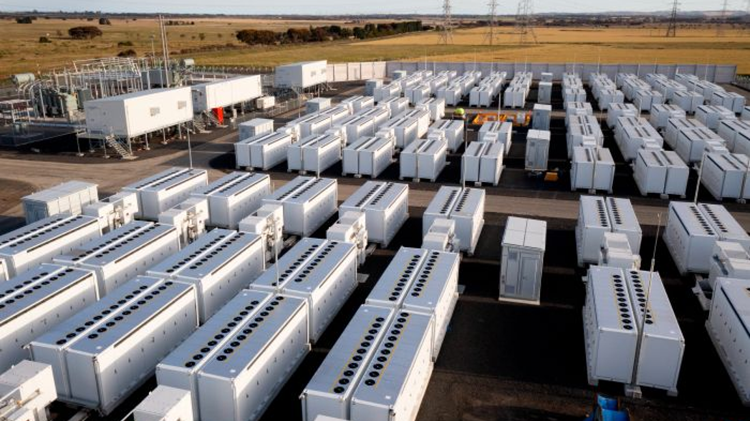
At the same time, the Superintendence of Electricity has advanced the publication of Resolution SIE-178-2025-MEM, which establishes minimum technical rules for integrating battery energy storage systems. These include ramp control, frequency response and operational stability guarantees — essential factors for a grid with increasing variable generation.
“The Dominican Republic will probably be one of the most dynamic markets in the region. There is sustained growth in electricity demand, tourism and industry, and a regulator that has been steadily refining the regulatory framework. The challenge is not attracting investment, but managing that growth well so that it is sustainable and efficient,” Villalobos said.
In an environment where regulation is becoming more sophisticated, financing is more demanding and public–private interaction more complex, it is not necessarily the largest projects that move forward, but the best-structured ones.
As Villalobos put it: “Today it is not enough to have a strong energy resource or a solid sponsor; what is needed is to align legal, technical and institutional elements into a coherent strategy.”
The three countries analysed offer concrete opportunities, but execution will depend on common variables: contracts that allocate risks appropriately, clear technical regulations, inter-institutional coordination and rules that remain stable over time. Without these elements, the competitiveness of the renewable energy sector loses traction, even if demand continues to grow.