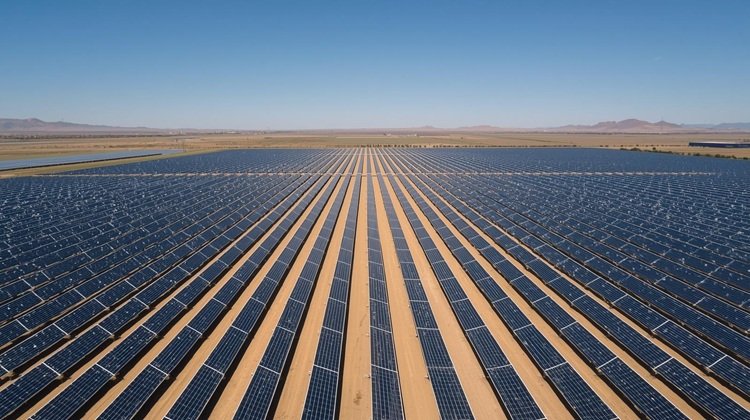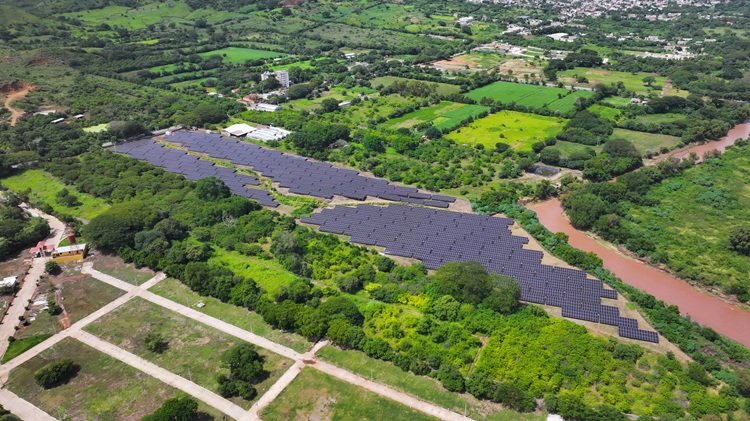








Atlas Renewable Energy is on track to reach 5 GW of installed capacity across Latin America by 2026, with active operations in Uruguay, Chile, Brazil, Colombia and Mexico. Within this regional strategy, the company is advancing a diversified portfolio of solar PV projects combined with battery energy storage systems (BESS), aimed at delivering firm and competitive power on a 24/7 basis.
However, the rollout of these initiatives in Chile is facing market and regulatory conditions that are limiting their scalability, despite the country’s rapid expansion of energy storage capacity.
“We have a well-developed pipeline of solar-plus-storage projects. But the key to materialising them is securing long-term contracts with off-takers that make the projects bankable. Without those contracts, the projects simply cannot move forward,” said Alfredo Solar, Regional Manager for Chile and the Southern Cone at Atlas Renewable Energy, speaking during the Future Energy Summit (FES) Chile.
Rewatch the full day here: https://www.youtube.com/watch?v=dcqxLQGp3SE
Solar added that while the company is technically and financially prepared to participate in upcoming tenders, it does not foresee a new wave of large-scale investment in the short term.
“We do have projects, and we are ready to compete in future auctions, but we do not expect a massive escalation of investment. We are currently in a pause phase,” he explained.
As a result, Atlas does not anticipate another cycle of aggressive capital deployment in the Chilean market. This cooling trend reflects tangible signals, including stagnant electricity demand growth and the structure of mining sector power contracts, which are typically expanded in phases rather than through large, long-term commitments.
Rapid growth of storage, but questions over sustainability
Meanwhile, Chile’s energy storage market is experiencing unprecedented growth. The country currently operates 1,850 MW of BESS capacity, with projections pointing to more than 2 GW by January 2026.
Industry figures indicate that 456 MW are in testing, 6,373 MW are under construction, and 8,431 MW are undergoing environmental assessment. If the full pipeline were to materialise, Chile would reach 8.6 GW of storage capacity by 2027, exceeding its national target of 6 GW by 2050 by more than 40%.
Of the capacity already in operation, 1,197 MW correspond to hybrid solar-plus-storage projects, 491 MW to stand-alone BESS, 95 MW to hydropower facilities, and 67 MW to wind farms equipped with batteries. According to industry sources, this growing integration is already having a significant operational impact, particularly on solar marginal prices.
Despite this momentum, Solar questioned the long-term sustainability of the current expansion, warning that storage deployment could slow down or even lead to a form of market cannibalisation if projects fail to secure sufficient revenues to recover investment costs under the current economic framework for batteries.
“Who benefits the most from storage? A solar plant facing curtailment that does not invest in batteries,” he argued. “Two generators suffer from congestion and zero prices, but only one invests in a battery. Both benefit equally. If the main beneficiary is the one who does not invest, what happens to the one who does?”
He explained that today’s business model for battery investment is largely based on price arbitrage and capacity payments.
“We start with high arbitrage spreads, which create an incentive to recover revenues through arbitrage. The other component is the capacity payment,” Solar noted. “Chile has a solid regulation that ensures capacity payments, but as more capacity enters the system, those payments become diluted and eventually disappear.”
He warned that if arbitrage revenues decline, capacity payments erode, and each new battery investment benefits neighbouring generators more than the investor itself, the economic drivers for continued growth will weaken.
Supreme Decree No. 125: urgency for clear dispatch rules
Beyond economic signals, regulatory uncertainty is adding further risk to storage and hybrid projects, particularly due to the lack of clear, official criteria for battery dispatch by Chile’s National Electricity Coordinator.
In this context, Solar highlighted the progress made on Supreme Decree No. 125, which aims to establish the foundational rules for storage dispatch and address several outstanding regulatory issues affecting the industry.
However, he stressed that the decree’s implementation cannot be delayed, calling for the approval process at the Comptroller General’s Office to be accelerated so that the regulation can enter into force and allow the system operator to define clear operational rules.
“This is a necessary issue not only for the current government but also for the next one, and for the industry as a whole,” Solar concluded. “We cannot allow this process to be delayed by particular interests that benefit from a market distortion which urgently needs to be corrected.”