






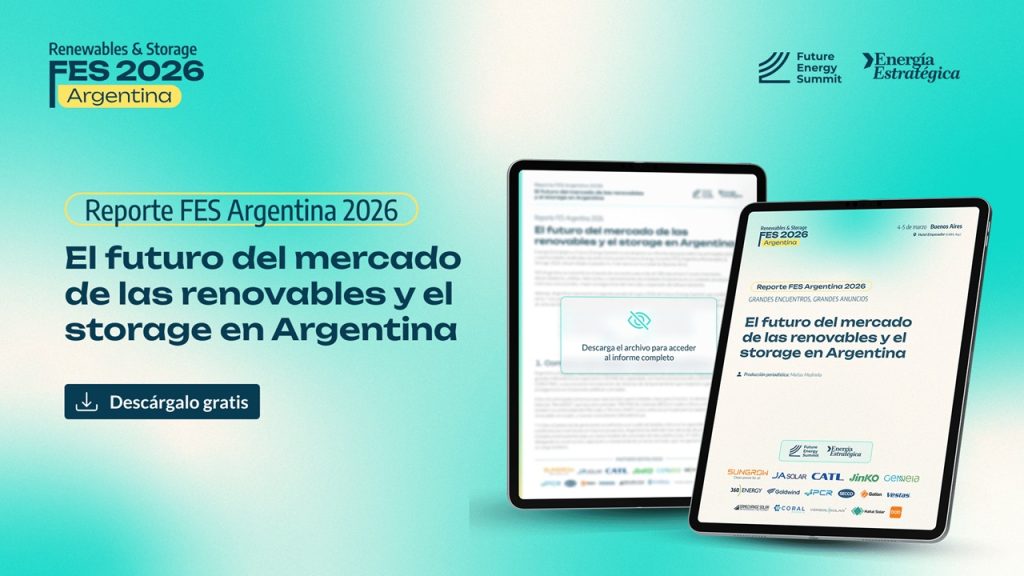
Energía Estratégica and Future Energy Summit (FES) have produced an exclusive report (only available in Spanish) outlining the main announcements and key developments following the event that brought together more than 500 industry leaders in Buenos Aires. The meeting was marked by the continuity of power purchase agreements (PPAs), as well as new tenders for energy storage and transmission infrastructure.
Energía Estratégica and Future Energy Summit (FES) co-produced a report summarising the main announcements and opportunities discussed during FES Argentina Renewables & Storage 2026, held on 4–5 March in the city of Buenos Aires, which gathered over 500 leaders from across the energy sector.
The report confirms that FES Argentina once again became a crucial meeting point for the energy industry and positions itself as a roadmap for investors and executives amid structural reforms, new electricity market dynamics and investment decisions that are reshaping the pace of growth.
Why? Argentina is on the verge of reaching 8 GW of installed renewable capacity in the Wholesale Electricity Market (MEM), excluding hydroelectric plants larger than 50 MW. At the same time, the country continues to incorporate stand-alone storage through the AlmaGBA tender (713 MW awarded) and the ongoing AlmaSADI process (700 MW target), while transitioning towards more private bilateral contracts and marginal cost-based pricing.
In particular, the AlmaSADI tender is emerging as one of the most significant signals for the sector. Government authorities have suggested that the procurement volume could increase by up to 10%, depending on pricing, location and the number of bids received, potentially marking a turning point to “let the market operate more freely”.
Moreover, leading energy companies have expressed strong interest in participating in the 700 MW BESS tender, which is expected to close between May and June. There is also a strong business consensus consolidating energy storage as a core component in the development of future renewable energy projects.
Furthermore, FES Argentina made clear that the Mercado a Término (MAT) will continue to serve as the main vehicle for channelling investment into renewable generation and storage, as hourly price signals and the availability of interconnection nodes will define the execution pipeline.
In this context, companies across the sector are already adjusting their strategies towards more flexible models, where technology choices respond directly to system needs and customer demand. Hybridisation is no longer an alternative, but rather an emerging standard.
Companies such as YPF Luz, Pampa Energía, Central Puerto, PCR, TotalEnergies, and Coral Energía are advancing schemes that combine generation, storage and, in some cases, transmission infrastructure in order to optimise costs, improve operational flexibility and adapt to an increasingly competitive market.
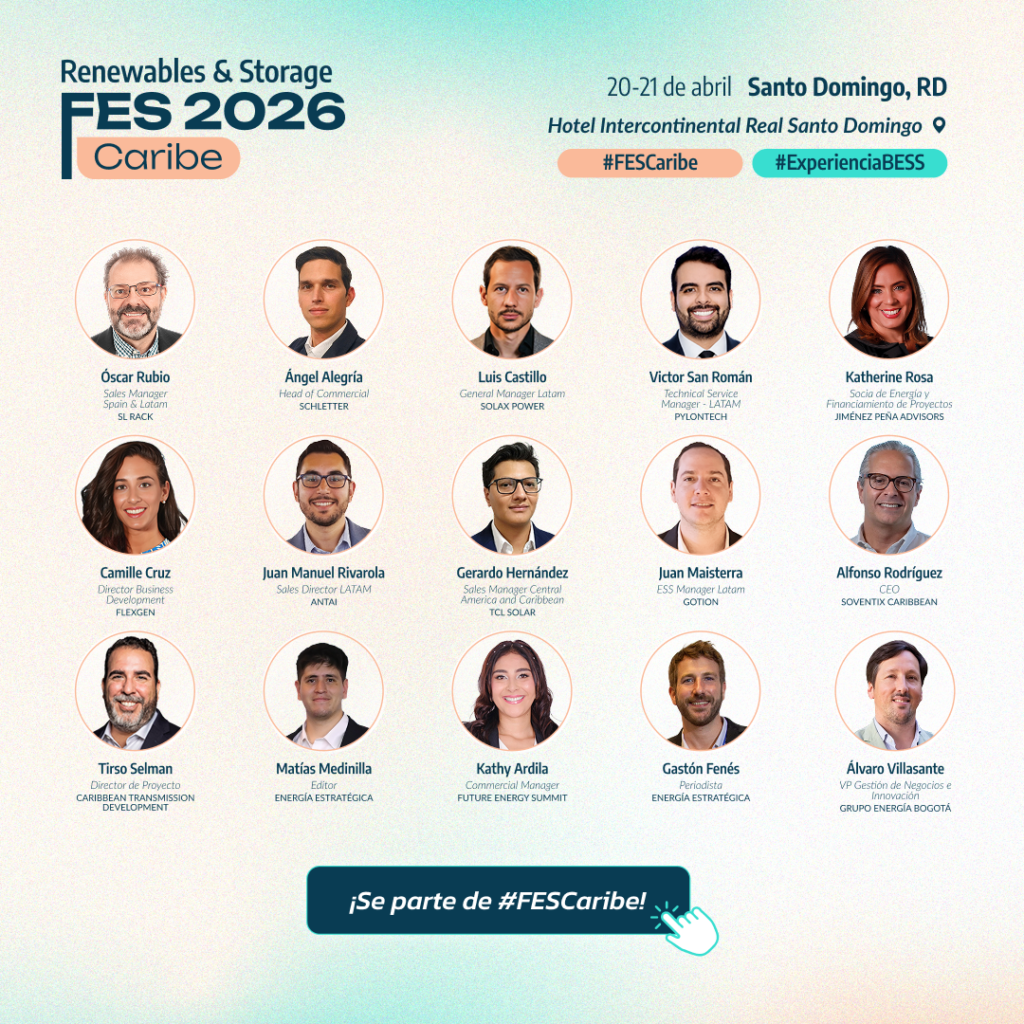
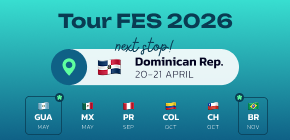
How does the FES tour continue? Argentina represented the second stop of the 2026 Future Energy Summit tour, which will continue with seven additional events aimed at strengthening regional dialogue, promoting technological innovation and fostering public–private collaboration around the challenges and opportunities of the energy transition.
- Dominican Republic (20–21 April)
- Guatemala (14 May)
- Mexico (19 May)
- Peru (28 September)
- Colombia (30 September)
- Chile (28–29 October)
- Brazil (3 November)
Transmission: the bottleneck shaping renewable growth
Another determining factor in this landscape is transmission infrastructure, which remains the main constraint on sector expansion and was one of the central topics discussed during FES Argentina.
During the event, Argentina’s Secretariat of Energy revealed when tender documents for the first three key high-voltage transmission projects will be launched. These will be structured under a concession model that assigns construction, operation and maintenance responsibilities to the private sector.
The projects will enable more than 1,000 MW of additional capacity and relieve congestion in critical nodes of the Argentine Interconnection System (SADI), while generators and developers actively prepare in anticipation of increased transmission capacity.
In summary, the report prepared by Energía Estratégica and Future Energy Summit (FES) not only compiles key announcements but also provides a comprehensive view of the market’s direction.
Amid regulatory signals, corporate decisions and a pipeline of new projects, the document stands out as a key tool for understanding the current landscape and anticipating the sector’s next moves.
The full details of these developments, along with data, projects and outlooks, are presented in the report, offering deeper insights into each of the opportunities identified during FES Argentina 2026.