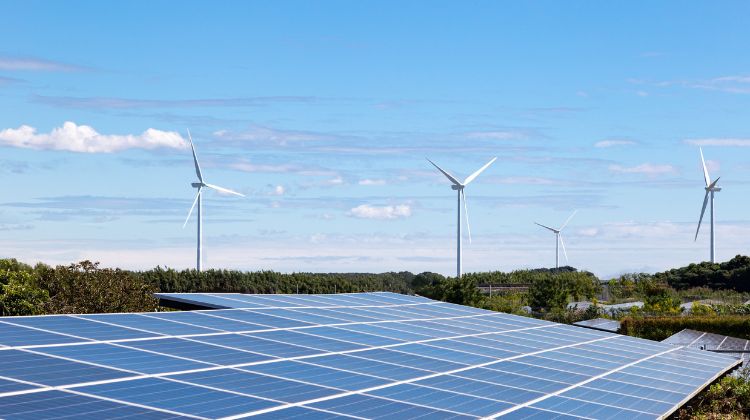












The country currently has 7,843 MW of renewable energy capacity installed in the Wholesale Electricity Market, excluding large hydropower plants above 50 MW. The mix is dominated by 4,531 MW of wind power and 2,475 MW of solar PV, with strong concentration in Patagonia (1,662 MW of wind) and Buenos Aires + Greater Buenos Aires (1,971 MW of wind), while the Cuyo region leads in photovoltaics with 1,095 MW.
However, future growth—estimated at 5,492 MW in the project pipeline—faces a structural limitation linked to transmission capacity, identified as the system’s main bottleneck.
In this context, leading players are consolidating their position by combining new generation projects with energy storage initiatives and transmission infrastructure expansion, accounting for a significant share of installed and under-development capacity nationwide.
Genneia (1,616 MW), YPF Luz (756 MW), Central Puerto (570 MW), PCR (545 MW), MSU Green Energy (335 MW), Pampa Energía (427 MW), Coral Energía (400 MW), AES Argentina (357 MW) and 360 Energy (245 MW) together operate more than 5,250 MW of wind and solar capacity.
In addition, Solar DQD has delivered over 1,200 MW as an EPC contractor, alongside 25 MW of proprietary assets.
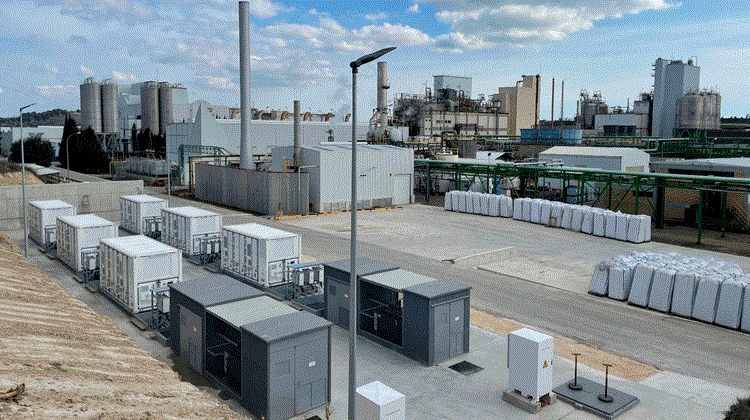
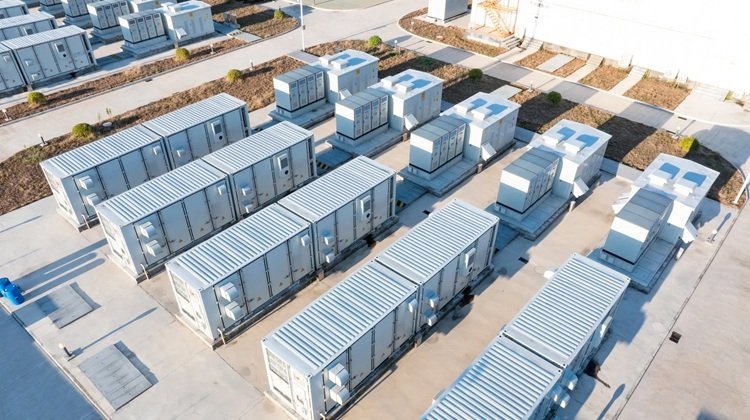
Regarding projects under construction and near-term expansion, these companies accumulate more than 1,400 MW of renewables in execution or advanced engineering stages. At the same time, energy storage is gaining prominence within their pipelines, both through the 713 MW awarded in the AlmaGBA storage tender in 2025, at an average price of USD 11,964 per MW-month, and through future projects under the Term Market framework.
Furthermore, Argentina’s energy sector is awaiting the launch of the new AlmaSADI call. Combined with the volume of projects already underway, energy storage is consolidating as the new short-term expansion axis.
The term market: Core driver of expansion
Corporate dynamism is accompanied by a structural shift in regulatory design, as Resolution SE No. 400/2025 marks a turning point by promoting the transition towards private bilateral contracts, reducing the role of CAMMESA as the main off-taker and restoring its function as system operator with marginal cost-based price signals.
The Term Market (MAT) is therefore set to consolidate as the central vehicle for renewable expansion, following its role as the main growth driver in recent years.
Currently, 136 projects totalling 6,019.7 MW hold dispatch priority, of which 3,726.5 MW correspond to the Full MATER regime (without injection limits) and 2,293.2 MW to the Referential A mechanism, with potential curtailment of up to 8% until transmission works are completed.
Additionally, 85 applications representing 3,646.5 MW are seeking dispatch priority, while another 51 awarded projects—totalling more than 2,300 MW—are pending commercial operation. Dispatch priority allocation has thus become the key mechanism for rationing limited grid capacity.
However, structural expansion ultimately depends on transmission infrastructure. Decree 921/2025 enables a privately financed public works concession model, with repayment through regulated tariff charges. Three priority projects—AMBA I (more than 500 kilometres), the 500 kV Río Diamante–Charlone–O’Higgins line and the 500 kV Puerto Madryn–Choele Choel–Bahía Blanca line—together add more than 1,300 kilometres of high-voltage grid, and will be decisive in unlocking additional capacity.
From a strategic perspective, energy storage represents the fastest execution opportunity with the greatest short-term visibility (1–2 years). Utility-scale generation maintains strong technical potential, although constrained by transmission availability and contractual consolidation (2–4 years). Transmission networks constitute the largest-scale investments with systemic impact, offering regulated returns over a 4–8 year horizon.
Argentina’s power market is therefore undergoing a dual technological and regulatory transition. The combination of corporate leadership, contractual liberalisation, fiscal incentives such as the RIGI framework and private infrastructure concessions is shaping a new competitive balance in which efficient capital allocation will depend on structuring bankable contracts, securing dispatch priority and managing regulatory risk.
Argentina is redefining its electricity market under an open market logic, where opportunity no longer depends solely on natural resource availability, but on the strategic integration of generation, storage and transmission within a context of structural transformation.