





The Argentine government is considering increasing the capacity awarded under the AlmaSADI battery storage tender by up to 10% above the currently planned 700 MW, depending on the competitiveness and geographic distribution of submitted projects.
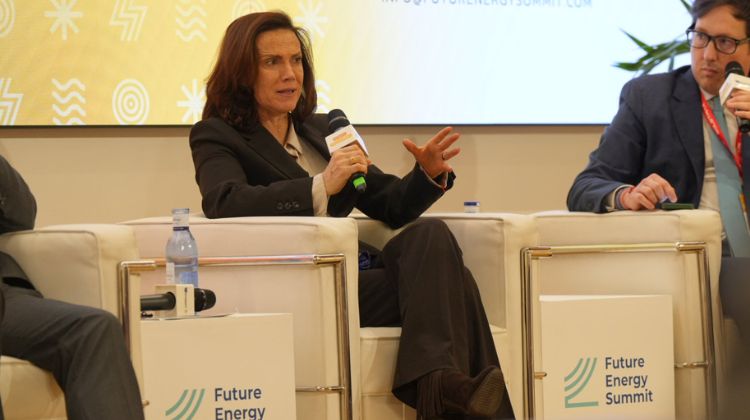
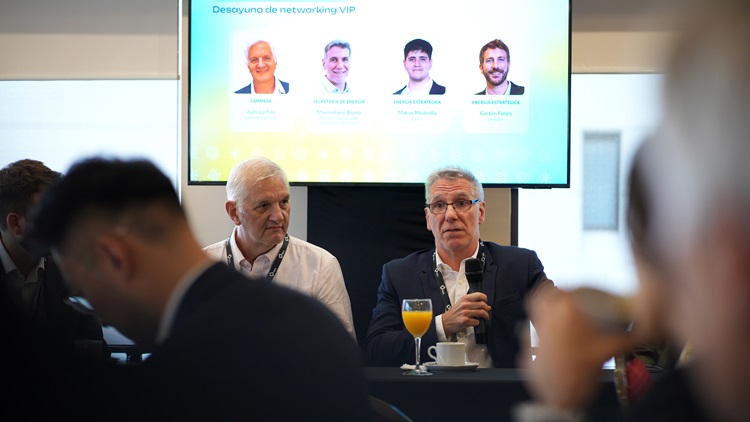
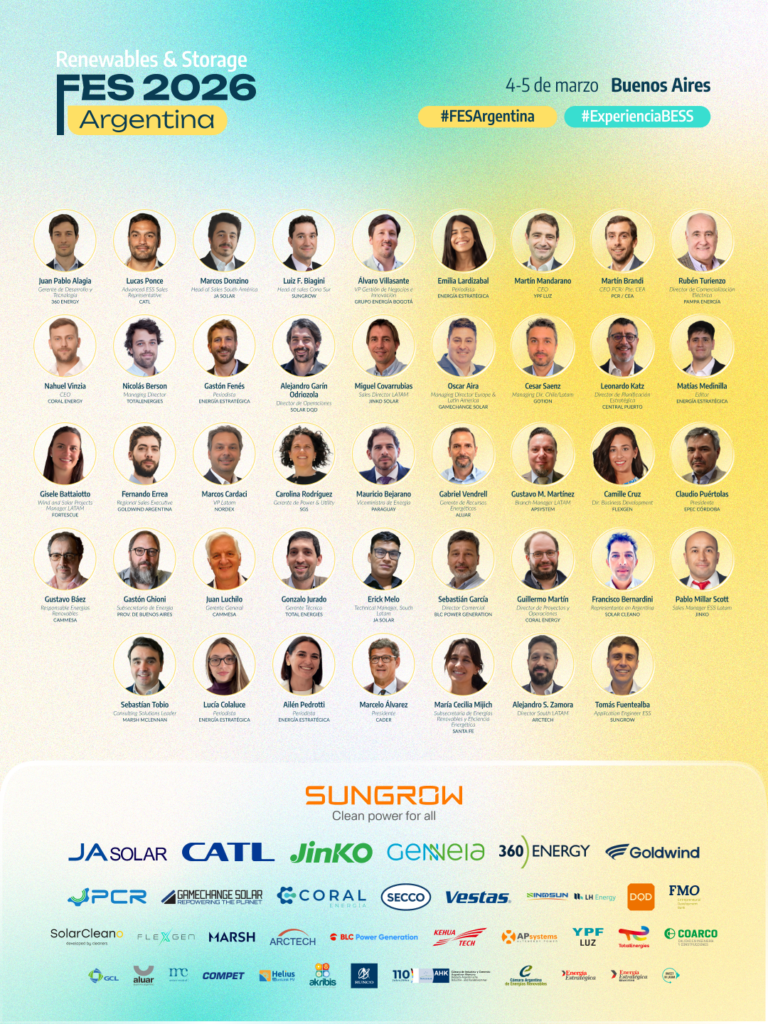
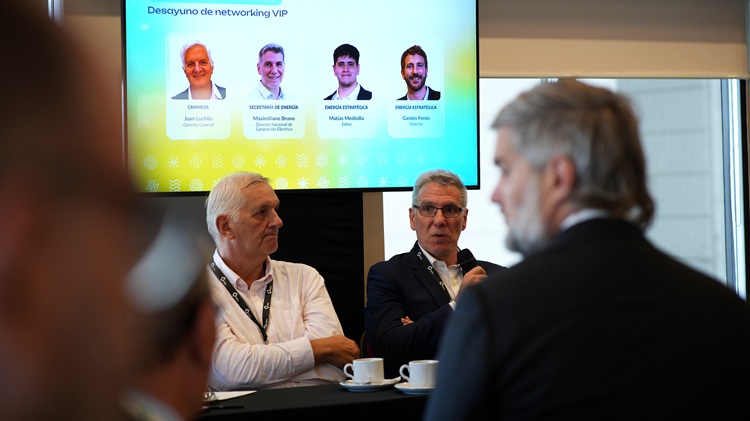
The announcement was made by Maximiliano Bruno, Argentina’s National Director of Power Generation, during an exclusive networking breakfast at Future Energy Summit (FES) Argentina, a regional event that gathers renewable energy executives and policymakers.
“The expansion of awarded capacity will depend largely on the number of bids, their location and the offered prices,” Bruno explained to industry representatives from across Latin America.
“While the regulator will ultimately decide whether to expand the awarded capacity, launch a second round, or set a price adjustment mechanism for bidders, the current ceiling is 700 MW — although it could increase by up to 10% depending on the structure of the projects,” he added.
The AlmaSADI auction, formalized through Resolution SE No. 50/2026, aims to deploy 700 MW of stand-alone battery energy storage systems (BESS) across Argentina.
The initiative targets critical nodes of the Argentine Interconnection System (SADI) — the country’s national electricity grid — with the goal of improving reliability and reducing supply interruptions in several regions.
Key features of the tender include:
-
Technology: Stand-alone battery energy storage systems (BESS)
-
Target capacity: 700 MW
-
Estimated investment: USD 700 million
-
Contract duration: Up to 15 years
-
Offtaker: CAMMESA (Argentina’s wholesale electricity market administrator)
-
Revenue model: Payments primarily linked to capacity availability
The program represents one of Argentina’s most significant grid-scale energy storage initiatives, designed to support renewable energy integration and strengthen grid stability.
The bidding process will be completed in less than four months, following a tight schedule established by the Energy Secretariat.
| Milestone | Date |
|---|---|
| Technical and administrative bids (Envelope A) | May 8, 2026 |
| Evaluation period | May 8 – May 21 |
| Publication of results | May 28 |
| Economic bids (Envelope B) | June 5 |
| Award announcement | June 19 |
| Contract signing begins | June 25, 2026 |
Regarding project execution timelines:
-
Contractual start date: January 1, 2027
-
Commercial operation deadline: December 31, 2029
During the event, Bruno also encouraged developers to submit competitive bids, emphasizing the importance of the tender within Argentina’s evolving energy policy.
“We don’t know if there will be another auction of this type, so we encourage interested companies to put strong effort into the AlmaSADI call, offer competitive prices and try to win,” he said.
A broader reform of Argentina’s power market
The tender comes amid a broader restructuring of Argentina’s electricity sector.
In 2025, the government launched several procurement processes aimed at improving grid reliability and attracting investment in infrastructure, including:
| Initiative | Capacity / Scope |
|---|---|
| AlmaGBA BESS auction | 713 MW awarded |
| Hydropower tenders | Concessions for existing plants |
| Transmission expansion | Planned new grid investments |
According to Juan Luchilo, General Manager of CAMMESA, Argentina’s wholesale power market operator, the government’s objective is to gradually rely more on market mechanisms.
“If the market can be organized with the tenders already carried out and those currently underway, along with the regulatory changes introduced in Resolution SE No. 400/2025, there may not be another battery auction,” Luchilo said during the FES Argentina breakfast.
“The idea is to launch this tender and allow the market to function more freely, since Resolution 400/2025 already provides mechanisms for new energy storage or generation projects to enter the system”.