











Argentina has allocated 365 MW of dispatch priority to seven renewable energy projects under its private power contracting framework, a mechanism that allows large consumers to sign bilateral power purchase agreements (PPAs) directly with generators.
Of the total capacity awarded, 24 MW received full dispatch rights, while 341 MW were granted under the “Referential A” scheme. This mechanism permits projects to move forward despite grid limitations, allowing up to 8% generation curtailment until transmission upgrades are completed.
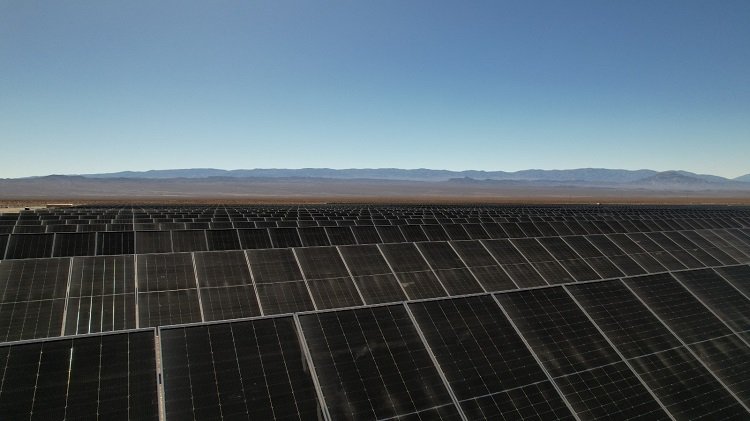
The technology breakdown shows a strong solar PV presence. Four photovoltaic projects totalling 290 MW were selected, while three wind power projects accounted for the remaining 75 MW. All wind projects were awarded capacity under the Referential A modality.
Commercial operation dates were committed for January 13, 2028. However, two solar projects that include associated transmission and infrastructure works extended their timelines to January 12, 2031.
Notably, two of the awarded projects incorporate grid infrastructure and/or energy storage solutions, enhancing system reliability and enabling additional future capacity.
Among them, PS Sol del Valle secured 180 MW in this round—on top of 120 MW previously awarded. The project includes a 132 kV shunt compensation system in Malvinas, replacement of a series capacitor at the Recreo transformer substation, and expansion of transformation capacity at the La Rioja Sur 132/500 kV substation.
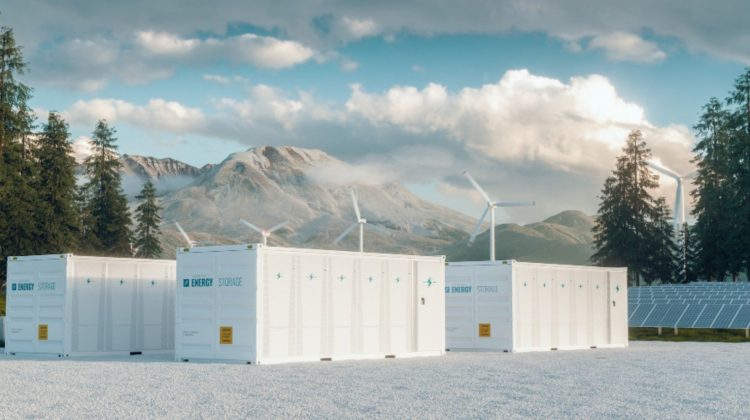
Another key project, PS Tocota III, received 46 MW. It includes upgrades to the Bauchaceta transformer substation, normalisation of the Calingasta–Rodeo high-voltage transmission line, and the addition of a Battery Energy Storage System (BESS), strengthening grid integration capacity.
| Transmission Corridor | Awarded Capacity | Technology / Notes |
|---|---|---|
| Northwest Argentina (NOA) | 180 MW | Solar – Referential A |
| Buenos Aires Centre-South | 55 MW | 2 Wind projects |
| Cuyo region | 46 MW | 1 Solar project |
| Northeast Argentina (NEA) | 40 MW | Solar |
| Greater Buenos Aires (GBA) | 24 MW | Solar PV (Full dispatch) |
| Atlantic Coast | 20 MW | Wind |
The results position Genneia—one of Argentina’s leading renewable energy companies—as the main beneficiary of the auction. The company secured dispatch priority for a 20 MW wind farm and two solar PV plants with associated infrastructure, totalling 226 MW.
These additions align with Genneia’s strategy to reach 2 GW of installed renewable capacity in the short term, reinforcing its leadership in Argentina’s renewable energy sector.
The awarded volume reflects a technically restrictive scenario. According to data published by CAMMESA—the country’s wholesale electricity market administrator—only 50 MW had full grid availability without restrictions, located exclusively in the Misiones–NEA–Litoral corridor.
All remaining capacity was subject to the Referential A scheme, underscoring that Argentina’s renewable energy expansion is increasingly conditioned by transmission bottlenecks rather than project availability or corporate demand for clean energy.
Compared to previous allocation rounds, where higher volumes were granted, the decline is directly linked to structural limitations in the high-voltage transmission network. The primary bottleneck now lies in evacuation capacity and grid integration rather than investment appetite.
The historical data of Argentina’s private renewable market confirms this trend:
-
1,495 MW of fully enabled capacity
-
359 MW operating under Referential A
-
1,140 MW of full-capacity projects not yet commercially enabled
-
1,530 MW of Referential A projects are pending commercial operation
-
An additional 946.6 MW (full) and 2,445.9 MW (Referential A) under Resolution SE 360/23
These figures highlight a dynamic renewable energy market increasingly dependent on grid expansion and modernisation.
In this latest round, the combination of solar PV generation, transmission upgrades and battery energy storage signals a new phase for Argentina’s energy transition—one in which technical feasibility and grid integration have become central to renewable growth strategy.