








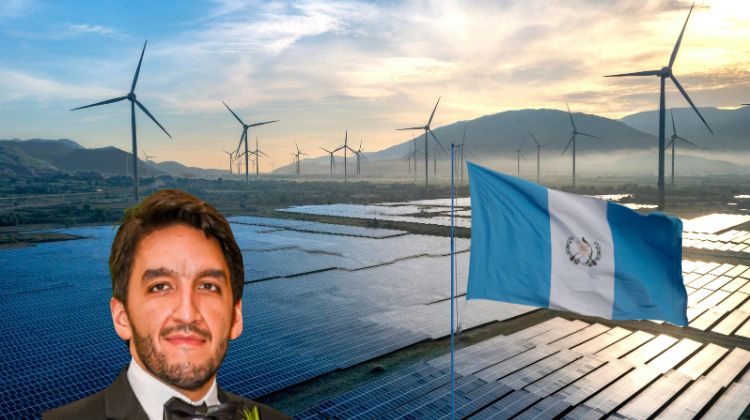
Renewable energy is quietly reshaping electricity price formation in Guatemala. While solar and wind power still play a limited role as marginal technologies, they are displacing increasing volumes of higher-cost generation. With the addition of energy storage, they could soon move from being price takers to price setters in the wholesale power market.
Between December 2024 and November 2025, solar and wind technologies set the Opportunity Cost of Energy (Precio de Oportunidad de la Energía, POE) for just 13 and 24 hours, respectively, out of a total of 8,760 hours. At first glance, this would suggest a secondary role. However, underlying trends point in the opposite direction.
Renewable plants are pushing more expensive generation out of the dispatch stack, reshuffling the merit order and forcing conventional technologies to the margins. This systemic pressure is already altering market dynamics. With the integration of battery energy storage systems (BESS), the role of renewables could expand even further.
The key shift lies in flexibility. When combined with storage, a renewable power plant no longer depends solely on real-time solar or wind availability. It can store energy and decide when to inject it into the grid. From a market perspective, this capability transforms renewables into potential price-forming assets.
This transition has already materialised in Texas. In Guatemala, it has not yet fully taken shape, but early signs are emerging. Technology providers have entered the market with modular, containerised solutions of around 5 MWh, although large-scale deployments remain limited.
Beyond technology, the main bottleneck is economic. Leonardo David, a renewable energy consultant, summarised the challenge clearly:
“There is a clear opportunity to activate the energy storage market through schemes that recognise the different services batteries can provide to the power system.”
He referred directly to the New York State Energy Research and Development Authority (NYSERDA) model, under which batteries can generate revenue from multiple services, including demand reduction, capacity payments, ancillary services and, to a lesser extent, energy arbitrage. This diversified revenue stack significantly improves project bankability without relying solely on high spot prices.
In the Guatemalan context, where renewable penetration continues to increase, adopting a similar framework could accelerate investment in distributed energy storage, enhance system flexibility and ultimately alter price formation mechanisms.
At present, spot prices remain largely driven by other technologies. Nevertheless, market signals are becoming increasingly clear. The average POE recorded by renewables stood at USD 1.23/MWh for solar and USD 0.86/MWh for wind, compared with higher levels for other generation sources. While their marginal participation remains low, it understates their real influence on the system.
“Distributed generation resources (GDRs) without power purchase agreements (PPAs) tend to be the most exposed to spot price reductions, as the spot market determines the sale price of uncontracted output,” David warned. While renewables exert downward pressure on prices, this also highlights the need for more stable commercial arrangements for distributed generators.
The picture is that of a market in transition. As variable renewable capacity continues to expand, energy storage is emerging as the missing link that will allow clean power not only to enter the system but also to shape price signals.
The challenge is no longer technical, but regulatory and economic. Properly valuing renewables and their associated storage will not only mitigate financial risks for the most exposed players but will also determine who sets electricity prices in Guatemala in the years ahead. All indications suggest that renewables will play that role.