







How is Ventus positioning itself regionally? How has 2026 started for the company?
Ventus is consolidating itself as an increasingly relevant regional player in the renewable energy sector, with a value proposition that combines development, engineering, construction, operation and maintenance, alongside growing capabilities to execute large-scale engineering, procurement and construction (EPC) contracts.
What milestones have you achieved?
Over the past 16 years, we have approached 3 GW under construction and have managed more than USD 3 billion in assets across the region. That trajectory has allowed us to build a very strong foundation in key markets while developing an increasingly clear regional vision.
And what lies ahead this year?
2026 marks a new phase for Ventus. We come from years of consolidation in countries where we now have a significant presence, and we are entering a more active growth stage, with a robust pipeline, new geographies under development and a clear commitment to international expansion.
Rather than growth built on narrative, what we see is tangible progress in activity, contract awards, customer diversification and regional presence.
Which countries are you currently operating in, and where are you looking next?
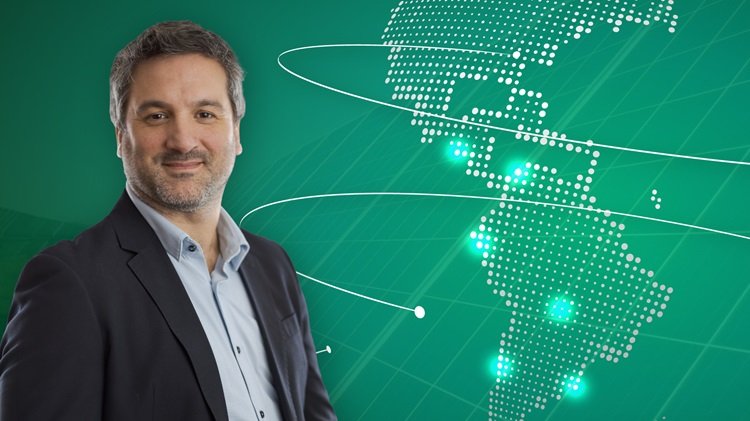
We have a presence in Uruguay, Argentina, Chile, Colombia, Ecuador, Guatemala and Costa Rica. That regional base allows us to project stronger expansion into Central America, the Caribbean and North America.
We also see attractive opportunities in Peru, the Dominican Republic and Mexico — countries with different dynamics, but a shared need to advance new renewable energy infrastructure with partners that have real large-scale project experience.
What differences do you see among these markets?
In more mature markets such as Colombia or Chile, the focus is on competitiveness, efficiency, speed of execution and the adoption of new technologies.
Meanwhile, in markets still consolidating their development, such as several in Central America and the Caribbean, the greater value lies in structuring projects well from early stages, supporting clients with initial engineering, organising risks and helping turn an opportunity into an executable and financeable project.
Given these opportunities and ongoing processes, how do you prepare to participate?
Preparing to participate in a project begins long before submitting a bid. It requires a deep understanding of the project, the client, the market and the risks associated with each context.
Such as?
It requires in-house technical capabilities, especially in engineering and project structuring, to quickly assess needs, constraints and opportunities.
At the same time, it requires building local presence and teams capable of understanding the context, developing trusted relationships and grounding each project realistically.
Today, competing in this sector is not only about price. Increasingly important are execution capabilities, meeting deadlines, risk management, interface coordination, relationships with communities and stakeholders, and adaptability in changing scenarios. In that sense, experience in EPC contracts is fundamental.
What projects are you currently working on?
Colombia remains one of the company’s most important markets, where we have delivered and are delivering 800 MW, with significant participation in the development of the solar sector.
At the same time, we are advancing projects and concrete opportunities in Ecuador, Guatemala and Costa Rica, among other markets.
And looking ahead, what can we expect from the company?
Looking forward, we see a very clear opportunity to continue growing in Central America, the Caribbean and Mexico, regions where we expect greater activity in the coming years.
This is complemented by progress on Latin America’s first green hydrogen project for road transport, which will begin operations in 2026 and also reflects our commitment to new technologies with transformational potential in the region.
Ultimately, the goal is to continue growing steadily, but with discipline: maintaining a focus on execution quality, project profitability and the ability to turn complex challenges into concrete and viable solutions for clients.
Have recent geopolitical and economic developments had an impact on you?
Yes, the global geopolitical and economic context has a direct impact on highly sensitive variables for our sector, such as supply chains, equipment availability, logistics costs, manufacturing lead times and price volatility.
That environment requires far greater focus today on planning, procurement and risk management than it did a few years ago.
But it also increases the value clients place on companies with experience, solidity and adaptability.