




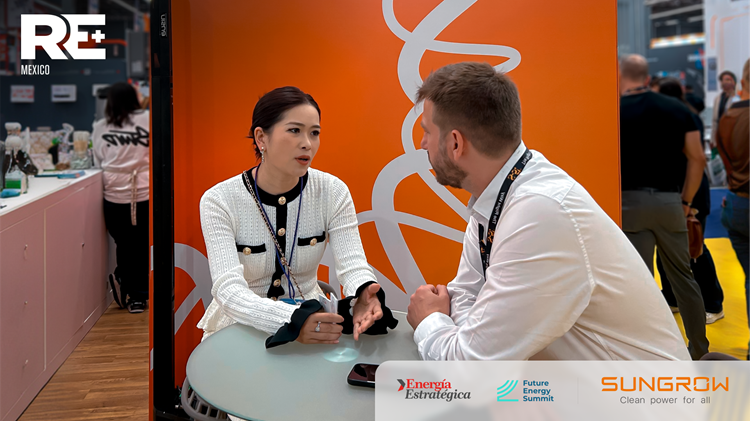
In an interview with Energía Estratégica, Alba Min Ye, CEO of Solis LATAM, discusses her professional trajectory, the challenge of integrating cultures, and the company’s strategy across the region.
—How has your professional journey evolved, and what milestones led you to Solis?
I have spent many years working for the Chinese company, combining Chinese culture with local teams—not only in Mexico. If a Chinese company wants to achieve something different, the most important thing is to build a strong team without misunderstandings. My main task is to strengthen a solid team in this market—not only in sales, but also in product—in order to deliver the best service to customers.
—What are the key differences between Chinese and Latin American business cultures?
This is a very interesting topic. In China, we have a concept called internal competition. It’s not only between people, but also with ourselves. We execute targets under tight schedules; if I have one task at 9:00 and another at 10:00, everything must be completed on time.
Local teams tend to be more relaxed. They also work hard and effectively, but with a different pace. In China, people often work even on weekends or spend time writing reports.
Here, there is a clearer separation between work and personal life. In China, not so much. My role is to help headquarters understand how we work here, and show that success can also be achieved in this way. Cultural exchange is essential.
—How do you apply this in practice as CEO for Latin America?
The most important aspect is building trust with local employees and clearly explaining the company’s goals. It is not possible for only Chinese teams to execute these objectives—we always work as a team. Both sides must fully understand what we are doing and how we will move forward.
I am working to establish a clearer and fairer KPI (Key Performance Indicator) system for everyone. We define targets for each individual based on their role, and conduct evaluations the following year. Those who meet their targets receive salary increases or bonuses according to the established rules.
—Why did you choose Latin America to develop your career?
I really like Latin America. My entire career has been built here. After graduating, I came for business and have now been here for more than 13 years. I stand in the middle—I can combine Chinese culture while embracing Latin American culture. This has helped me greatly, both professionally and personally. I feel very comfortable here.
—What solutions are addressing market needs, and what differentiates Solis?
We have a strong foundation, especially with our on-grid inverters, where we have years of experience. In the residential segment, we hold a competitive advantage.
In the commercial and industrial (C&I) segment, this year we introduced our hybrid inverter, which is highly competitive. Sales data shows significant growth compared to last year.
If we continue strengthening pre-sales and after-sales services, I am confident we will achieve strong growth, especially as Mexico’s industrial market is expanding under recent policies.
—What technical advantages does a separate AC/DC architecture offer?
Our hybrid inverters can be applied to both solar and energy storage systems. Customers do not need to install two separate inverter systems—our hybrid inverter fulfills both roles.
This results in substantial cost savings in project development, reducing expenses related to inverters as well as accessories such as cables and connectors.
—If we met again in April 2027, what would need to happen in 2026 for you to feel satisfied?
I would review the targets we are currently setting to measure how much we have achieved. I am confident that by then, Solis’ energy storage solutions will be mature and widely accepted by customers.
Solis solutions are highly compatible. We offer hybrid inverters that can work with any battery brand, while also providing fully integrated solutions. I believe this will drive significant market growth.
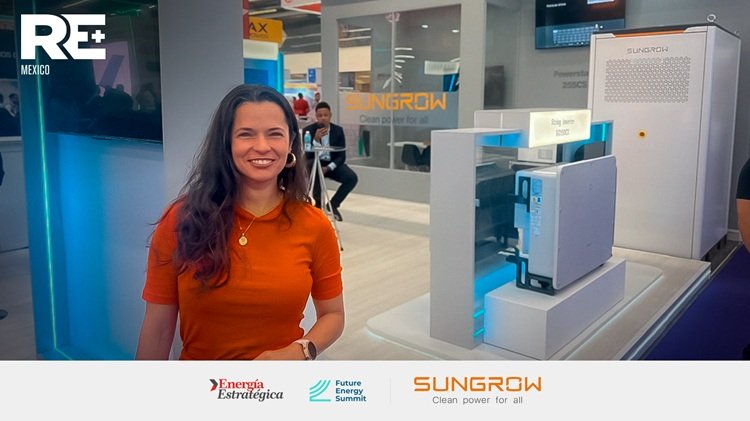
Within the framework of RE+ Mexico, Solis LATAM showcased its energy storage solutions for both residential and commercial and industrial segments.
Key solutions presented:
- EverCore (C&I energy storage system)
- Based on a 125 kW four-in-one hybrid inverter
- Separate AC/DC architecture
- Configurations: 100 kWh, 120 kWh, and 261 kWh
- Enables seamless integration with solar PV systems, the grid, and backup generators
- Residential storage portfolio
- IntelliHome batteries: wall-mounted or floor-mounted (5–16 kWh)
- FlexHome batteries: stackable systems (5–40 kWh)
- Designed to ensure energy independence, reliable backup, and long-term cost optimization
These solutions generated strong interest and positive feedback from attendees, in line with the company’s strategy to strengthen its position in energy storage and hybrid solutions across Latin America.