











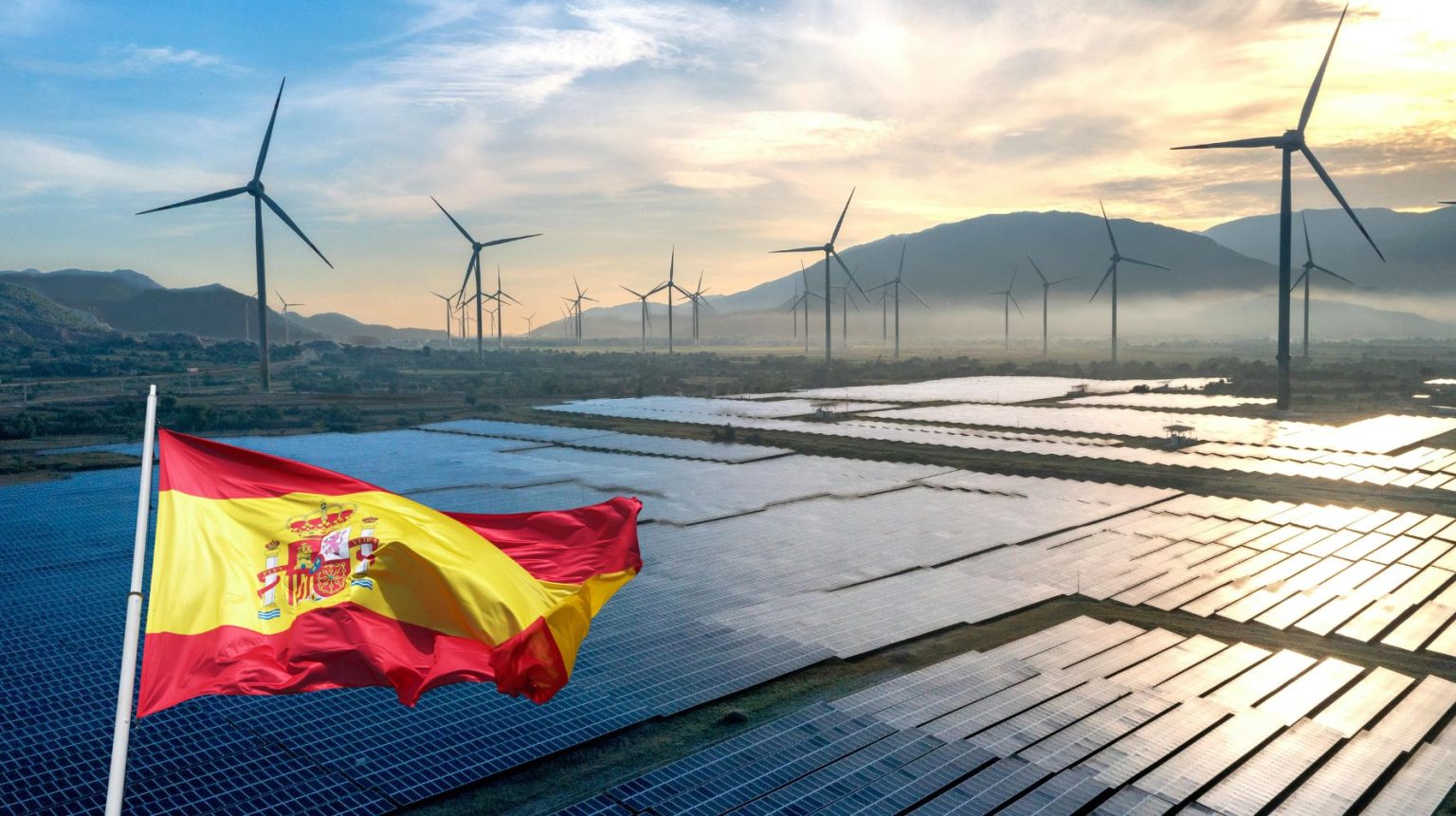
Spain has started 2026 with strong momentum in renewable energy deployment, reaching 650 MW of installed capacity during the first quarter. This comes in a context where clean generation is not only gaining structural share but also setting monthly milestones. In March, renewables accounted for 63.1% of the total electricity mix, consolidating an increasingly decarbonised power system, according to data from Red Eléctrica de España (REE), the country’s transmission system operator.
This trend builds on steady growth since the beginning of the year, with renewables representing 56.4% in January, rising to 64.3% in February, and reaching 63.1% in March. In contrast, non-renewable technologies declined from 43.6% in January to 36.9% in March, highlighting a sustained shift within the electricity mix. In this scenario, Spain’s energy matrix continues to be reconfigured, with greater renewable penetration and reduced reliance on conventional sources.
In terms of technologies, wind power remains the main generation source with 22.4% of the total, followed by hydropower at 19.1% and solar photovoltaic at 18.5%, reflecting an increasingly competitive balance between mature and expanding technologies.
From the total new capacity added during the quarter, solar PV accounts for the largest share, with projects continuing to be deployed at scale across strategic regions. Castilla-La Mancha leads this growth with 360.5 MW installed, followed by Castilla y León, which adds 168.3 MW, reaching a cumulative total of 5.9 GW.
At a smaller scale, other regions also contribute to solar expansion: the Valencian Community adds 26.1 MW, Madrid incorporates 12.2 MW, and Murcia contributes 10.2 MW, while the rest of the regions show more moderate increases. This pattern highlights a strong territorial concentration of solar PV development, driven by resource availability, land access and grid connection capacity.
In this context, installed capacity continues to scale at the system level, with wind power reaching 33,346.6 MW and solar PV 51,506.5 MW, consolidating both as key pillars of Spain’s energy mix.
By contrast, wind power shows more limited expansion during the period, with only 38 MW installed, all located in Andalusia. Meanwhile, solar PV added just 1.5 MW in March, suggesting a temporary slowdown in monthly grid connections despite strong quarterly performance.
This progress occurs alongside a 1.8% year-on-year contraction in electricity demand in March, reinforcing the relative weight of clean technologies in meeting consumption. In this scenario, the energy mix continues to evolve towards higher renewable penetration and lower dependence on conventional sources.

Demand, grid and warning signals for the sector
This start to the year is supported by a solid foundation: Spain added nearly 8 GW of renewable capacity throughout 2025. In this context, the 650 MW installed in the first quarter of 2026 reflects continued expansion, albeit with signs of greater selectivity in both technological deployment and regional distribution.
However, the development of new electricity infrastructure is emerging as one of the main bottlenecks in the system. Updated distribution grid capacity maps show that 83.4% of nodes are saturated, limiting the integration of new renewable projects as well as access for large electricity consumers.
This scenario not only constrains supply but also shapes demand evolution. Alongside the drop in consumption recorded in March, the market is increasingly focusing on mechanisms to activate new demand, where demand-side auctions stand out as a key tool to rebalance the system. Currently, around 75 nodes have been identified as eligible for such tenders, following the recent allocation of 928 MW, opening a new chapter in Spain’s energy planning.
In conclusion, the start of 2026 confirms Spain’s renewable momentum, but also highlights structural challenges related to grid infrastructure and demand. High penetration of clean generation coexists with access constraints and the need to activate consumption, shaping a scenario where future expansion will depend both on infrastructure development and the system’s ability to absorb new energy.