








The development of new energy projects in Argentina is opening a window of opportunity for international financing, particularly in sectors linked to renewable generation, energy storage and mining. However, expanding the country’s power infrastructure is emerging as a necessary condition for these investments to materialise.
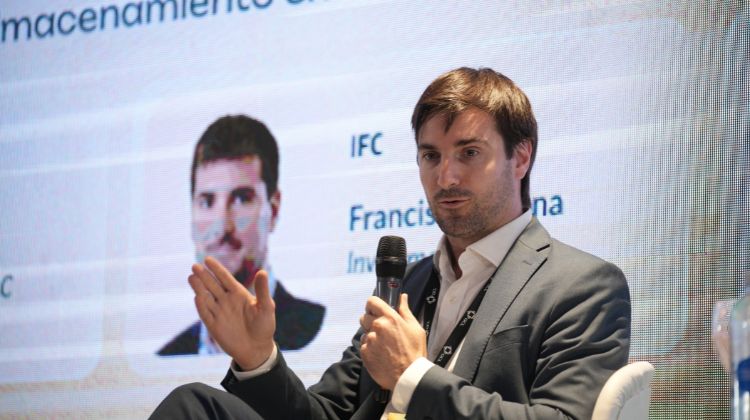
At the Future Energy Summit Argentina 2026, Francisco Iacona, Investment Officer at the International Finance Corporation (IFC), explained that the country has energy and natural resources capable of driving a new investment cycle if it manages to resolve bottlenecks in the electricity system.
“The main challenge we see is transmission,” Iacona stated.
The executive noted that this challenge is not exclusive to Argentina, but is repeated across different electricity markets due to the technical, regulatory and financial complexity involved in developing large-scale high-voltage transmission lines.
Relive the second day: https://www.youtube.com/live/CvOl38xzqk8?si=2VPHqIGv-Cpv3iZ2
From IFC’s perspective, the potential for energy financing in Argentina is increasingly linked to the growth of other productive sectors, particularly mining.
“Our strategy in Argentina is focused on the mining ecosystem,” Iacona explained.
The institution is working on schemes that combine financing for productive projects with associated infrastructure, such as roads, railways, ports, power networks and generation. The objective is to mobilise private capital alongside financial institutions and commercial banks to enable large-scale investments that drive economic development.
IFC has even entered into an agreement with Central Puerto to finance technical, economic and environmental feasibility studies for a high-voltage transmission line of approximately 140 km, originating at the Puna transformer station.
This project is expected to require a total investment of USD 600 million and aims to reach 400 MW (with a potential of up to 700 MW), offering competitively priced energy supply, mainly from renewable sources.
As a result, it could serve as a starting point for other players in the energy and mining sectors to express interest in this new IFC mechanism, which—according to industry sources—would be similar to the Mercado a Término de Energías Renovables (MATER): a fully private scheme without state guarantees, unlike the RenovAr Programme (FODER + World Bank).
In addition, Argentina already has a preliminary roadmap to expand its electricity transmission network. The system identifies 16 strategic transmission projects that would increase energy evacuation capacity and enable new grid connections.
These initiatives are part of a national transmission expansion plan launched in 2025, which includes the construction of more than 5,610 km of new high-voltage lines (132 kV and 500 kV), with estimated investments exceeding USD 6 billion to strengthen the Sistema Argentino de Interconexión (SADI) and relieve current bottlenecks limiting system expansion.
These works are seen as a key condition for enabling investment in power generation, especially in a country that has rapidly expanded its renewable energy capacity over the past decade.
At the same time, the government has already defined the first three projects that will move forward under a private-sector tender scheme within this priority package.
These include AMBA I, an initiative aimed at reinforcing electricity supply in the Buenos Aires Metropolitan Area—home to nearly 40% of the country’s electricity demand—through new substations and high-voltage lines. Also included are the Río Diamante – Charlone – O’Higgins corridor, designed to facilitate power evacuation from the Cuyo and Comahue regions, and the Puerto Madryn – Choele Choel – Bahía Blanca line, which would strengthen the connection between Patagonia and the national grid.
New financing structures in the electricity market
Argentina’s electricity market is also undergoing a transition in its financing model.
The first wave of renewable projects was developed under the RenovAr Programme, which offered long-term power purchase agreements (PPAs) backed by the Renewable Energy Fund (FODER), enabling the award of 5,929 MW of renewable capacity across 283 PPA contracts.
Over time, the market has evolved towards a greater number of bilateral agreements between generators and large industrial consumers, mainly through the MATER market, with recent prices around USD 60–70/MWh.
According to data from CAMMESA, the MATER mechanism has already granted dispatch priority to 136 projects totalling 6,019.7 MW, although only 3,646.5 MW are currently in operation.
“The private sector has demonstrated that it can manage risk well,” the executive stated.
At the same time, battery storage is beginning to gain prominence within the energy ecosystem, and IFC is already participating in related operations, including a corporate financing provided to Central Puerto to support strategic initiatives that include battery projects linked to the ALMA programme.
When evaluating investment initiatives, the institution applies a comprehensive analysis that considers financial, technical, environmental and social variables, with the aim of ensuring economic viability and impact on productive development.
Looking ahead, IFC believes Argentina faces a significant opportunity if it manages to consolidate the development of its energy and natural resources. However, for this scenario to materialise, the country will need to advance in energy infrastructure, expand access to financing and reduce the risk perceived by international investors.