





Sólida, an engineering and consulting firm specialising in renewable energy, is currently participating in tender processes linked to projects in Mexico that could move into execution over the coming months. The company identifies a more dynamic outlook for the sector after several years of limited activity.
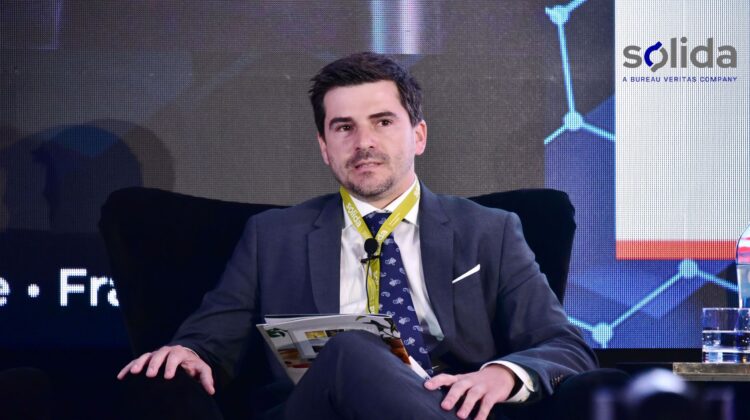
“In this first quarter of the year we are already immersed in tender processes that will lead us to work again on projects under construction from Q2,” said Andrés Medina, Business Development Director at Sólida, in an interview with Energía Estratégica.
According to the executive, the market is beginning to show signs of recovery, driven by new mechanisms aimed at reactivating investment in clean power generation.
“We are in a favourable moment that we expect will continue evolving positively in the short and medium term,” Medina said.
This scenario coincides with recent initiatives designed to restart renewable energy project development in the country after a period marked by regulatory uncertainty and slowing investment.
In December, Mexico’s National Energy Commission (CNE) launched a call aimed at private companies that awarded 3.3 GW of renewable generation together with 1.2 GW of battery energy storage systems (BESS), one of the clearest signals of renewed momentum in the Mexican energy market.
This initiative is complemented by a new scheme promoted by the state-owned utility Federal Electricity Commission (CFE) to incorporate 7.5 GW of renewable generation through power purchase agreements with private participation, a mechanism that could strengthen the project pipeline in the coming years.
The arrival of Sólida in the country also responds to its international expansion strategy. The company began its internationalisation process in Latin America between 2011 and 2013 with the opening of its first subsidiaries in Brazil and Chile. A decade later it added offices in Italy and Portugal, consolidating its presence in southern Europe.
According to Medina, the company’s interest in Mexico emerged several years ago due to the potential of the energy market. However, the decision to establish a local subsidiary only materialised in 2025, after observing more favourable signals in energy policy and securing agreements with strategic clients in the country.
“In 2024, with these subsidiaries already consolidated, we needed to continue growing and set our sights on Mexico, the market with the greatest potential in the region that had been dormant for more than five years. However, the bet was still too risky due to political uncertainty, and it was not until mid-2025 that the right circumstances emerged to finally make the decision. We saw the first green shoots in the country’s energy policy, closed framework agreements with strategic clients and started winning contracts again in Mexico,” the company representative explained.
He added: “The opening of Sólida Mexico represents a step forward in our ambitious global expansion plan, now strengthened by our integration into the Bureau Veritas platform. With this new technical hub we will be able to confidently cover the entire LATAM region without exception.”
He also explained that the firm seeks to combine international experience with strong knowledge of local regulatory and operational frameworks, a key factor for the development of energy projects.
“We are convinced that engineering must combine international expertise with a strong understanding of local regulations and practices,” Medina said.
From this new base, the company offers its three main business lines: engineering, consulting and construction management.
“We cover the entire lifecycle of projects, from conception to commercial operation,” Medina explained.
During early stages, the company works on wind and solar resource and production studies, pre-feasibility analyses and system sizing for hybridisation with battery energy storage systems (BESS).
Later, as projects advance in development, the firm participates in interconnection studies with the National Centre for Energy Control (CENACE), hydrological analyses and technical developments linked to permitting and EPC tender processes, which are necessary to structure initiatives before construction.
Once developments reach the ready-to-build (RTB) stage, the company’s involvement extends into construction activities through detailed engineering, Owner’s Engineering services and construction supervision.
In addition, the firm acts as a technical advisor in project acquisition and financing processes, supporting developers and investors throughout the different stages of project structuring.
“As the sector has been halted for so many years, the vast majority of projects are still in development and permitting phases,” Medina explained.
However, the executive added: “In Mexico we will certainly be talking in gigawatts.”
In this context, Sólida’s strategy focuses mainly on large-scale renewable energy projects, where engineering expertise plays a decisive role in optimising design and project viability.
“Our target is large projects where high-quality engineering is a clear differentiator,” he said.
At the same time, Medina identified an emerging niche linked to self-consumption projects, particularly installations of up to 20 MW, whose development will depend on regulatory evolution and the interest of industrial consumers.
In this regard, distributed generation is beginning to gain ground within Mexico’s power system. The National Energy Commission (CNE) currently accumulates 4.7 GW of interconnection requests linked to this type of project, reflecting growing interest from the private sector in developing capacity close to consumption centres.
Gilberto Sánchez, president of the National Solar Energy Association (ANES), believes that “the country is entering the prelude to distributed generation 2.0,” referring to a more mature stage of the model characterised by digitalisation, smarter energy use and the integration of new storage and demand management schemes.