










Power grids across Latin America are facing increasing pressure from the variability of renewable generation, a trend that is accelerating the development of energy storage projects in several markets across the region.
In this context, Sungrow aims to position itself to respond to the market’s growth, leveraging its industrial scale and expanding manufacturing capacity.
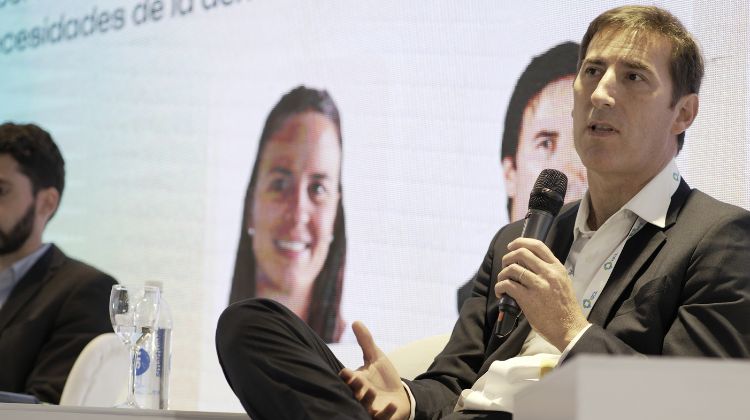
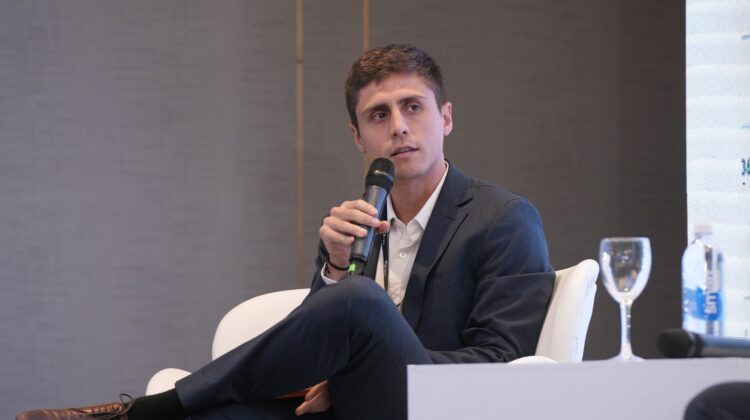
“We are a company that currently has an annual manufacturing capacity of 75 GW of energy storage systems, and we are building new factories to reach 110 GW,” explained Tomás Fuentealba, ESS Application Engineer for Latin America at Sungrow, during his participation at Future Energy Summit (FES) Argentina.
According to the executive, this expansion responds to the global growth of energy storage systems and the need to strengthen the stability of power systems with high penetration of renewable energy.
“Grid operators are increasingly discussing grid-forming capabilities, and how we can help the electrical system provide greater support so that variability in generation does not impact system security,” he said.
Fuentealba noted that these challenges are already visible in several electricity markets, where grid stability has become a priority for operators and regulators.
“Take the Dominican Republic, which has experienced significant variability and instability in its grid, and what we have also seen in Chile or even in Spain,” he said.
At the same time, several countries in the region are beginning to incorporate storage into electricity procurement processes and new tenders.
In Argentina, for example, the government launched the ALMA-SADI tender, aimed at incorporating energy storage systems at strategic nodes of the Argentine Interconnection System (SADI) to strengthen grid stability.
Meanwhile, in the Dominican Republic, bids were submitted for 1,655 MWp of solar projects under a tender that includes 600 MW combined with energy storage systems, reflecting the growing interest in integrating utility-scale batteries.
Similarly, Guatemala’s PEG-5 tender received renewable energy bids totalling 1,933.93 MW (out of 3,653.93 MW submitted — equivalent to 53% of the offers) from more than 40 interested participants, significantly exceeding the capacity the government initially expected to award.
For Sungrow, these processes mark a new stage for the development of energy storage in Latin America, as power systems seek to integrate larger volumes of renewable energy without compromising grid stability.
Alongside market growth, Sungrow has already accumulated relevant experience in energy storage projects in Latin America, particularly in Chile. The company has more than 10 GW of storage capacity contracted in the country, one of the most dynamic markets in the region for this technology.
“We have projects that have been operating for several years, and in some cases they have achieved availability rates above 99%,” Fuentealba said.
The executive also emphasised that the development of these projects depends not only on technology but also on the long-term operation and maintenance of the systems.
“We want to train our clients’ teams so they can carry out the operation and preventive maintenance of the systems. We do not want to keep all the knowledge only within our company,” he explained.
In that regard, the specialist highlighted that the modularity of energy storage systems allows potential failures to be resolved quickly while maintaining high levels of availability.
“If an issue occurs, the modularity of our equipment allows us to solve it quickly,” he added.
Another aspect highlighted by the executive was the growth of hybrid projects combining renewable energy with storage, a trend that is beginning to consolidate in several markets.
“We firmly believe that renewable energy must be the foundation of our energy matrix, and storage provides another level of security to the electrical grid,” he said.
In these types of projects, storage can be integrated either in alternating current (AC) coupled or direct current (DC) coupled configurations, creating new opportunities to optimise the operation of renewable power plants.
Fuentealba explained that in DC configurations, batteries can be charged directly from the solar panels connected to the inverters, which requires efficient operation and maintenance of photovoltaic systems.
“If we do not have proper maintenance of the solar panels, our batteries will not be able to operate efficiently either,” he warned.