











The AlmaSADI battery storage tender in Argentina introduces a series of differences compared with AlmaGBA, the previous storage auction. The most notable change is the installation of battery energy storage systems (BESS) across multiple nodes of the national electricity grid, defined according to the operational needs of the system, instead of concentrating projects in a single area as occurred in 2025.
During the event FES Argentina – Renewables & Storage, representatives from the Wholesale Electricity Market Administrator (CAMMESA) and the national government explained the particular features that companies interested in the tender should take into account.
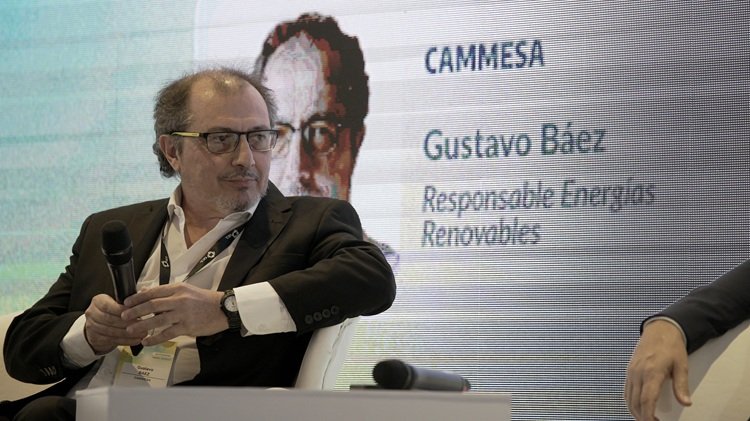
“The objective of AlmaSADI is 700 MW, but if you look at the quotas allocated by region, the total is practically 1,000 MW,” explained Gustavo Báez, Head of Renewable Energy at CAMMESA, during his participation in the meeting organised by Future Energy Summit (FES).
“In other words, competition is expected not only within regions but also between regions. The expectation is that this will be a competitive mechanism and that prices will once again be favourable, as they were in AlmaGBA,” he added.
The map of nodes defined for the tender includes a wide range of connection points distributed mainly across 132 kV and 220 kV networks, located in provinces such as Córdoba, San Luis, Buenos Aires, Santa Fe, Entre Ríos, Mendoza, San Juan, Chaco, Corrientes, Misiones, Salta, Tucumán, Santiago del Estero and La Rioja.
However, it should be noted that each location has technical capacity limits by node, zone and region, defined based on operational studies of the national power system.
Another central feature of the scheme is the classification of nodes according to their level of criticality within the electricity system, introducing incentives aimed at directing investment towards specific strategic locations.
In this regard, the design distinguishes violet, red and yellow nodes, defined based on CAMMESA’s analysis of the operational needs of the power system.
“Violet nodes are those with very high impact, where the Energy Secretariat considers it necessary for projects to be installed,” officials from Argentina’s national energy authority explained.
However, awards in violet nodes are not guaranteed, as projects must still compete within the tender process due to capacity limits by zone. Nevertheless, to encourage development in these strategic locations, the mechanism incorporates an advantage in the economic evaluation formula.
“Those violet nodes receive a USD 750 benefit in the evaluation. In addition, interested companies will be able to request new nodes beyond those already listed and mapped,” officials from the Energy Secretariat added.
Báez referred to this mechanism as a tie-breaking factor that favours projects located in these areas.
The design of AlmaSADI also introduces key changes compared with the AlmaGBA tender, which served as a precedent for the development of energy storage in the country:
-
CAMMESA will act as the offtaker, as the objective of the process is to contract services that contribute to the integrated operation of the electricity system.
-
The new model expands the scope of the services that awarded storage systems must provide, including available power capacity and frequency regulation services.
“Some aspects have been improved compared with AlmaGBA. The process becomes more sophisticated and moves towards unlocking greater potential for energy storage,” Báez said during the featured discussion, “Market challenges for developing wind, solar and storage in Argentina.”
Contracts, investment and tender timeline
The AlmaSADI tender is expected to mobilise around USD 700 million in investment for the development of stand-alone BESS projects distributed across different regions of Argentina.
Awarded projects will have contracts of up to 15 years, with CAMMESA acting as the offtaker, and a remuneration scheme mainly focused on the availability of capacity for the electricity system.
The tender process will take place in less than four months. The submission of technical and administrative bids (Envelope A) is scheduled for 8 May, with evaluation running until 21 May and the publication of results on 28 May.
Subsequently, economic bids (Envelope B) will be opened on 5 June, while the final award is scheduled for 19 June. The signing of contracts will begin on 25 June 2026.
Regarding operational timelines, 1 January 2027 has been established as the target date for the start of contractual counting, while 31 December 2029 has been set as the deadline for the commercial operation of awarded projects.