











Guatemala’s PEG-5 power procurement tender has attracted renewable energy bids totalling 1,933.93 MW (out of 3,653.93 MW submitted, equivalent to 53% of the total offer) from more than 40 interested developers, far surpassing the capacity the government initially expected to award.
The strong response signals renewed investment interest in Guatemala’s power sector, particularly in renewable energy technologies. However, it also highlights structural challenges in the country’s electricity infrastructure.
The expansion of generation expected from the PEG-5 auction, combined with sustained growth in electricity consumption, is increasing pressure to accelerate the development of transmission networks capable of delivering power to demand centres.
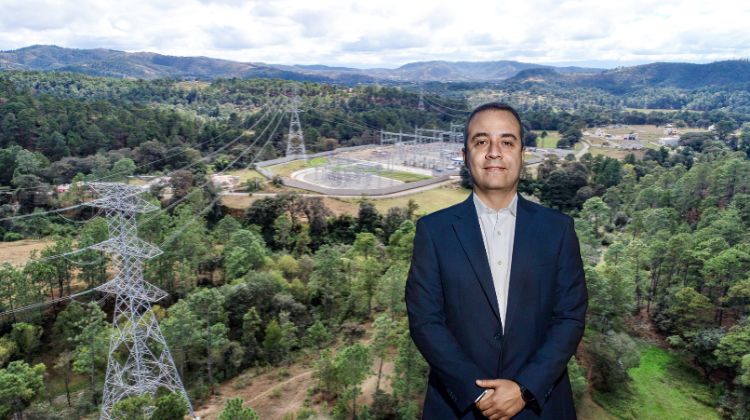
According to Juan Jacobo Rodríguez, Chief Executive Officer of Conecta, the current context places Guatemala in a favourable position to expand its energy mix.
“Guatemala has an enormous opportunity because electricity demand has been growing at around 4–5% annually,” Rodríguez told Energía Estratégica.
Yet the electricity transmission network has not expanded at the same pace. While consumption continues to rise steadily, transmission infrastructure has grown significantly more slowly, potentially limiting the integration of new projects.
Transmission networks in Guatemala are currently expanding at around 1–1.5% per year, well below the rate of demand growth. According to industry estimates and government planning, the country will require a major expansion to avoid future system constraints.
“The country should build roughly 5,000 to 6,000 kilometres of additional transmission lines over the next 15 years,” Rodríguez explained.
Achieving that target would require developing 500 to 600 kilometres of new lines annually, far exceeding the historical pace of electricity infrastructure deployment.
Expanding generation meets transmission bottlenecks
The results of the PEG-5 tender reinforce Guatemala’s attractiveness for renewable energy investment, particularly in technologies such as solar PV and wind power.
However, the availability of infrastructure to transport electricity will become a decisive factor in determining whether these projects can move forward.
For this reason, industry attention is now shifting towards the PET-4 transmission tender, which the government plans to launch and which could represent a turning point for the development of the national electricity system.
The previous transmission tender illustrates the challenges facing the segment. The last procurement process for transmission infrastructure was declared void after failing to attract private sector participation.
Rodríguez believes the success of future tenders will depend on revising certain regulatory and contractual conditions that currently create uncertainty for investors.
“If risk allocation and financial conditions in the tenders are adjusted, many more bids will be submitted to develop the infrastructure,” he said.
Among the main barriers are permitting procedures and territorial management, factors that often extend the execution timeline of large-scale transmission projects.
Transmission lines typically require municipal permits, environmental licences and agreements with landowners and local communities, which frequently result in complex and lengthy negotiations.
Critical infrastructure for electrification and regional power markets
Beyond enabling new power generation projects, expanding transmission infrastructure will also be critical for improving electricity access across Guatemala.
Several departments and municipalities still report electrification rates below 80%, a situation that contrasts with the country’s overall economic performance.
Strengthening the transmission network could help advance rural electrification, improve system reliability and ensure supply in emerging demand areas.
A more robust electricity grid could also reinforce Guatemala’s position within the Central American regional electricity market.
Historically, Guatemala has maintained the capacity to export electricity to neighbouring countries in the region.
If the projects emerging from the PEG-5 tender materialise and can be connected to the regional interconnected grid, the country could regain that strategic role.
In this context, expanding transmission infrastructure is emerging as one of the most decisive factors for supporting generation growth, improving electricity access and strengthening regional energy integration.