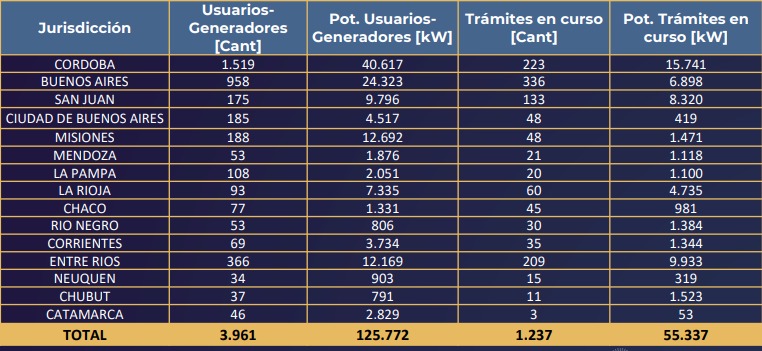





Argentina’s distributed generation market currently records 3,961 prosumers (users-generators) connected to the grid, with 125.77 MW of installed capacity under Law No. 27,424, and industry players are already anticipating a new market trend: the implementation of battery systems.
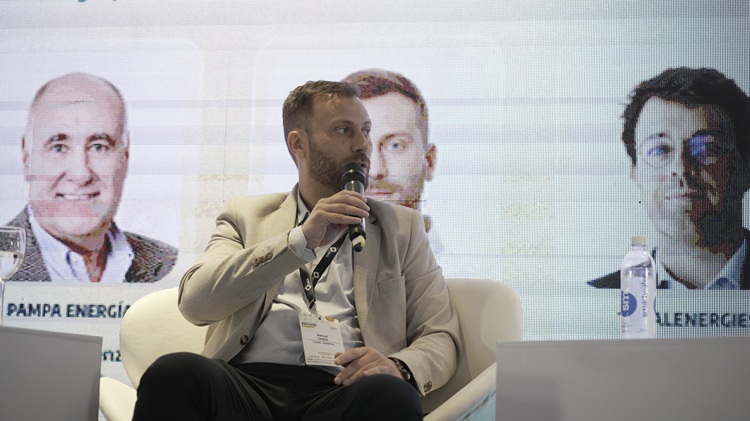
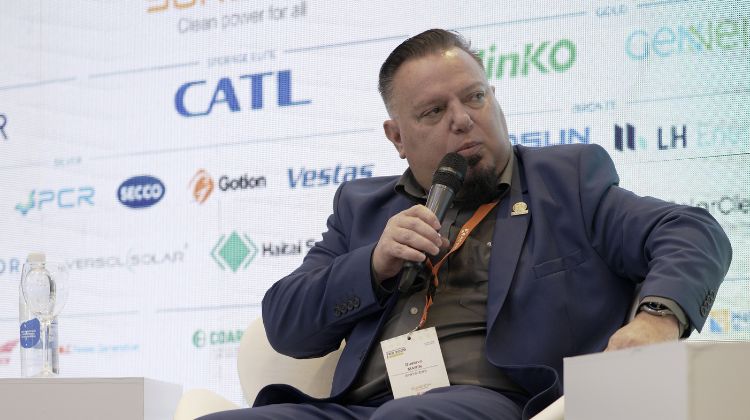
Gustavo Marín, LATAM Branch Manager of APsystems, participated in the Future Energy Summit Argentina and explained that, after several years of declining costs, the technology has reached a stage of stability that allows its expansion into new projects.
“We are at a balance point where the price is ready for the market to develop,” said Marín. According to the executive, the market had expected a downward trend in battery costs, but the current price level already enables the implementation of this technology in energy solutions.
“The implementation of batteries in distributed generation is now a necessity (…). It is very important to achieve the required autonomy and avoid power outages,” he added during the event, which brought together hundreds of renewable energy and energy storage leaders from across Latin America.
Why is it important?
In addition to operating as backup during system interruptions, these solutions allow the implementation of optimised self-consumption strategies and mechanisms such as peak shaving, which help reduce energy costs and improve the use of electrical infrastructure.
“With batteries we will be able to decide what to do with stored energy: inject it into the grid, discharge it during peak hours or use it whenever needed,” Marín noted.
To address this new market dynamic, the company incorporated battery solutions to complement its portfolio of microinverters, responding to emerging market requirements. These include energy management systems with power conversion systems (PCS) with capacities of 5 kW and 11.4 kW, which are “sufficient for homes and commercial applications” and provide greater autonomy for these segments.
“We are working on the energy conversion and management side with lithium iron phosphate batteries. The evolution of these components is moving towards higher-capacity systems and greater lithium availability in the future,” added APsystems’ LATAM Branch Manager.
What is the situation in Argentina?
Distributed generation in the country grew almost 60% in the number of users-generators (2,510 U/G in February 2025) and installed capacity nearly doubled over the past year (63.77 MW at the beginning of 2025).
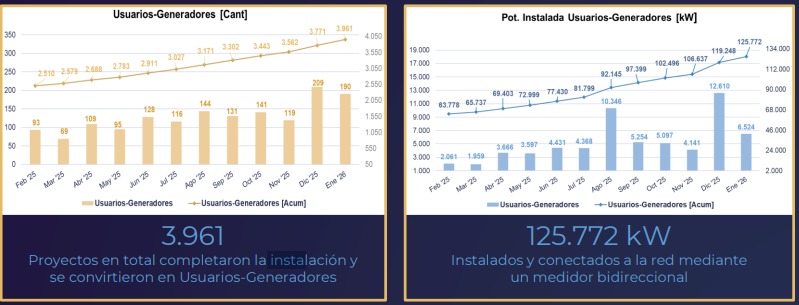
In addition, distributed generation continues expanding nationwide, as there are currently 1,237 prosumer applications in progress, representing an additional 55.33 MW in the grid connection process.