







The Brazilian government has confirmed that it will move forward with its first reserve capacity auction for battery energy storage systems (BESS), known as “LRCAP Storage”, following months of regulatory discussions and technical adjustments aimed at defining participation rules and the remuneration scheme.
The initiative represents a key step in integrating grid-scale energy storage into Brazil’s electricity system, which is increasingly dominated by variable renewable energy such as wind power and solar PV.
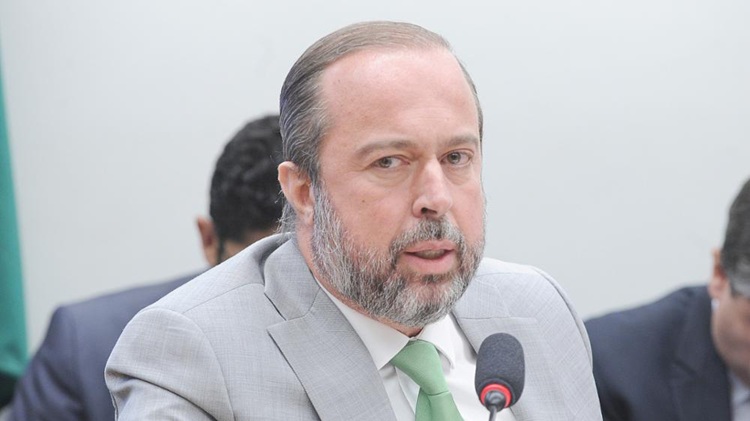
Brazil’s Minister of Mines and Energy, Alexandre Silveira, confirmed the timeline during a session of the Chamber of Deputies’ Mines and Energy Committee.
“The battery auction will be launched in April this year, and the ordinance establishing the rules will also be published this year,” the minister said.
Silveira added that the government is in discussions with major global battery manufacturers regarding potential local content requirements, particularly with Chinese companies that dominate the global battery supply chain.
“I have already met with the world’s largest battery companies. We are discussing with Chinese firms how much local content we can require. This auction must also help build a domestic industry, but we must proceed carefully to ensure the auction succeeds,” he said.
The minister also stressed that the development of an energy storage market is a priority for Brazil’s executive branch, even amid a complex political context ahead of the general elections scheduled for October 4.
According to estimates from private sector stakeholders, the government could contract between 1 GW and 2 GW of battery storage capacity in this first auction.
This level would be considered appropriate in a scenario where Brazil’s power system is expected to require around 38 GW of new generation capacity by 2034, driven largely by renewable energy expansion and rising electricity demand.
Key parameters anticipated for the auction include:
-
Minimum project size: 30 MW
-
Maximum discharge duration: up to 4 hours per day at full capacity
-
Maximum recharge time: 6 hours
-
Round-trip efficiency: at least 85%
The minimum capacity requirement aims to ensure the participation of utility-scale storage projects capable of providing system reliability and grid support.
Projects selected in the auction would sign Capacity Reserve Contracts (CRCAP) with a 10-year term.
According to preliminary information gathered by Energía Estratégica:
| Key Parameter | Expected Condition |
|---|---|
| Contract duration | 10 years |
| Start of supply | August 2028 (under review) |
| Payment structure | Annual fixed revenue |
| Indexation | Adjusted by Brazil’s National Consumer Price Index |
| Payment frequency | 12 monthly installments |
The fixed annual revenue will also be conditioned on operational performance, ensuring that battery systems remain available to support the grid when needed.
Meanwhile, electricity used to charge the batteries and the energy later injected back into the grid will be settled in Brazil’s Short-Term Market at the Settlement Price for Differences (PLD).
Any economic difference resulting from this operation will be covered by CONCAP, a reserve capacity energy account designed to avoid unexpected impacts on electricity tariffs.
Regulatory framework for storage under development
Parallel to the auction process, Brazil’s electricity regulator, Agência Nacional de Energia Elétrica (ANEEL), is advancing regulatory reforms to integrate energy storage into the national power system.
Earlier this year, the agency published Technical Note No. 03/2026, aimed at adapting the existing regulatory framework to Law No. 15,269, enacted in November 2025.
The legislation formally recognises energy storage as an independent activity within Brazil’s electricity sector, enabling the creation of dedicated rules for its operation, remuneration, and market participation.
The regulatory process also complements the second phase of Public Consultation No. 39/2023, which outlines structural guidelines defining how batteries and other storage technologies will operate, charge, and receive payments within Brazil’s National Interconnected System (SIN).