









After years working in the renewable energy sector—discussing solar photovoltaic (PV), energy storage, the energy transition and decarbonisation—Carolina Nester, Board Advisor at Circular Synergies, decided to expand her impact beyond the corporate sphere. She has now transformed her technical experience into a collection of children’s books that explain renewable energy and recycling through imagination and play.
– After years in the renewable energy sector, how did the idea of writing children’s stories emerge?
– I have two young children, and I have always loved children’s stories. I’m someone who enjoys colours and connecting ideas in my head, but with the lack of time I had never really had the opportunity to sit down and think about it. For years, professional demands set the pace. During this recent pause in my career, while spending time at home, I thought: why not? Now is the moment.
– What type of books did you decide to create?
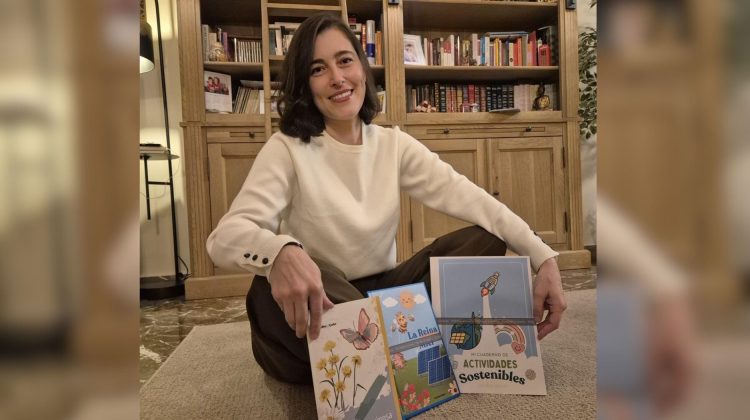
– I launched two lines. One is a story designed to teach children what renewable energy is, including solar PV, wind power, geothermal energy and hydropower, as well as the three Rs of recycling. The collection includes titles such as La Reina Miel, Lila, la mariposa and Mi cuaderno de actividades sostenibles, available on Amazon.
– How do you translate a technical concept, such as solar PV, into language that children can understand?
– You have to explain it using everyday examples. At home, I use small models with miniature solar panels so that the process becomes visible. You cover the panel and the small fan stops; then you uncover it and say, look, when the sun reaches it, it works again.
The explanation starts from something concrete: for you to switch on a light, energy first has to be generated. The books also include practical activities. Children can use what they normally have in their pencil case. Instead of giving them a mobile phone during a meal, you give them the book, and they cut, colour and paste while staying engaged. The idea is that learning should not be abstract but experiential.
– Was it possible to develop this project while holding an executive role?
– No, it’s impossible because in those positions you are focused 100% on work. In my previous role, I was responsible for a team of 42 people, which required total dedication. There was simply no space to think about anything other than work. The daily dynamic, combined with family life, made it unfeasible to move forward with the project. I always had the desire, but never the opportunity.
– What does this new stage represent for you?
– I’m delighted and very happy. I think it is going to be something very special. The project also has a representation component within a sector that is still highly masculinised. Engineering is still largely male-dominated today.
It’s important for children to see that it’s not only men who work in this field, but that women also understand these technologies and contribute to them. They should pursue something they enjoy, but also realise that there are opportunities to do things that are not defined as “for men”, but simply as something anyone can choose.
– After years of advocating for the energy transition in the corporate world, what does it mean to bring that message to childhood education?
– I have always been passionate about renewable energy, and I think this is a great opportunity for children to understand it. You have to explain it using everyday examples. For you to switch on a light, energy first has to be generated.
These books are inspired by my children and by my passion for renewables. They are the bridge between my professional vocation and my vocation as a mother. Because the energy transition is not built only with megawatts—it is built with values, with awareness and with education from an early age.
Today I can say that I have fulfilled one of the dreams I had been postponing for years.
In this way, solar PV ceases to be just a variable within corporate strategy and becomes an illustrated story. An initiative that does not replace her career in the energy sector, but rather expands it—because the energy transition also begins at home.