










Argentina’s renewable energy sector is seeing a new wave of solar photovoltaic (PV) and battery storage development, as an emerging energy company builds a project pipeline of around 800 MW while aiming to reach 250 MW in operational capacity by 2026.
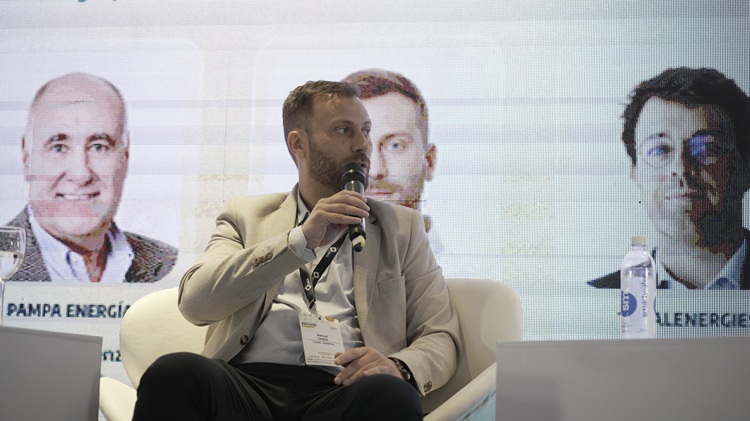
The strategy was outlined by Nahuel Vinzia, CEO of Coral Energía, an Argentine energy developer expanding its presence in solar PV and battery energy storage systems (BESS), during the Future Energy Summit (FES) Argentina, one of the region’s key industry events.
“We aim to reach 250 MW in operation and currently have an important pipeline of around 800 MW developed, while also looking closely at the upcoming AlmaSADI tender and continuing to expand our solar portfolio,” Vinzia said.
The company is currently advancing 17 projects at different stages of construction, including 15 solar PV plants and two battery storage projects.
The storage projects — BESS Parque and BESS Pilar — were awarded in the AlmaGBA tender, an auction designed to deploy battery systems in the Buenos Aires metropolitan area to improve grid reliability and reduce supply disruptions.
Each project will install 50 MW of storage capacity, with awarded prices of USD 11,461 per MW-month and USD 11,979 per MW-month, respectively.
According to Vinzia, Coral Energía expects its first project to reach commercial operation in March 2026, with the rest of the portfolio scheduled to achieve commercial operation date (COD) throughout the same year.
The company currently accumulates around 400 MW of renewable capacity between contracted projects and assets under construction, while planning sustained growth toward the end of the decade.
Storage becomes a strategic pillar for growth
Looking ahead, Coral Energía is targeting 1 GW of signed renewable energy contracts by 2030, as part of a long-term strategy to strengthen its position in Argentina’s evolving power market.
Within that roadmap, battery energy storage systems (BESS) are emerging as a central pillar of the company’s growth strategy, particularly after its participation in the AlmaGBA storage auction, where it secured two projects.
Argentina is now preparing a new procurement process known as AlmaSADI, which aims to award 700 MW of stand-alone battery storage systems across the country.
The initiative is designed to strengthen critical nodes of the Argentine Interconnected System (SADI) — the national transmission network — while helping reduce supply disruptions and improve grid stability in regions facing infrastructure constraints.
For Coral Energía, this policy framework reinforces the role that storage technologies will play in the next phase of Argentina’s power sector development.
“We are very enthusiastic. The reception of these initiatives has been very positive, and we see storage as one of the strategic pillars of Coral Energía’s growth in the coming years,” Vinzia said.
Although the company’s portfolio is currently focused mainly on solar PV and battery storage, Coral Energía is also evaluating opportunities in other generation technologies depending on their competitiveness within the power system.
“We are an energy company and want to bring generation projects to the table with a competitive levelized cost of electricity (LCOE) that help optimize the overall system cost,” Vinzia explained.
“Different technologies are competing, and at Coral Energía we are also evaluating wind power and other types of generation,” he added.
Beyond the current project pipeline and upcoming tenders, the evolution of Argentina’s electricity market will be critical to unlock new investment cycles, particularly in the corporate renewable energy procurement segment.
According to Vinzia, clearer price signals and greater market stability will be necessary before companies begin signing new medium- and long-term power purchase agreements (PPAs).
“As clearer price signals emerge — once this transition period passes and electricity demand begins to recover — we will start to see medium- and long-term contracts again,” the executive said during the event.
He noted that 2026 could still be a year of observation for investors, as market participants assess how the regulatory framework and pricing mechanisms evolve.
“This year may be a moment to wait and see how the system stabilizes, how predictable and reliable the new framework becomes, and whether price signals are clear enough for demand to start contracting energy again,” he explained.
Ultimately, improving market predictability and investor confidence will be essential to lower financing costs and accelerate the deployment of renewable energy and storage technologies in the country.
“We need predictability, confidence and clear signals so that the cost of financing continues to decline. That will certainly help drive all renewable technologies and energy storage,” Vinzia concluded.