










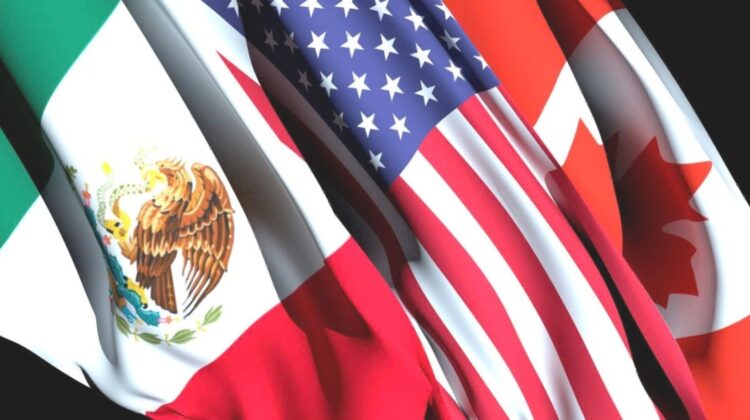
Within the framework of preparations for the joint review of the United States–Mexico–Canada Agreement (USMCA), the results of nationwide public consultations have revealed a clear consensus: the transition toward renewable energy and sustainability are non-negotiable pillars for maintaining competitiveness and driving regional development in North America.
Through sectoral roundtables and consultations across Mexico’s 32 federal entities, the productive sector emphasized that sustainable development can no longer be postponed. Key industries involved in trilateral trade raised concerns about their energy requirements. As the official report notes, “the steel, aluminum, energy and mining sectors insisted on the need for a clean, affordable and stable energy matrix that guarantees regulatory certainty and competitiveness.”
The consultations also revealed that perspectives on energy vary by region of the country, although all coincide in viewing it as a fundamental driver of the future:
Industrial momentum in the North and Bajío: To sustain the competitiveness of manufacturing and just-in-time processes, highly industrialized states are demanding availability and stability in electricity supply, promoting proposals linked to the energy transition and trilateral cooperation.
Development engine in the South-Southeast: In contrast, the southern region perceives that “energy—especially clean energy—can drive regional development, attract investment and generate employment.”
The joint call from states such as Tabasco, Tamaulipas and Sonora stands out. While emphasizing the relevance of Chapter 8 of the USMCA as a guarantee of national sovereignty, they also agreed on the need to establish a framework for an orderly transition toward clean energy. To achieve this, they called for clear rules that allow private sector participation, trilateral cooperation and the promotion of green financing mechanisms.
Likewise, recognizing that infrastructure is not the only challenge, the consultations raised the urgency of developing human capital. In this regard, the state of Tabasco highlighted a proposal to create an educational-technological cluster that would serve as a platform to train specialized talent in clean energy and advanced manufacturing.
The message emerging from the consultations is clear: the 2026 review of the USMCA opens an invaluable opportunity to align trade and industrial objectives with a modernization agenda that includes energy transition and environmental sustainability. Mexico is preparing to promote a position that builds a trilateral productive bloc that is not only efficient, but also deeply sustainable and integrated.