






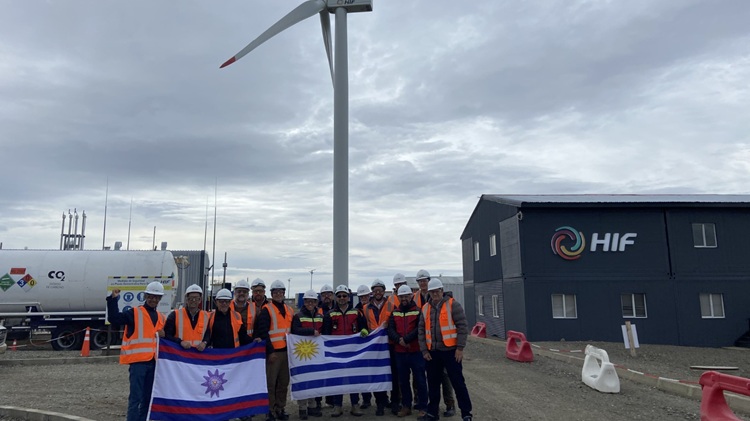
Uruguay is accelerating its green hydrogen ambitions through direct engagement with operational projects abroad. The Asociación Uruguaya de Energías Renovables (AUDER) led a public-private mission to Punta Arenas, in southern Chile, to assess large-scale green hydrogen and synthetic fuels production.
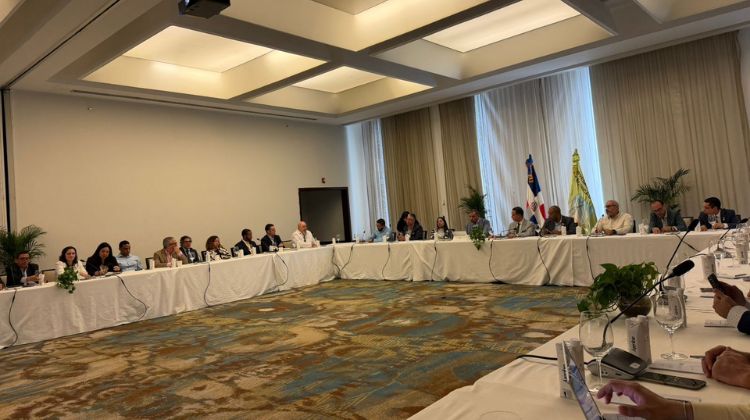
The delegation included national and departmental authorities, members of parliament and energy officials. The visit comes as Uruguay advances regulatory and investment frameworks to develop its own green hydrogen industry.
The agenda featured meetings with regional authorities from Chile’s Magallanes region and a site visit to Haru Oni, developed by HIF Global — the world’s first integrated commercial-scale e-fuels plant.
Haru Oni uses Patagonia’s high-capacity wind power to drive electrolysis, producing green hydrogen. The hydrogen is then combined with captured biogenic CO₂ to synthesize:
-
e-Methanol (for maritime transport or further processing)
-
e-Gasoline (e-Nafta) for road vehicles
-
e-SAF (synthetic aviation fuel) for aircraft
A key advantage of these synthetic fuels is their compatibility with existing combustion engines and fuel infrastructure, enabling decarbonization without immediate fleet replacement.
Uruguay eyes USD 5.4 billion investment
The visit holds particular relevance because HIF Global is also promoting a USD 5.4 billion e-fuels project in Paysandú, Uruguay, with similar technical characteristics.
According to Uruguay’s Undersecretary of Environment, the country is entering a “second energy transition.” After achieving over 90% renewable electricity generation — primarily from wind, hydro and solar PV — Uruguay is now targeting green hydrogen and derivatives as a new industrial export vector.
Officials highlighted that the environmental and operational standards observed at Haru Oni align with the highest international benchmarks, reinforcing confidence in replicating such projects under strict sustainability criteria.
Uruguayan lawmakers emphasized the industrial logic behind the plant’s design. Unlike traditional refineries, Haru Oni operates as a compact chemical synthesis facility with:
-
High-efficiency electrolysis units
-
CO₂ capture and utilization systems
-
Low acoustic impact
-
Modular expansion capability
Delegates also tested synthetic fuels produced on-site, underscoring the technological maturity of power-to-X solutions.
Chilean authorities shared insights into the implementation of the country’s national hydrogen strategy, including:
-
Territorial planning for hydrogen hubs
-
Public-private coordination frameworks
-
Investment promotion mechanisms
-
Regulatory and environmental permitting processes
The exchange opens avenues for continued bilateral cooperation as both countries position themselves within the global green hydrogen and e-fuels value chain.