











Peru’s energy sector is facing a period of heightened regulatory uncertainty just two months ahead of the presidential elections, with 30% of voters still undecided, according to the latest CPI poll. The implementation of Law No. 32249, the framework for electricity supply auctions led by distribution companies, and the development of the ancillary services market are now subject to a political timetable that could redefine priorities between April and July.
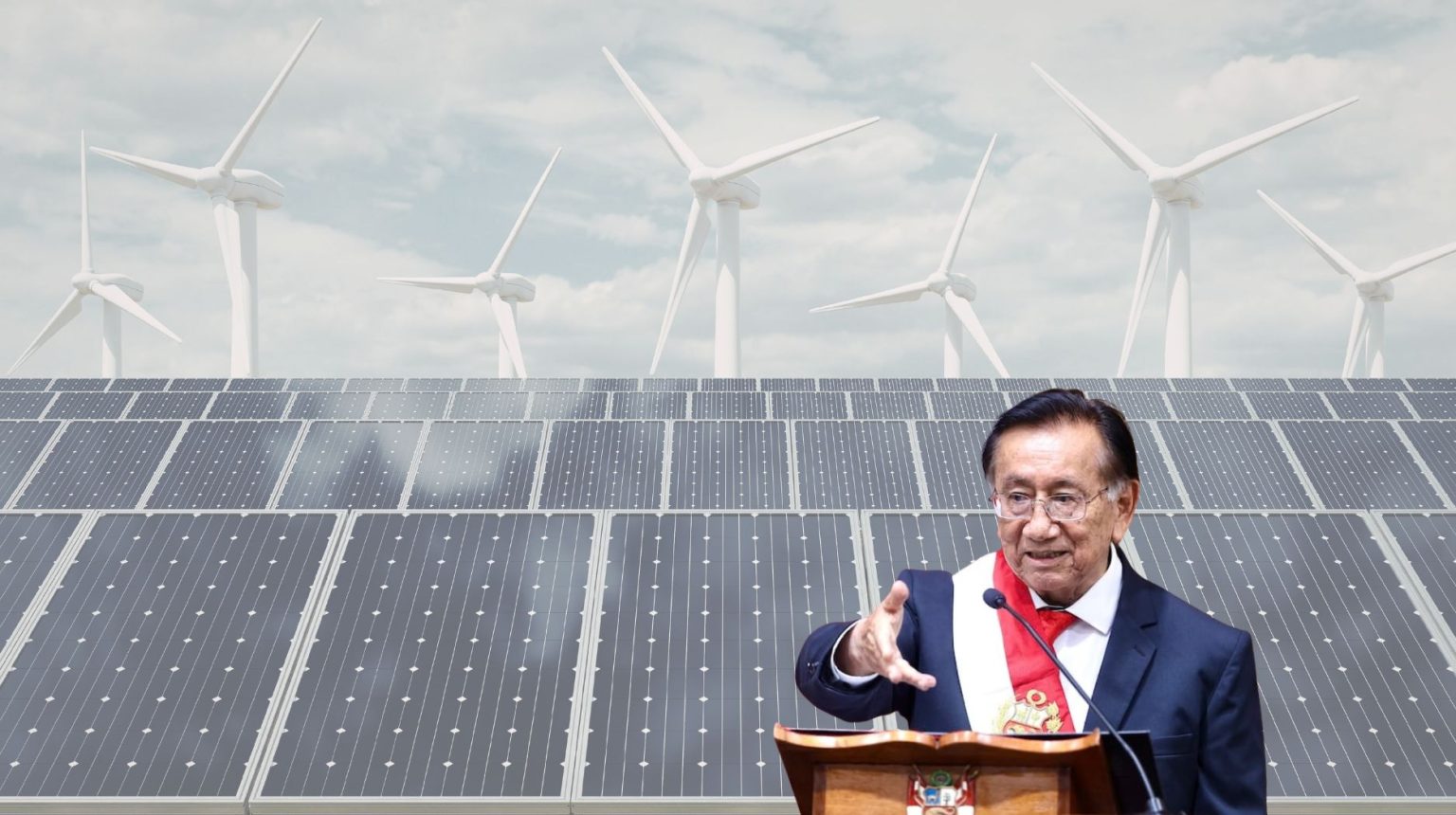
The newly appointed interim president, José Balcázar, from the Perú Libre party, has sought to project institutional stability. Brendan Oviedo, partner in the Energy and Climate Change practice at Hernández & Cía, said the president “is seeking continuity”.
Balcázar appointed Hernando de Soto as President of the Council of Ministers and confirmed Dennis Miralles as Minister of Economy and Finance, alongside other cabinet members. The authorities are due to be sworn in on 24 February in an effort to reinforce political and economic predictability during the electoral process.
However, the government’s room for manoeuvre is limited. Seven weeks remain until the election, followed by a transition period until 28 July, when the president-elect will take office. “They will move very cautiously, at least until the elections, to avoid any situation that could affect the vote,” Oviedo warned.
Market concerns extend beyond the pre-election period. “I am more concerned about what could happen afterwards… once the elections are over, what the president might do during the remaining two months,” the specialist added, referring to the period between April and the inauguration of the new administration.
Law 32249 and renewable energy auctions at a standstill
The regulation of Law 32249 is one of the most sensitive issues for the sector. The legislation aims to revitalise electricity supply auctions conducted by distribution companies, a key mechanism to contract renewable energy under long-term power purchase agreements (PPAs). Although a draft regulation was opened for public consultation in April last year and has reportedly received technical feedback, the final text has yet to be published.
“Personally, I do not see much chance of it being published under this government, although I hope to be wrong,” Oviedo said.
From a technical perspective, the document should already be consolidated. Yet the political decision to publish it — or to open a new round of consultations — will depend on the electoral climate.
According to Riquel Mitma, Vice-President of the Peruvian Renewable Energy Association (SPR), there are 58 renewable energy projects ready to move forward, representing more than 12.5 GW of installed capacity and over USD 12 billion in potential investment, provided there are “clear government signals”.
Peru also holds a significant solar PV pipeline. Data compiled by Energía Estratégica, based on figures from the energy regulator Osinergmin, show 13,116.1 MW undergoing environmental permitting with approved pre-operational studies, distributed across 65 projects.
However, only 11 projects have secured final concessions, representing just 2.3 GW formally authorised to proceed to the construction stage.
Renewable energy pipeline in Peru
| Segment | Projects | Capacity (MW) | Status |
|---|---|---|---|
| Solar PV (environmental stage) | 65 | 13,116.1 | Pre-operational studies approved |
| Solar PV (final concession) | 11 | 2,300 | Authorised for construction |
| Total renewables ready to advance | 58 | 12,500+ | Awaiting clear regulatory signals |
This bottleneck highlights the gap between project development and regulatory execution, affecting investment in renewables, grid integration and long-term energy planning.
The ancillary services market — essential for system flexibility, frequency control and the integration of higher shares of wind power and solar PV — faces even greater uncertainty, according to industry sources. The definition of economic signals for system flexibility and back-up capacity remains pending, limiting the development of energy storage and other balancing technologies.
In parallel, regulation governing operational coordination in isolated systems — which would enable participation by the Economic Operation Committee of the National Interconnected System (COES) — is reportedly at an advanced stage within the Presidency of the Council of Ministers.
Structural challenges beyond the elections
Although Peru maintains a perception of macroeconomic stability, Oviedo argues that the structural issue lies in the lack of institutional continuity. “Not only is there no continuity among public officials responsible for decision-making, but there is also no plan establishing a clear timetable with defined milestones and objectives,” he explained.
Frequent changes of ministers, vice-ministers and senior officials, combined with the absence of a formal energy roadmap, mean that regulatory implementation often depends on individual decisions. This increases uncertainty and complicates medium- and long-term planning for developers and investors.
On the electoral front, recent polls place Rafael López-Aliaga of the Renovación Popular party in the lead, followed by Keiko Fujimori and Carlos Álvarez, while around 30% of voters remain undecided. This high level of uncertainty reinforces caution across the energy market, which is awaiting signals regarding the next administration’s approach to renewable auctions, market rules and energy planning.
Ultimately, the presidential outcome will not only reshape Peru’s political landscape but also determine the pace — or postponement — of the country’s renewable energy and regulatory agenda. As Oviedo concluded, “When the players change, it becomes difficult to maintain the same level of play.”